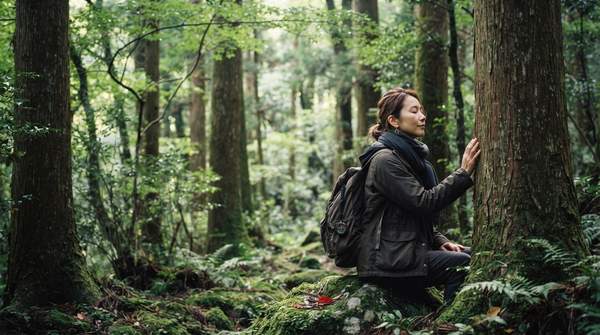
Spending just two hours a week outdoors, equivalent to a short walk each day, significantly boosts mental well-being, according to 2019 research cited by PMC. This minimal time commitment offers accessible therapeutic benefits, suggesting a simple yet powerful intervention for public health.
Despite clear evidence that consistent time in nature improves mental health, Western society increasingly retreats from the outdoors. This growing disconnect creates a tension between proven natural remedies and modern lifestyle choices, limiting access to vital therapeutic benefits.
A continued societal disconnect from nature will likely lead to a greater burden on traditional mental health services and a missed opportunity for accessible, holistic well-being.
Defining Ecotherapy: Intentional Engagement with Nature
Ecotherapy extends beyond casual outdoor enjoyment; it involves intentional, structured engagement with natural environments. Nature-based therapists employ specific methods to acknowledge and interpret nature's input as significant to the therapeutic process, according to childrenandnature. This structured methodology makes nature an active, interpreted element, not merely a setting for healing.
Specific Impacts: How Nature Heals Diverse Populations
Ecotherapy benefits diverse populations, fostering specific developmental and social gains. Caring for hens at a Dublin elementary school, for instance, helped children from socio-economically marginalized areas improve responsibility, empathy, respect for nature, cooperation, relaxation, motivation, and peer-assisted learning, according to childrenandnature. Similarly, a forest healing program in South Korea led to a statistically significant increase in interpersonal relationship skills for adolescents in foster care, according to childrenandnature. Ecotherapy's profound impact on social-emotional development and interpersonal skills, extending beyond individual well-being to foster community engagement and structured therapeutic outcomes, is evident in these cases.
The Cost of Disconnect: Neglecting Nature's Therapeutic Role
Western society's increasing retreat from nature, driven by technological immersion and urban living, inadvertently severs a vital connection to natural resources, according to PMC. Neglecting ecotherapy carries significant costs for human well-being. When this ecosystem service is lost, it can result in slower recovery times, greater distress, and reduced well-being, according to PMC. Nature's therapeutic role is not a luxury, but an essential resource. Ignoring this natural healing capacity incurs a substantial human cost, impacting public health outcomes and making re-engagement critical for addressing mental health challenges.