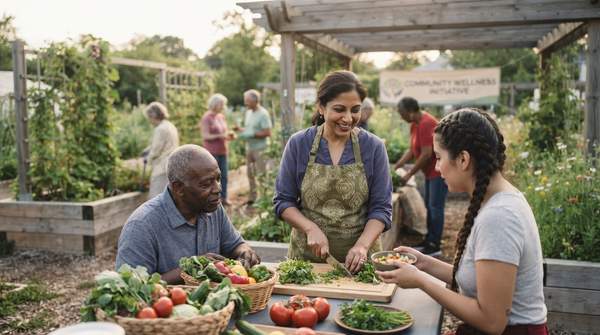
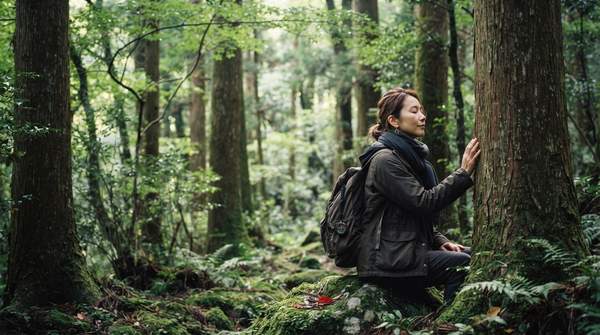
By 2026, Brazil's Unified Health System is projected to deliver over five million Integrative Community Therapy procedures annually in primary care. This marks a quiet revolution in global health, showing a deep commitment to community-based wellness beyond conventional medical practices. It addresses collective health needs at scale, fostering a deeper connection between individuals and their care.
Western culture's materialistic worldview fuels pervasive health crises and widespread burnout. Yet, traditional and eco-spiritual practices are now institutionalized, offering more effective solutions. This divergence signals a global re-evaluation of public health, moving beyond purely symptomatic treatment.
As the limits of a purely biomedical approach become clear, the institutional adoption of eco-spiritual and traditional medicine practices will likely accelerate. This reshapes global health toward more integrated, preventive care models.
Brazil's Unified Health System incorporates Integrative Community Therapy, aiming for over five million procedures annually in primary care by 2025, states the WHO. This embeds culturally relevant care directly into communities. Similarly, Peru's EsSalud has spent nearly three decades institutionalizing complementary care, integrating traditional medicine into its public health infrastructure, also noted by the WHO. Formal healthcare systems are embracing traditional and integrative medicine as core public health components, revealing a broader, often overlooked, trend. This moves beyond a purely materialistic Western worldview, which often fuels health and environmental crises through individualistic, reactive treatments. Nations institutionalizing traditional and eco-spiritual medicine build more resilient, preventive, and culturally relevant public health systems. They directly address the systemic failures of purely materialistic Western approaches.
Beyond Materialism: Defining Eco-Spiritual Wellness
A systematic review of 14 articles suggests ecospirituality offers keys to improving health, reports pmc. This worldview recognizes deep, often unacknowledged, links between spiritual outlook, ecological well-being, and human health, emphasizing interconnectedness. Western culture's materialistic worldview, however, frequently overlooks the interdependence of human and non-human life. This contributes to both environmental crises and their influence on health through a narrow focus on individual gain and consumption. Ecospirituality fosters a healthier environment, which in turn improves global health, also reported by pmc. This challenges conventional medical definitions. It recognizes human health is inextricably linked to environmental well-being, pushing back against reductionist, materialistic health models. The evidence that ecospirituality improves individual and global environmental health suggests integration is not just about human well-being. It is a critical strategy for planetary health, challenging policymakers to broaden public health definitions beyond the purely biomedical.

The Burnout Epidemic: A Crisis in Modern Healthcare
About 50% of medical students experience burnout before residency, according to pmc. A pervasive issue within the very systems designed to heal is revealed, indicating systemic vulnerability. The problem extends beyond training: 90% of people with burnout test positive for depression, also reported by pmc. A significant mental health burden is highlighted. An urgent need for healthcare systems globally to adopt worldview-shifting interventions is underscored by these statistics. Conventional treatments often fail to address root causes of distress. The medical community's own struggle with burnout and depression demands healthcare models that prioritize well-being beyond symptom treatment, fostering a supportive, sustainable environment for caregivers.
Empirical Evidence: How Wellness Interventions Boost Well-being
A wellness study program with 224 students showed significant improvements in health metrics, according to pmc. This offers concrete support for integrative approaches. High-dose interventions notably increased average psychological scores from 13.2 to 14.7 (p=.018), detailed by pmc. Moderate and low intensity cohorts also impacted emotional intelligence scores. The moderate group showed a mean difference of 3.021 (95% CI: 0.553–5.488, p=.008), while the low intensity group reported a mean difference of 5.197 (95% CI: 3.057–7.337, p=<0.001), says pmc. These empirical findings confirm that structured wellness programs, often mirroring traditional and eco-spiritual practices, lead to significant psychological and emotional well-being improvements. This suggests a promising avenue for broader public health application.
Strengthening Systems: The Broader Impact of Integration
Traditional medicine in the Americas strengthens formal healthcare systems, making care preventive, culturally relevant, and community-based, according to the World Health Organization. This moves beyond reactive treatment models toward proactive health maintenance and local engagement. A regional dialogue, 'Innovative Experiences to Strengthen Health and Self-Care through Traditional, Complementary and Integrative Medicine,' held on May 13, 2026, further supports this commitment. A growing recognition of traditional medicine's potential to make healthcare robust, culturally appropriate, and prevention-focused is shown by these ongoing dialogues. This approach starkly contrasts conventional Western medicine's reactive, individualistic model, which struggles with widespread burnout. Institutional adoption of traditional and eco-spiritual practices, as seen in Brazil and Peru, represents a core shift. It moves away from the problematic materialistic Western worldview that fuels health and environmental crises, toward an interdependent understanding of well-being.
Common Questions on Eco-Spiritual Wellness
How can I integrate eco-spirituality into my daily life?
Integrating eco-spirituality involves conscious practices that foster connection with nature and a sense of interdependence. Simple steps might include daily walks in natural settings, mindful gardening, or participating in community clean-up initiatives. Exploring global wellness traditions, such as those discussed on Bbc, can also provide inspiration for incorporating nature-based rituals and self-care practices into your routine.
Is eco-spiritual wellness a new concept?
While the term "eco-spiritual wellness" may be contemporary, the underlying principles are deeply rooted in ancient and indigenous cultures worldwide. Many traditional societies have always viewed human health as inseparable from the health of the environment and the spiritual realm. The modern articulation of eco-spiritual wellness is a re-discovery and re-packaging of these enduring truths for a contemporary audience, emphasizing an old wisdom for new challenges.
If current trends continue, the institutional embrace of eco-spiritual and traditional medicine appears likely to redefine global health, prioritizing interconnected well-being over purely biomedical interventions.