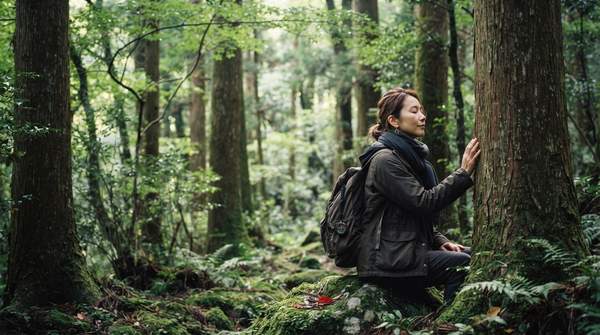
Shinrin-yoku, widely recognized as "forest bathing," is a practice that originated in Japan, encouraging individuals to immerse themselves mindfully in a forest environment. Far more than a simple walk, this intentional engagement with nature has become a subject of scientific inquiry, with research documenting its short-term physiological and psychological benefits, particularly for mental well-being and cardiovascular health.
Origins and Scientific Foundation of Shinrin-yoku
The concept of Shinrin-yoku, which translates to "taking in the forest atmosphere," emerged in Japan during the 1980s. It was initially promoted as a way to encourage people to connect with nature, offering a counterbalance to the stresses of modern life and fostering a sense of calm and rejuvenation. This practice quickly evolved from a cultural recommendation into a field of rigorous scientific investigation, leading to the establishment of "Forest Medicine" as a recognized area of study.
Researchers in Japan and across the globe have undertaken systematic reviews and original studies to explore the effects of Shinrin-yoku on human health. These scientific endeavors aim to understand precisely how exposure to forest environments influences various physiological and psychological markers. The Japanese Society of Forest Therapy, for instance, has been instrumental in advancing this research, seeking to validate the therapeutic potential of forest bathing and transition it from an intuitive practice to an evidence-backed approach for health promotion and disease prevention.
Physiological Benefits: Impact on Body Systems
Engaging in Shinrin-yoku has been linked to several short-term physiological improvements, particularly concerning cardiovascular and immune system functions. A study published in the International Journal of Environmental Research and Public Health, for example, noted that participants who practiced forest bathing exhibited lower blood pressure and heart rates when compared to those in urban settings. This suggests a direct positive impact on cardiovascular health.
Beyond cardiovascular effects, systematic reviews indicate broader physiological advantages. A review by Wen et al. concluded that forest bathing might remarkably improve various bodily functions, including cardiovascular and hemodynamic indexes, neuroendocrine and metabolic indexes, and immunity and inflammatory indexes. These findings suggest a comprehensive positive influence on the body's internal systems.
Furthermore, exposure to phytoncides—organic compounds emitted by trees—has been associated with enhanced immune function and decreased inflammation. While the precise biochemical mechanisms are complex, the overall reduction in stress levels achieved through forest bathing is also understood to contribute to improved autonomic and immune functions. These documented effects underscore the therapeutic potential of forest environments in supporting physical well-being.
Psychological Benefits: Enhancing Mental Well-being
The psychological advantages of Shinrin-yoku are equally compelling, with research highlighting its capacity to alleviate stress and improve mood. Studies have found that forest bathing can significantly enhance people's emotional state, attitude, and overall feelings, contributing to both physical and psychological recovery. This is particularly relevant for working-age individuals, who often experience high levels of fatigue and stress, identified as risk factors for depression.
A comparative study investigating the effects of forest bathing on working-age individuals, including those with depressive tendencies, demonstrated improvements in psychological health. The study observed an alleviation of negative psychological parameters after approximately two hours of forest bathing as part of a one-day outing in a forest environment. The systematic review by Wen et al. further supports these observations, noting an obvious alleviation of anxiety and depression, alongside an enhancement of adaptive behaviors.
These findings collectively suggest that the mindful immersion in nature inherent in Shinrin-yoku can serve as a valuable tool for managing stress, improving emotional regulation, and fostering a greater sense of mental calm and well-being. The practice encourages a focused attention that helps individuals detach from daily stressors and reconnect with their inner state.
Summary of Shinrin-yoku's Documented Benefits
Systematic reviews and original studies have identified several short-term physiological and psychological benefits associated with engaging in Shinrin-yoku. These benefits contribute to overall well-being, particularly for working-age individuals.
| Benefit Category | Specific Benefit | Finding | Qualification |
|---|---|---|---|
| Cardiovascular Health | Reduces blood pressure and heart rate. | Participants in forest environments exhibited lower blood pressure and heart rates compared to those in urban settings. | Documented in studies comparing forest and urban environments. |
| Immune Function | Improves autonomic and immune functions. | Exposure to forest environments may enhance immune function and reduce inflammation. | Potentially linked to phytoncide exposure and stress reduction. |
| Mental Well-being | Alleviates depressive tendencies and reduces stress levels. | Significant enhancement of emotional state, physical and psychological recovery, and alleviation of anxiety and depression. | Observed in working-age individuals and linked to forest environments. |
Practical Steps for Forest Bathing
Engaging in Shinrin-yoku is an intentional practice that goes beyond a casual stroll; it involves mindful immersion in nature. While specific programs can vary, general guidance emphasizes focusing on sensory experiences to maximize the benefits. Research suggests that a session of approximately two hours in a forest environment, as part of a one-day outing, can lead to improvements in physiological and psychological health for working-age individuals.
To practice Shinrin-yoku, begin by finding a natural setting, such as a forest, a wooded park, or any area with ample trees. It is advisable to leave behind distractions like phones, cameras, and other electronic devices to fully engage with the environment. The core principle is to slow down and activate all your senses deliberately.
Pay close attention to the sights around you: observe the varying shades of green, the patterns of sunlight filtering through leaves, and the textures of bark. Listen intently to the sounds of the forest—the rustling of leaves, the chirping of birds, the gentle flow of water. Inhale deeply, noticing the distinct scents of the forest air, the damp earth, and the trees. Feel the ground beneath your feet, the texture of leaves or moss, and the breeze on your skin. This mindful presence allows for a deeper connection with the natural environment, facilitating the documented physiological and psychological improvements.
Embracing Nature: A Path to Holistic Well-being
The scientific exploration of Shinrin-yoku consistently underscores the profound impact that natural environments can have on human health. By intentionally immersing ourselves in forests, we can tap into a practice that offers documented short-term physiological and psychological benefits, including reduced blood pressure, improved immune function, and the alleviation of anxiety and depression. These findings suggest that integrating forest bathing into one's routine can be a valuable strategy for enhancing overall well-being.
Consider integrating Shinrin-yoku into your routine to potentially improve mental and cardiovascular well-being. To assess its impact, monitor personal feelings of stress reduction, mood improvement, and overall sense of calm after engaging in the practice.