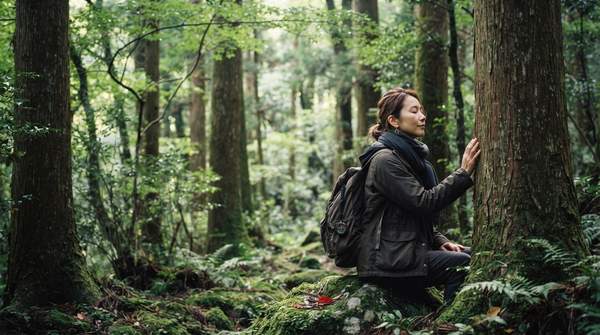
Children who spend time in green spaces show improved brain development, revealing a profound link between nature and human flourishing often overlooked in modern life. Natural environments offer opportunities for discovery, creativity, risk-taking, and mastery, all contributing positively to cognitive growth, according to PMC. This challenges conventional views prioritizing structured learning, underscoring nature's foundational role.
Modern society's focus on material gains, however, drives environmental degradation and a decline in human health. This detachment creates tension, but ancient wisdom combined with simple nature connection practices offers a powerful, accessible antidote.
Integrating ecospiritual principles into daily life appears to be a crucial, yet underutilized, strategy for fostering both individual well-being and planetary resilience. This approach, often termed ecospiritual wellness, connects human health with ecological health.
What is Ecospirituality?
Ecospirituality involves seeing the natural world as sacred, fostering a deep connection that benefits both personal health and the environment. It directly counters Western culture's materialistic focus, which often separates humans from nature. Practicing ecospirituality can involve deceptively simple actions, such as spending 10 minutes outside without a phone, as suggested by meditationsandwisdom. These engagements reveal ecospirituality as a practical framework for mindful living. Its accessible nature challenges the notion that complex health issues require equally complex solutions.
Nature's Healing Power
Direct nature exposure significantly improves human health across several metrics. It is associated with improved cognitive function, enhanced brain activity, lower blood pressure, better mental health, increased physical activity, and more restorative sleep, according to associations between nature exposure and health - pmc - nih. These findings confirm nature's profound health benefits.
Given PMC's evidence that green spaces profoundly influence children's brain development, societies that fail to prioritize accessible nature exposure for their youth are actively undermining the cognitive potential of future generations. This impact extends beyond childhood, with nature connection showing benefits for adult well-being.