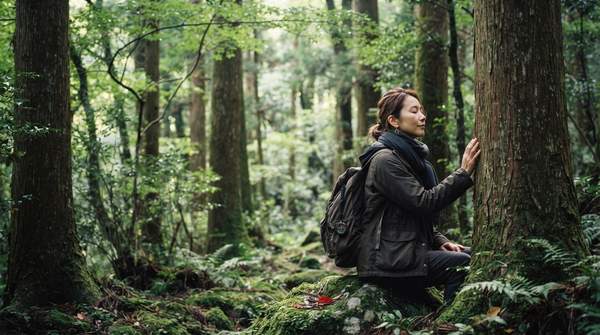
Exposure to natural environments provides measurable mental health benefits, from improving focus to lowering stress. A growing body of scientific evidence is no longer asking whether nature matters for our well-being, but precisely how it works. As one expert involved with the World Wildlife Fund noted, what was once theory is now a "pretty consistent body of evidence" showing that time in nature improves attention, mood, and overall well-being. The psychological benefits are explained by several key theories that detail how green spaces interact with our minds and bodies. These frameworks—the Biophilia Hypothesis, Attention Restoration Theory, and Stress Reduction Theory—provide a scientific basis for understanding why a walk in the park or a hike in the woods can feel so restorative.
The Innate Connection: Biophilia Hypothesis
One foundational idea explaining humanity's positive response to nature is the Biophilia Hypothesis. This theory, described by the American Psychological Association, argues that humans possess an innate drive to connect with the natural world. This tendency is not a modern preference but an evolutionary inheritance; our ancestors evolved in wild settings and depended entirely on the environment for their survival. This deep history has left us with an inherent affiliation for nature, which helps explain why we are so receptive to its calming and restorative effects. The hypothesis suggests a deep-seated, biological need for green spaces that persists in our urbanized world.
This framework provides the backdrop for the more specific mechanisms that translate nature exposure into tangible mental health outcomes. It posits that our positive reactions are not merely learned but are part of an ancient, ingrained connection. This drive to affiliate with nature underpins the psychological relief and cognitive boosts observed in numerous studies, framing them as the fulfillment of a fundamental human need. This perspective also helps explain why benefits can arise from a wide spectrum of interactions, from immersive wilderness experiences to simply having plants indoors or looking out a window at trees, as noted by the Canadian Psychological Association.
Restoring Focus: Attention Restoration Theory (ART)
Modern life, particularly in urban environments, constantly demands our "directed attention," a type of intense focus required for tasks like working, driving, and navigating busy streets. According to Attention Restoration Theory (ART), this sustained effort leads to mental fatigue. Natural environments offer a powerful remedy by providing a setting that is less cognitively demanding. A scientific review notes that spending time in nature allows people to overcome this mental fatigue and restore their capacity for directed attention.
The restorative process works because nature engages our attention effortlessly, a concept sometimes called "soft fascination," which allows the brain's more directed, focused functions to rest and recover. This cognitive replenishment has been linked to improved working memory, cognitive flexibility, and attentional control. Research cited by the American Psychological Association found that adults in public housing with more green space showed better attentional functioning. A 2024 study in Scientific Reports further found that individuals with more nature contact exhibited greater attentiveness, a benefit that appears to hold true regardless of a person's pre-existing connection to nature. This healing power is being recognized in practical settings; a report in Texas Parks & Wildlife Magazine notes that hospitals are increasingly incorporating gardens and green spaces to promote faster recovery.