If you're looking for the best cultural practices for mental well-being, this guide explores several approaches that have supported communities across the globe. As a journalist focused on the intersection of culture and wellness, I've often observed how our modern search for well-being leads us back to ancient traditions. This list is for anyone curious about holistic, time-tested methods for nurturing mental and emotional health. We will explore these practices by considering their emphasis on community, their approach to resilience, and their use of ritual.
This selection is based on an exploration of themes discussed in mental health and cultural studies, including the role of community connection and culturally-specific rituals for emotional processing.
1. Embracing Community and Social Connection — For building a foundational support system
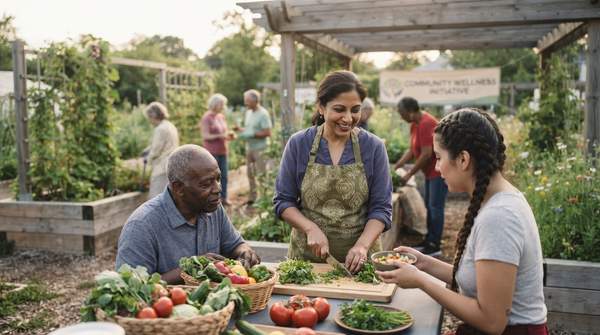
Perhaps the most universal cultural practice for well-being is the simple, profound act of embedding oneself in a community. So much of our modern wellness discourse focuses on the individual, on self-care and personal journeys. But what if we approached wellness as a collective endeavor? An exploration by Restoration Psychology discusses the role culture and community play in mental health, suggesting that our sense of belonging is not an accessory to well-being, but its very foundation. This practice is best for those who feel isolated by the hyper-individualism of contemporary life and seek a sense of shared identity and mutual support.
This approach ranks over more solitary practices because it addresses the fundamental human need for connection. It posits that our mental health is not just in our own hands, but in the hands of those we share our lives with. A limitation, however, is that for individuals who feel alienated from their culture of origin or live far from their community, actively building or finding a new one can be a significant and sometimes daunting challenge. It requires vulnerability and a willingness to both give and receive support, which can be difficult when one is already feeling low.
2. Participating in Rituals of Renewal — For navigating life's transitions
Cultures worldwide have long recognized the power of ritual to mark time, process change, and foster hope. Let's consider the cultural currents that shape our response to life's cycles of loss and rebirth. An article in Psychiatric Times highlights celebrations like Eid al-Fitr, Nowruz, and the Spring Equinox as powerful examples of celebrating renewal, even in difficult circumstances. These are not just parties; they are structured, communal acknowledgments that life continues, that light follows darkness. This practice is particularly potent for those navigating grief, major life changes, or periods of uncertainty, offering a framework for looking forward.
The strength of these rituals lies in their predictability and shared meaning, providing an anchor in turbulent times. Unlike more spontaneous forms of celebration, they connect the individual to a long lineage of ancestors who have performed the same actions. The main drawback is that their power is often tied to specific dates in the calendar. One cannot simply conjure the communal energy of Nowruz in the middle of autumn; its meaning is deeply intertwined with the turning of the seasons, which means its support is not always available on demand.
3. Engaging with Culturally-Grounded Healing — For a more holistic and specific approach
The modern, Western model of psychotherapy is just one of many ways to understand and heal the mind. Mental Health America provides information on the existence of various culturally-based practices that can support well-being. These can include traditional healers, talking circles, or healing rituals that are deeply woven into a community's spiritual and social fabric. This path is best for individuals who feel that mainstream mental health services do not fully see or address their cultural background, spiritual beliefs, or lived experiences.
These practices often excel where others fall short by offering a holistic view of health that integrates the mind, body, spirit, and community. They can provide a sense of validation and understanding that is profoundly healing. However, a significant limitation is accessibility. Finding a practitioner who is genuinely trained in these traditions can be difficult, and there is a risk of encountering diluted or commercialized versions that lack the depth and integrity of the original practice. Furthermore, they may not be equipped to handle all forms of acute mental health crises.
4. Fostering Narratives of Resilience — For processing trauma and finding strength
An editorial in Frontiers in Global Women's Health discusses concepts of post-traumatic growth and resiliency across different cultures, particularly concerning maternal trauma. It highlights how a culture's narrative around suffering and survival profoundly influences an individual's ability to cope, shaping whether an experience leads to lasting distress or becomes a source of strength. This cultural framework is invaluable for anyone working to overcome past trauma or adversity.
Its power lies in its ability to reframe personal struggle as part of a larger, often heroic, human story. It shifts the focus from victimhood to survival and growth. The limitation, as noted by the source's focus, is that much of the formal discussion is in specific contexts, like maternal health. Applying these ideas more broadly requires careful and sensitive adaptation, as a culture's narrative of resilience can sometimes inadvertently pressure individuals to suppress their pain or "be strong" before they are ready.
| Cultural Practice | Core Principle | Best For | Key Consideration |
|---|---|---|---|
| Community Connection | Shared Identity & Mutual Support | Those feeling isolated | Requires active effort to build or find a community |
| Rituals of Renewal | Marking Time & Fostering Hope | Navigating life transitions and grief | Often tied to specific calendar dates |
| Culturally-Grounded Healing | Holistic, Specific Care | Those seeking alternatives to mainstream therapy | Accessibility of authentic practitioners can be limited |
| Narratives of Resilience | Reframing Hardship & Growth | Processing trauma and adversity | Risk of cultural pressure to suppress pain |
How We Chose This List
This journalistic exploration delves into diverse cultural avenues for well-being, encompassing communal, individual, ritualistic, and narrative approaches. The selection prioritized practices and concepts discussed in sources exploring the intersection of culture and mental health, such as the importance of community noted by Restoration Psychology and the power of renewal rituals mentioned in Psychiatric Times. Purely medical or pharmacological practices were excluded to focus specifically on the cultural dimension of well-being, aiming to open a conversation and encourage gentle self-reflection on various paths to healing.
The Bottom Line
Well-being is not about finding a single, perfect practice, but about weaving together approaches that deeply resonate with individual lives and histories. For those seeking to mend a sense of isolation, exploring community connection offers a powerful first step, while those navigating change may find solace in rituals of renewal. Ultimately, the most influential cultural practice will be the one that allows you to feel seen, supported, and connected to something larger than yourself, fostering a profound sense of belonging.