Wellness

Beyond the App: Exploring the Cultural Roots and Historical Evolution of Mindfulness Practices

Mindfulness is more than a modern app; it's a practice with deep cultural roots and a rich historical evolution. This article explores its journey from ancient traditions to diverse global expressions, offering a nuanced understanding of presence.

YE
Yasmin El-Sayed

April 5, 2026 · 8 min read

An ancient temple in mountains overlaid with modern meditators, symbolizing mindfulness's journey from historical roots to contemporary global practice.

I often wonder, when I see a mindfulness app advertised on a city billboard, how many of us stop to consider the deep history behind that simple invitation to “just breathe.” A recent fieldwork study published in Frontiers in Psychology on May 20, 2025, prompts us to look deeper, exploring the rich cultural roots and historical evolution of mindfulness practices that stretch back millennia, far beyond their current incarnation as a digital wellness tool. This journey reveals a global tapestry of contemplative traditions, each with its own unique texture and hue, offering a more holistic and nuanced understanding of what it truly means to be present.

Mindfulness, widely embraced as an antidote to chronic stress and digital distraction in corporate wellness programs, schools, and therapy, has well-documented benefits. However, its modern, often-Westernized packaging obscures its profound origins. Tracing these practices back to their sources is not merely a historical exercise; it reconnects us with the diverse philosophical and cultural contexts that gave them meaning. This exploration reframes wellness not as a product, but as a conversation with centuries of human wisdom about the mind and a balanced life.

What Is Mindfulness?

Mindfulness is the basic human ability to be fully present, aware of where we are and what we’re doing, and not overly reactive or overwhelmed by what’s going on around us. At its core, it is a practice of paying attention to the present moment on purpose and without judgment. Imagine you are watching clouds drift across the sky. You notice their shape, their speed, and the way they change, but you don't try to control them or get upset by them. Mindfulness is like that, but with your own thoughts, feelings, and bodily sensations. It’s a state of gentle, observant awareness.

While often used interchangeably with meditation, the two are distinct. Meditation is the formal practice you might do for a set period—like sitting on a cushion for twenty minutes—to train your attention. Mindfulness is the quality of awareness that you cultivate during meditation, which you can then apply to any moment of your day, whether you are washing dishes, walking to work, or listening to a friend. The goal is not to empty the mind, but to become more familiar and at ease with its constant flow. It is less about escaping from life and more about arriving fully within it.

What Are the Earliest Known Origins of Mindfulness?

When we discuss the history of deep thought, Western scholarship has often traced the origins of philosophy, science, and rationality back to the ancient Greeks. We are taught to revere figures like Socrates and Plato as the foundational pillars of intellectual inquiry. However, this perspective overlooks a vast and ancient landscape of philosophical exploration that was thriving long before the Hellenic period. As research published by PMC highlights, thinkers from India, China, and other non-European regions were deeply engaged in debates about morality, existence, and the nature of consciousness for centuries.

The roots of what we now call mindfulness are embedded in these rich Eastern traditions. Ancient Hindu, Buddhist, and Jain philosophies developed incredibly sophisticated discourses on mental phenomena, epistemology, and the nature of suffering that pre-date many similar Western concepts. The practice of focused attention and present-moment awareness was not merely a tool for relaxation but a central component of a path toward spiritual insight and liberation. For instance, the Vedic texts of Hinduism, some of which are thousands of years old, describe various forms of meditation (Dhyana) as a means of understanding the self and its connection to the universe. It was within this pre-existing Hindu culture that Buddhism arose; Siddhartha Gautama, the man who would become the Buddha, was himself born into a Hindu family, and his teachings built upon and responded to the contemplative practices of his time.

Mindfulness is not a monolithic concept but a stream fed by many rivers. The Buddhist tradition, particularly through Sati (mindfulness) and Vipassana (insight), articulated and refined these practices with exceptional clarity. However, their full depth emerges when seen as part of a broader, ongoing human inquiry into the inner world—conducted across continents and cultures for millennia—challenging the notion that profound philosophical thought began in any single part of the world.

How Did Mindfulness Evolve Outside Western Adaptations?

Long before mindfulness arrived in the West, its journey was a story of continuous adaptation and cultural expression. S. N. Goenka, born in Burma to an Indian family, became one of the most influential figures in its modern global spread, popularizing vipassana (insight) meditation worldwide. Shaped by his Hindu householder values and interest in Vedic philosophy, Goenka intentionally presented vipassana as a non-sectarian, universal "science of mind and matter." This approach resonated with diverse backgrounds, independent of Buddhist religious doctrine. According to Lion's Roar, his organization now operates nearly two hundred full-time meditation centers in at least thirty-five countries.

Goenka's approach represents just one path of transmission. Countless other cultural practices worldwide embody the spirit of mindfulness, often without using the same name, showcasing unique expressions.

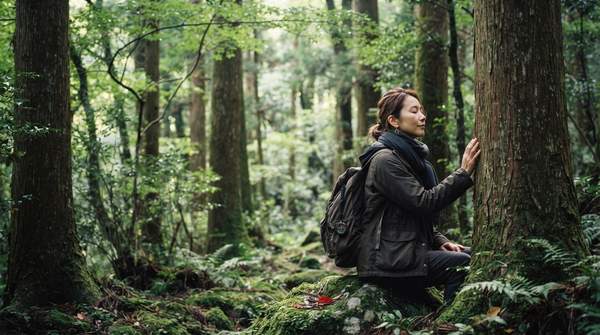
  • Shinrin-Yoku (Japan): The practice of shinrin-yoku, or "forest bathing," was developed in Japan during the 1980s. It was created as a direct response to modern stress and technology, encouraging people to immerse themselves in nature using all five senses. It isn't about hiking or exercise, but about mindfully connecting with the forest environment—the scent of the earth, the sound of leaves, the feeling of sunlight filtering through the canopy.
  • Keyif (Turkey): In Turkish culture, keyif is the art of quiet, idle relaxation and savoring the moment. It’s the feeling of sitting on a porch with a cup of tea, with no agenda and no goal other than to be peacefully present. It is a state of conscious, tranquil enjoyment, a form of mindfulness woven into the fabric of daily life.
  • Friluftsliv (Norway): The Norwegian concept of friluftsliv translates to "free air life" and describes a deep cultural commitment to spending time outdoors. More than just a hobby, it is a philosophy of appreciating and connecting with nature as an essential part of well-being, fostering a sense of presence and perspective.
  • Metta Meditation (Tibet): While rooted in Buddhist tradition, Metta, or loving-kindness meditation, offers a distinct flavor of mindfulness. This Tibetan practice focuses on actively cultivating feelings of benevolence and goodwill toward oneself and all other beings. It is a mindfulness of the heart, expanding awareness to include our shared capacity for compassion.

The fundamental human need for presence and connection has found unique homes in different cultural soils, demonstrating that the cultural roots and historical evolution of mindfulness practices are not a single, linear story. Instead, they form a rich, branching tree, with each limb offering a different perspective on living a more aware and meaningful life.

Why This Matters

Approaching mindfulness solely through a Western, stress-reduction model risks reducing a deep philosophical tradition to a mere life hack and constitutes cultural appropriation, taking the technique while leaving its rich context—ethics, wisdom, and community—behind. Understanding the global heritage of mindfulness is thus more than an academic pursuit; it profoundly impacts our well-being, enriching our own practice through respect and appreciation for its origins.

Furthermore, recognizing this diversity provides us with a broader and more flexible toolkit for mental and emotional health. The popular seated, silent meditation style may not resonate with everyone. Perhaps your path to presence lies not on a cushion but on a forest trail, practicing shinrin-yoku. Maybe your moment of peace is found not in silent observation but in the quiet, contented state of keyif. When we look beyond the mainstream, we discover a world of possibilities that can be adapted to our own temperaments, lifestyles, and cultural backgrounds. It invites us to ask: What if we approached wellness not as a rigid prescription, but as a creative exploration of these timeless human traditions?

Frequently Asked Questions

What is the difference between mindfulness and meditation?

Meditation is the formal act of training your attention, often done for a specific duration in a quiet setting. It's like going to the gym for your mind. Mindfulness is the quality of awareness that you cultivate during meditation, which you can then apply to any moment of your daily life. It is the state of being present and aware, whether you are meditating or not.

Are mindfulness practices always religious?

No, they are not. While many mindfulness techniques originated within religious and spiritual frameworks like Buddhism and Hinduism, the core practice of paying attention to the present moment is a universal human capacity. Modern secular adaptations, such as those taught by S. N. Goenka or used in Mindfulness-Based Stress Reduction (MBSR), intentionally remove religious dogma to make the practices accessible to everyone, regardless of their beliefs.

Where did the modern mindfulness movement in the West come from?

The modern Western mindfulness movement is largely rooted in Buddhist traditions, brought to the United States and Europe by influential teachers throughout the 20th century. Figures like S. N. Goenka were instrumental in introducing vipassana meditation to a Western audience. Subsequently, scientists and clinicians like Jon Kabat-Zinn adapted these ancient practices into secular, evidence-based therapeutic programs, such as MBSR. These programs are firmly based in Indian philosophy but are framed within a scientific context for health and well-being.

The Bottom Line

Mindfulness is not a new Western trend or simple technique, but a global human heritage: a collection of profound wisdom traditions that have explored the mind's inner workings for thousands of years. By understanding and respecting its diverse cultural roots, we can engage with the practice more deeply and authentically. I encourage you to look beyond popular apps to find a path to presence that truly speaks to you, connecting with a tradition both timeless and deeply personal.

More from Wellness

A diverse community, young and old, engaged in shared activities, with subtle golden lines connecting them, symbolizing cultural resilience and collective healing.

What Is Cultural Resilience and How Does It Foster Societal Well-being?

I once watched a documentary about Kintsugi, the Japanese art of repairing broken pottery with lacquer dusted or mixed with powdered gold. What if the fractures our communities endure are not just points of weakness, but opportunities to mend ourselves with the gold of our shared heritage, creating something stronger?

Yasmin El-Sayed· Apr 4
A person meditating peacefully with headphones, surrounded by visual representations of calming sound waves and soft natural light, symbolizing the profound impact of soundscapes on mental well-being.

What Is the Cultural Impact of Soundscapes and Ambient Music on Mental Well-being?

The cultural impact of soundscapes and ambient music on mental well-being is a subject of growing interest, suggesting the acoustic environments we inhabit can profoundly shape our inner state. This article explores how sound can cultivate peace and presence in daily life.

Yasmin El-Sayed· Apr 4
A person enjoying a peaceful moment in nature, free from digital devices, symbolizing mental clarity and the benefits of a digital detox for well-being.

What Is a Digital Detox and How Does It Affect Mental Health?

A digital detox is an intentional break from electronic devices, designed to recalibrate your mental and emotional states. This practice can significantly improve mental health, attention span, and overall well-being by fostering a more conscious relationship with technology.

Yasmin El-Sayed· Apr 3
A visually harmonious image blending traditional healing elements like herbal remedies and ancient symbols with modern wellness tools such as a yoga mat and digital health device, set in a serene, naturally lit environment.

Integrating Traditional Healing Practices into Modern Wellness: A Global Perspective

The global movement toward integrating traditional healing practices into modern wellness routines is gaining momentum. This article explores how ancient wisdom, from Ayurveda to Indigenous traditions, is enriching modern health approaches for a more holistic and personalized path to well-being.

Yasmin El-Sayed· Apr 3