Today, a listener is more likely to identify as a 'Billie Eilish fan' than a 'pop music enthusiast,' a stark indicator that traditional genre labels are becoming obsolete within the emerging music genres 2026 global soundscape. This shift extends beyond individual artists, marking a broader change in how audiences categorize their musical preferences. For most listeners, music genre has become almost irrelevant in the streaming era, according to BBC.
Traditional music genres are losing relevance for most listeners, but new, highly specific musical identities are rapidly forming around individual artists and technologically-driven fusions. This creates tension between established industry structures and evolving listener behaviors. The music industry faces a challenge in categorizing and marketing sounds that defy conventional boundaries. For more, see our How Global Music Fusion Genres.
Based on the increasing irrelevance of broad genre categories and the rise of artist-centric and hybrid sounds, the future of music appears likely to be defined by hyper-personalization and continuous sonic evolution rather than fixed classifications. This fundamental shift signals a move away from rigid classifications towards a more fluid understanding of music, where an artist's unique sound becomes their primary identifier.
The current music landscape highlights a significant trend: listeners increasingly class themselves not as fans of a broad genre, but of a single act, forming micro-genres around artist fandom, according to BBC. This personalization of music consumption empowers artists to define their own sonic worlds, fostering unique fan communities. The shift places the burden of identity directly on the artists, making them central to defining new musical territories.
1. Hybrid Genres / Cross-genre Collaborations
Best for: Artists seeking diverse sonic palettes.
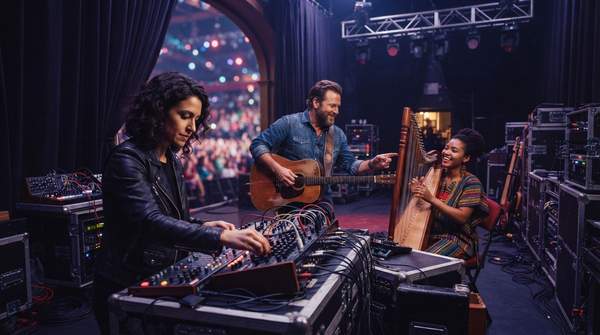
This trend is confirmed as a 'significant trend in the global music landscape,' shaping modern playlists in 2026, according to Soundverse. These collaborations reflect younger audiences’ demand for emotional depth within rhythmic frameworks, according to Soundverse. They are characterized by greater fusion and innovation, as noted by Illustrate Magazine.
Strengths: Offers broad appeal across demographics; fosters rapid sonic evolution. | Limitations: Can lack a cohesive identity if poorly executed; challenges traditional genre marketing.
2. AI-assisted Production
Best for: Producers and composers exploring new creative avenues.
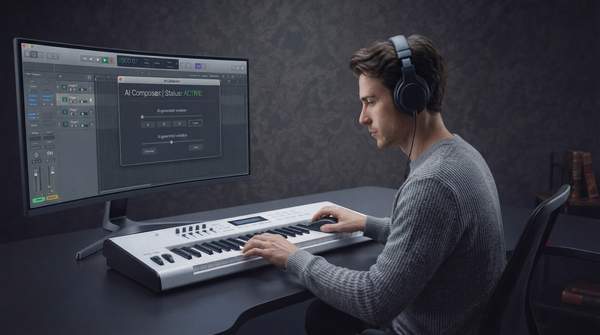
AI-assisted production is an emerging trend in music, with systems likely to become more sophisticated by 2026. It serves as a powerful tool for composers and producers, according to Illustrate Magazine, and is among the latest music trends, according to Elements.
Strengths: Accelerates creative workflows; generates novel soundscapes. | Limitations: Raises questions about artistic originality; requires technical proficiency.
3. Global Bass
Best for: Listeners seeking vibrant, rhythm-driven international sounds.
Global Bass blends electronic dance beats with Afrobeat grooves, Latin rhythms, and Asian melodies, according to Soundraw. This genre exemplifies the cross-cultural pollination driving new music forms.
Strengths: High energy and danceability; promotes global cultural exchange. | Limitations: Niche appeal outside specific regions; production can be complex.
4. Hybrid Pop (Afrobeats, Reggaeton, Electronic)
Best for: Mainstream audiences open to international chart-topping fusions.
This pop variant combines Afrobeats, Reggaeton, and electronic influences, shaping modern playlists in 2026, according to Soundverse. It represents a commercial success story in genre blending.
Strengths: Broad commercial appeal; introduces diverse rhythms to wider audiences. | Limitations: Risks dilution of core genre identities; can be over-produced.
5. Hyperpop Fusion
Best for: Experimental listeners drawn to aggressive, boundary-pushing sounds.
Hyperpop is blending with hip-hop, R&B, punk, and metal in 2026, according to Soundraw. This aggressive fusion pushes stylistic boundaries and challenges conventional listening.
Strengths: Highly innovative and experimental; attracts a dedicated, passionate fanbase. | Limitations: Can be polarizing for mainstream listeners; rapid evolution makes categorization difficult.
6. Post-genre Fusion
Best for: Audiences appreciating sophisticated, eclectic musical narratives.
Post-genre Fusion draws inspiration from jazz, classical, rock, and folk, according to Soundraw. This approach prioritizes artistic expression over adherence to established categories.
Strengths: Offers rich, complex musical experiences; appeals to discerning listeners. | Limitations: Can be perceived as inaccessible; harder to market through traditional channels.
7. Multilingual Rap
Best for: Global hip-hop fans interested in linguistic and cultural diversity.
Multilingual Rap, especially Spanish and French styles, has made the genre one of the world’s most innovative musical movements, according to Soundverse. It showcases linguistic diversity as a creative force.
Strengths: Expands global reach of rap; fosters cultural understanding through music. | Limitations: Language barriers can limit audience engagement; requires specific market knowledge.
8. Hybrid Futures: Culture Meets Code in the Global Soundscape
The music genres of the future will likely be characterized by greater fusion and innovation, driven by cultural exchange and technological advancements, according to Illustrate Magazine. This convergence of global influences and cutting-edge technology will inevitably lead to an explosion of novel, boundary-blurring musical forms. This convergence challenges the very idea of static genre boundaries, pushing music into a constant state of flux.
| Feature | Hybrid Genres / Cross-genre Collaborations | AI-assisted Production | Global Bass | Hybrid Pop (Afrobeats, Reggaeton, Electronic) |
|---|---|---|---|---|
| Innovation Driver | Artist-led fusion, cultural exchange | Algorithmic creativity, technological advancement | Cross-cultural rhythmic synthesis | Commercial appeal, mainstream adaptation |
| Primary Influence | Diverse styles, global collaborations | Data analysis, machine learning | African, Latin, Asian rhythms, electronic | Afrobeats, Reggaeton, Electronic dance |
| Audience Engagement | Niche discovery, deep fan communities | Experimental listeners, tech enthusiasts | Dance-oriented, global festival goers | Broad, chart-focused, younger demographics |
| Industry Challenge | Marketing complexity, categorization | Originality concerns, ethical debates | Regional market penetration | Genre dilution, authenticity debates |
9. Navigating the New Sonic Landscape of Emerging Music Genres
The dissolution of traditional genre labels requires both artists and listeners to adapt their approaches to music. For artists, cultivating a unique, artist-specific sonic identity is no longer an option but a requirement for success. Marketing strategies that rely on broad genre targeting are fundamentally flawed, based on BBC's observation that traditional genres are irrelevant and listeners form micro-genres around artists. Success now hinges on cultivating a unique, artist-specific sonic identity that transcends conventional categories.
Listeners, too, must evolve beyond genre-based discovery. Personalized playlists and algorithmic recommendations, which often blend diverse sounds, become primary avenues for finding new music. Understanding these shifts is crucial for both artists seeking to connect with audiences and listeners looking to discover new sounds. The shift necessitates new discovery algorithms that prioritize sonic characteristics and artist identity over traditional genre tags, directly impacting how streaming platforms function.
10. The End of Genre, The Dawn of Personalized Soundscapes
The streaming era has irrevocably fractured traditional music genres, forcing artists to cultivate hyper-specific, individualistic sonic identities to capture and retain listener attention. This move away from broad genre appeal signals a profound transformation in music consumption and creation. The traditional concept of genre is not dying, but evolving into something more dynamic, personal, and technologically integrated.
Artists who fail to embrace constant innovation and cross-pollination of sounds risk becoming irrelevant in a landscape where their personal brand is their primary genre. This is a critical takeaway from Illustrate Magazine's prediction of future genres characterized by fusion, coupled with the BBC's insight into artist-centric micro-genres. This evolution transforms music entirely, from its creation to its consumption, making every artist a potential genre creator. By Q4 2026, music streaming platforms will likely further invest in AI-driven personalization.driven tools that analyze granular sonic attributes, moving beyond conventional genre tags to categorize and recommend music.
11. Your Questions About Emerging Music Genres Answered
What are the most popular new music genres in 2026?
While broad genre popularity is declining, highly specific sounds like Afrofuturist Music and PluggnB are gaining traction. Afrofuturist Music blends traditional African instrumentation with electronic-based production, according to Epidemic Sound. PluggnB, a nanogenre combining plugg and '90s R&B, has been embraced by artists like Lil Uzi Vert, also according to Epidemic Sound.
How are emerging music genres changing the industry?
Emerging genres are shifting revenue models from album sales to streaming royalties and direct artist-to-fan engagement. This forces labels to invest in artist development that fosters unique sonic identities rather than fitting artists into existing genre molds. It also encourages more agile marketing strategies focused on individual artist brands.
What is the future of music genres?
The future of music genres points towards a fluid, ever-evolving system where 'genre' becomes a descriptor of an artist's unique sonic fingerprint rather than a fixed category. This will likely lead to an increase in cross-cultural collaborations and technologically experimental sounds. Expect genre boundaries to blur further, with listeners driving demand for personalized and innovative musical experiences.