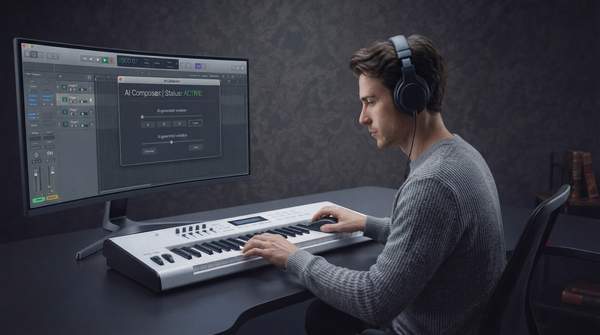
For independent musicians, artificial intelligence presents both a powerful creative partner and a complex web of ethical and legal challenges. Choosing the right AI tool requires more than just testing features; it demands a structured evaluation to ensure the technology aligns with your artistic identity, business goals, and ethical principles. By assessing potential tools against a clear set of criteria, artists can harness AI to enhance their work without compromising their rights or creative vision.
A practical approach involves examining any AI platform through four distinct lenses: its impact on your creative process, the implications for intellectual property, the ethics of its training data, and its potential role in your monetization strategy. This method allows you to move beyond the hype and make an informed decision that protects your work and supports a sustainable career in a rapidly changing industry.
AI Music Tool Decision Framework
To navigate the growing market of AI music technologies, independent artists can use a decision framework to systematically assess a tool's suitability. This framework is not an endorsement of any specific product but a guide for critical evaluation. The strongest creative workflows, as outlined by Coursiv, protect artist consent, label synthetic elements where appropriate, and treat AI-generated material as an input for human craft rather than a substitute for authorship. By asking targeted questions across four key areas, you can determine if a tool is a strategic asset or a potential liability.
Creative Control & Workflow Integration
The first step is to evaluate how an AI tool will integrate into your existing creative process. For many independent artists, AI offers a way to overcome technical knowledge gaps or the financial and time constraints of traditional studio sessions. According to an article from Sonarworks, these limitations can stifle the experimentation necessary for developing a unique artistic identity. The right tool should act as a collaborator that streamlines production, not a director that dictates creative choices. A practical approach, suggested by an analysis on Chartlex, is to use AI to eliminate bottlenecks in tasks like editing and mastering, freeing up valuable time for core activities like songwriting and performance.
Ask these questions:
- Does this tool automate tedious tasks, or does it encroach on core creative decisions?
- Will it help me overcome specific technical or resource limitations I currently face?
- Can I easily integrate the tool's output into my existing digital audio workstation (DAW) and workflow?
- Does the tool enhance my ability to experiment and develop my unique sound?
Intellectual Property & Ownership
The legal landscape surrounding AI and music is still developing. A 2023 paper in Transactions of the International Society for Music Information Retrieval notes that the future of AI platforms and regulatory frameworks remains "unstable and uncertain," making it crucial for artists to scrutinize the terms of service for any tool they consider. The central question is who owns the music created with AI assistance. Some platforms may claim ownership or co-ownership of the output, while others may grant you full rights. Understanding these distinctions is vital for protecting your ability to license, distribute, and profit from your work.
Ask these questions:
- Who owns the copyright to the music I create using this tool?
- Are there any restrictions on how I can use, distribute, or monetize the output?
- Does the platform offer any protection or indemnification if the AI output unintentionally infringes on an existing artist's work?
- What are the platform's policies regarding the use of my input data?
Ethical Sourcing & Training Data
An AI model is only as good—and as ethical—as the data it was trained on. Growing concerns in the music industry center on whether AI tools are built using copyrighted material without the original creators' consent, attribution, or compensation. According to an article from Soundverse, an ethically compliant ecosystem requires that AI never operates in isolation from human value. This means prioritizing platforms that are transparent about their data sources and are committed to fair practices. As the platform notes, this shift has encouraged "collaborations between independent artists and ethical AI platforms" that merge technology and human creativity without violating artistic integrity.
Ask these questions:
- Is the platform transparent about the data used to train its AI models?
- Does the company have a clear policy on obtaining consent from artists whose work is in the training data?
- Does the platform provide a mechanism for attribution or compensation to the original creators?
- Does the company engage with or listen to the concerns of the independent artist community?
Monetization & Revenue Models
Finally, consider how an AI tool can support or hinder your ability to earn a living from your music. Some ethical AI platforms are developing new revenue models, such as partner programs that provide artists with usage-based royalties when their work is used for AI training or generation. Soundverse describes this as a "recurring revenue model" that offers a sustainable alternative to simple exposure. Beyond direct compensation from the platform, AI can also be a powerful tool for marketing and fan engagement. An analysis on Chartlex highlights that a key benefit is repurposing content; a single recording session can be used to generate a week's worth of short-form promotional assets, maximizing your reach with minimal manual effort.
Ask these questions:
- Does this tool offer a direct path to monetization, such as royalty sharing or licensing opportunities?
- Can I use this tool to create assets that support my broader business strategy (e.g., social media content, promotional materials)?
- Are there subscription costs or usage fees that might outweigh the potential financial benefits?
- Does the platform's business model seem sustainable and fair to independent artists?
Making Informed Choices in the AI Music Era
For independent musicians, the strategic adoption of AI is not about replacing human creativity but augmenting it. The most effective path forward is to proactively evaluate tools using a structured approach that balances creative potential with legal, ethical, and financial realities. By prioritizing platforms that offer clear intellectual property rights, are built on ethically sourced data, and provide viable pathways to monetization, artists can use AI to their advantage.
Ultimately, the decision to use an AI tool rests on its alignment with your personal and professional values. A tangible way to assess this is to carefully review the terms of service and ethical guidelines of any platform you consider. Artists can monitor these documents for explicit statements on consent, attribution, and recurring compensation models, ensuring the technology they adopt supports a fair and sustainable music ecosystem for all creators.