For emerging musicians, artificial intelligence presents a double-edged sword. On one side, it offers powerful new ways to create, produce, and market music. On the other, it introduces profound risks to artistic identity, copyright, and the ability to stand out in an increasingly crowded field. Navigating this landscape requires a clear understanding of the trade-offs, distinguishing between AI as a collaborative partner and a force that could devalue human craft. By strategically evaluating these tools, artists can harness their benefits while mitigating the potential downsides.
Understanding AI Tools: Creative Assistants vs. Administrative Aids
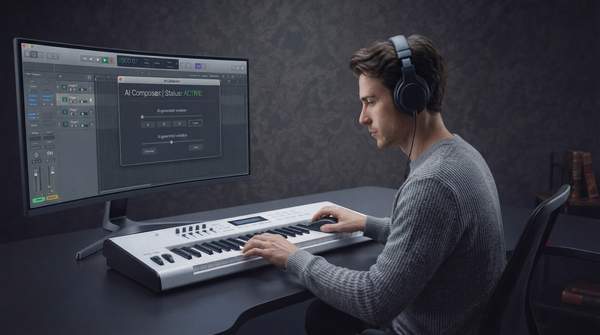
Not all AI tools serve the same purpose. For musicians, they generally fall into two broad categories. The first is creative assistants, which directly participate in the music-making process. These include generative AI systems that can produce new musical ideas, loops, and variations, as well as tools that assist with technical tasks like audio mastering. The second category consists of administrative and analytical aids. These tools operate on the business side of music, using predictive models to forecast which song structures or lyrical themes might resonate with specific audiences or helping with administrative operations, as noted in a policy paper from UK Music.
The Creative Process: Catalyst or Shortcut?
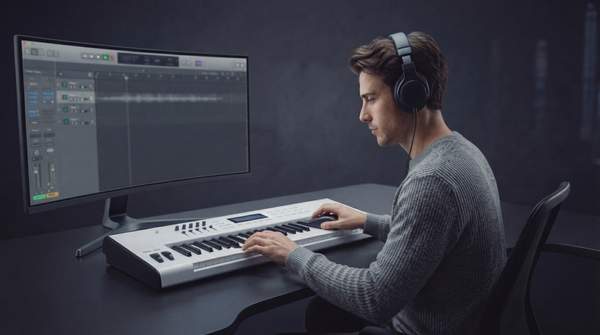
One of the most significant benefits of AI in music production is its ability to accelerate the creative process. According to the Musicians Institute, AI software can analyze vast amounts of data to generate new musical concepts in seconds, helping artists overcome creative blocks and focus on refining their work. This positions AI as a potential creative catalyst. However, there is a crucial distinction to be made between using AI to spark ideas and using it as a shortcut that raises what one academic paper calls "legitimate questions of artistic authenticity." The challenge for musicians is to integrate these tools in a way that enhances their unique vision rather than replacing it with formulaic outputs.
Market and Distribution: New Opportunities, Increased Competition
AI offers sophisticated methods for understanding and reaching listeners. Predictive models can analyze data to help artists tailor their music to audience preferences, potentially increasing their chances of success. But this technological advantage is accompanied by a significant market challenge. As AI-generated music becomes more prevalent, emerging artists must compete not only with their human peers but also with a potentially endless stream of machine-created content. This influx threatens to oversaturate the market, making it harder for unique, human-made music to gain traction and for artists to rise to fame, a concern highlighted in analysis from Scholastic at the University of Notre Dame.
Artistic Identity: Enhancement vs. Impersonation
While AI can be a tool to enhance an artist's existing skills, it also poses a direct threat to their most valuable asset: their identity. The rise of unauthorized voice cloning is a primary concern. A prominent example involved a fake duet between AI-generated versions of Drake and The Weeknd, which raised serious questions about personality rights. While there is limited legal precedent specifically for voice cloning, a piece from Berklee Online suggests it could fall under a celebrity's right to publicity, which protects their name and likeness. This technology creates a scenario where an artist's voice and style can be replicated without their consent, undermining their unique brand and creative ownership.
The Ethical and Legal Landscape: Copyright and Personality Rights
The legal and ethical frameworks governing AI in music are still largely uncharted territory, creating uncertainty for artists. Key questions about copyright and authorship for AI-assisted or AI-generated works remain unresolved. In response, industry bodies are beginning to advocate for clear principles. UK Music, for instance, has proposed that human creativity should be a prerequisite for copyright protection. The organization also calls for the creation of a new personality right specifically to protect the image and identity of songwriters and artists from unauthorized AI replication, signaling a push to establish legal safeguards in a rapidly evolving technological environment.
AI Trade-Offs for Emerging Musicians: A Decision Framework
To make informed choices, musicians can weigh the potential benefits of AI against its inherent risks. This framework categorizes the primary trade-offs across different aspects of a music career.
| Area of Impact | Opportunity | Risk |
|---|---|---|
| Creative Process | AI can act as a creative catalyst, generating new ideas and variations to overcome blocks and accelerate workflow. | Over-reliance on AI can become a shortcut that diminishes artistic originality and authenticity. |
| Market & Distribution | Predictive models can analyze data to forecast audience resonance, helping to optimize song structures and lyrical themes for better engagement. | The proliferation of AI-generated music increases competition and risks market saturation, making it harder for human artists to stand out. |
| Artistic Identity | AI tools can be used to enhance an artist's existing skills and expand their sonic palette without replacing their core creative voice. | Unauthorized voice cloning and style impersonation pose a significant threat to an artist's unique identity and personality rights. |
| Legal & Ethical | Industry groups like UK Music are advocating for principles that center human creativity for copyright and establish new personality rights. | The legal landscape for copyright and authorship of AI-assisted music is largely unresolved, creating uncertainty for artists. |
Navigating the AI Landscape: Your Next Steps
Emerging musicians should strategically integrate AI tools that enhance their unique creative process and business operations, while actively monitoring and advocating for clear legal and ethical guidelines to protect their artistic identity. The goal is not to avoid AI entirely but to approach it with a critical eye, selecting applications that serve as a collaborator rather than a replacement. By focusing on tools that augment their skills and help them connect with audiences, artists can navigate the complexities of this new era. The observable signal will be the artist's ability to articulate specific AI tools they plan to adopt or avoid, along with their rationale based on the trade-offs discussed, and their engagement with industry discussions on AI ethics and copyright.
Sources
- Music Industry 5 Key Principles on Artificial Intelligence — UK Music
- The Impact of Artificial Intelligence on the Music Industry — Musicians Institute
- Challenges for Musical Educationin the Age of AI and Digital Transformation — ARXIV
- AI’s Next Target: Up and Coming Musicians // Scholastic // University of Notre Dame
- AI Music: What Musicians Need to Know — Berklee Online Take Note