Wellness

What Is the Slow Living Cultural Movement?

In a world that often equates speed with success, the slow living movement offers a radical alternative. It's a philosophy rooted in mindfulness and intentionality, inviting us to reclaim meaning and well-being by consciously slowing down.

YE
Yasmin El-Sayed

April 8, 2026 · 8 min read

A person calmly sips tea while gazing out a sunlit window, surrounded by lush indoor plants, embodying the peaceful and intentional lifestyle of the slow living movement.

Have you ever reached the end of a day, or even a week, and felt a disquieting sense of blur? It’s a feeling I’ve come to know well, a sensation that time is not so much passing as it is accelerating away from me, a stream of notifications, deadlines, and obligations pulling me forward. In our modern world, speed is often synonymous with success. But what if the most radical act of self-care is not to speed up, but to consciously slow down? This question is at the heart of a quiet but profound cultural current, and today we are exploring the slow living cultural movement, its origins, and its core principles as a potential antidote to our collective burnout.

The conversation around slow living feels more urgent than ever. In a society that lionizes hustle culture and perpetual productivity, many of us are finding ourselves adrift, disconnected from our work, our communities, and even ourselves. This isn't a new phenomenon, but the search for an alternative has gained significant momentum. Slow living proposes a different path. It suggests that by intentionally moderating our pace, we can reclaim a sense of meaning, presence, and well-being. It is a gentle rebellion against the notion that a full life must be a fast one, inviting us to reconsider our relationship with time itself.

What Is Slow Living?

Slow living is a lifestyle and mindset rooted in mindfulness and intentionality, encouraging a more deliberate and meaningful pace of life. It’s not about doing everything at a snail's pace. Rather, it’s about finding the right speed—what author Carl Honoré, in his book "In Praise of Slowness," calls “tempo giusto.” Think of it as the difference between driving on a frantic, multi-lane highway and choosing a scenic, winding country road. Both routes may lead to a destination, but the latter allows for awareness, appreciation of the journey, and the space to truly experience the world around you. The art lies not in escaping modern life, but in engaging with it more consciously.

This philosophy is a direct counter-narrative to the idea that being busy equates to being important. It challenges us to curate our lives with intention, focusing on what truly matters and aligning our daily actions with our personal values. According to an article in Fortune, slow living isn't about rejecting ambition or modern conveniences; it's about aligning one's pace with its true purpose. To better understand the concept, it can be helpful to clarify what it is not. Slow living is not about:

  • Laziness or Inefficiency: It is about being deliberate and effective, focusing on one task at a time (single-tasking) to produce higher-quality work and reduce stress.
  • A Specific Aesthetic: While often associated with rustic, minimalist imagery on social media, slow living is an internal mindset, not an external look. It can be practiced in a bustling city apartment as effectively as a countryside cottage.
  • Anti-Technology: The goal is not to abandon technology but to control it. It means using tools with intention—for connection, creation, or information—rather than allowing them to dictate the rhythm of your day.
  • Perfection: As noted by the online resource The Slow Year, it is not about curating a perfect or hyper-ethical lifestyle, but about choosing one's own pace and way of being in the world.

What Are the Origins of the Slow Living Movement?

To understand the philosophy, we must travel back to its roots, which are surprisingly specific and centered around a universal pleasure: food. The slow movement originated in Italy in the late 1980s, born from a protest against the opening of a McDonald's near the historic Piazza di Spagna, or Spanish Steps, in Rome. This was more than a complaint about a new restaurant; it was a symbolic stand against the rising tide of "fast life" and the homogenization of global culture. The golden arches at the foot of a treasured cultural landmark represented an encroachment of speed and standardization on a way of life that valued tradition, craft, and leisurely enjoyment.

At the forefront of this protest was Italian journalist Carlo Petrini. A few years after the demonstration, which is widely reported to have taken place in 1986, Petrini formally founded the international Slow Food movement. His goal was to defend regional traditions, gastronomic pleasure, and a slow pace of life. He championed the idea that we should have the "right to determine our own tempos." This was a powerful declaration of autonomy in an increasingly fast-paced world. The philosophy was simple yet profound: protecting local food cultures was a way of protecting a more human-centered way of living.

What began with food soon blossomed into a much broader cultural philosophy. The principles of Slow Food—valuing quality over quantity, appreciating the source of things, and taking time for enjoyment—were clearly applicable to other areas of life. The term "slow movement" itself was popularized by Carl Honoré in his 2004 book, In Praise of Slowness: Challenging the Cult of Speed. According to the online resource Sloww, Honoré's work helped articulate how this ethos could extend into every facet of our existence. Today, the slow movement encompasses a vast range of applications, including slow fashion, slow travel, slow parenting, and even slow money, each one adapting the core tenets to its specific domain.

What Are the Core Principles of Slow Living?

While the slow living movement has diversified, its essence can be distilled into a few core principles that guide the practice. These are not rigid rules but rather gentle invitations to shift one's perspective and daily habits. Let's consider the cultural currents that shape this approach to well-being.

The first principle is Intentionality. This is the conscious act of choosing how to spend your time, energy, and attention. Instead of reacting to the endless stream of external demands, slow living encourages a proactive approach. It asks us to pause and question our motivations. Why am I doing this? Does this activity align with my values? Does it bring me joy or a sense of purpose? This curation of one's life is about making space for things that matter and letting go of the obligations that serve only to fill a calendar.

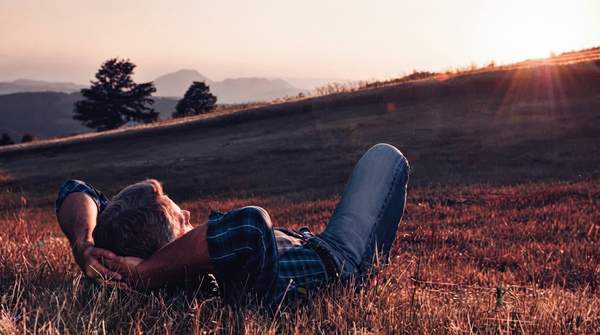
A second, related principle is Presence and Mindfulness. In a world of constant distraction, being fully present in the moment is a rare and valuable state. Slow living emphasizes single-tasking over the myth of multitasking. It means savoring a meal without a screen, listening to a friend without mentally drafting a to-do list, and engaging deeply with the task at hand. This heightened awareness fosters a richer experience of life and, as *Fortune* reports, has a significant positive impact on mental and emotional well-being by reducing the anxiety that comes from a perpetually fractured focus.

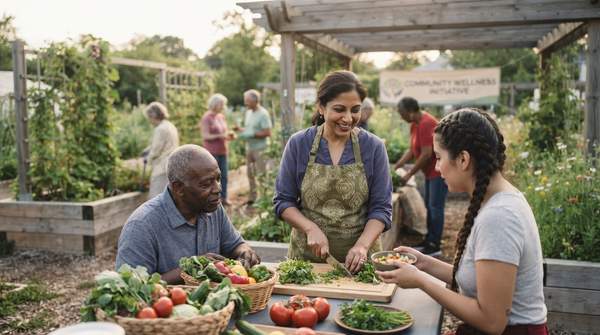
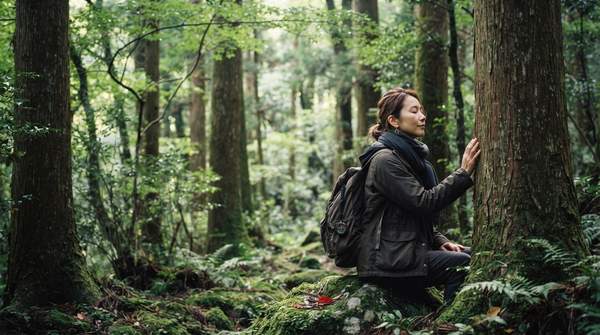
Finally, slow living champions Connection. The relentless pace of modern life can often lead to a profound sense of isolation. By slowing down, we create the necessary space to cultivate deeper connections—with ourselves, with our community, and with the natural world. This might look like choosing a local farmer's market over a supermarket, taking a walk in a park instead of scrolling through social media, or simply setting aside unstructured time to spend with loved ones. It is about prioritizing the quality of our relationships and our environment over the quantity of our interactions and acquisitions.

Why Slow Living Matters

The growing appeal of slow living is a direct reflection of a collective cultural exhaustion. The rise of this movement, as sources suggest, stems from a widespread dissatisfaction with a pace of life that has led to burnout and a pervasive sense of disconnection for many. In this context, choosing to live slowly is not a passive retreat but an active and empowering form of self-preservation. It offers a tangible framework for building a more sustainable and fulfilling life in a world that often feels overwhelming.

The impact of this philosophy extends beyond individual well-being and into the very structure of our communities. The concept of "Slow Cities," or Cittaslow, which also originated in Italy, provides a compelling example. This international network of towns and cities is committed to improving the quality of life for their citizens by slowing down its overall pace. They prioritize local culture, environmental sustainability, and community-focused urban planning. According to research cited by Sloww, there are now 236 cities across 30 countries that have adopted these principles, demonstrating a global interest in creating healthier, more connected human habitats. What if we approached wellness not just as an individual pursuit, but as a collective, community-wide project?

Ultimately, slow living matters because it returns a sense of agency to us. It reminds us that while we cannot always control external pressures, we can choose our response. It encourages a shift in our definition of a "good life" away from metrics of productivity and accumulation and toward measures of presence, connection, and contentment. It is a quiet revolution, one that happens not through grand gestures but in the small, intentional choices we make every single day.

Frequently Asked Questions

Is slow living anti-technology?

No, slow living is not inherently against technology. The focus is on mindful and intentional use. It encourages using technology as a tool that serves a specific purpose rather than allowing it to become a source of constant distraction and anxiety. This might involve setting boundaries, such as designated screen-free times or turning off non-essential notifications, to reclaim control over one's attention.

Do you have to live in the countryside to practice slow living?

Absolutely not. Slow living is a mindset and a set of practices that can be adapted to any environment, including a dense urban one. The existence of the "Slow Cities" movement is a testament to this. Urban slow living might involve visiting local parks, supporting neighborhood businesses, walking or cycling instead of driving, and consciously creating moments of quiet and reflection within a bustling city life.

Is slow living the same as minimalism?

While slow living and minimalism often overlap, they are distinct concepts. Minimalism primarily focuses on reducing material possessions to live with only what is essential. Slow living is broader, focusing on the pace of life and the intentional use of time and energy. A person practicing slow living might also be a minimalist, but the core emphasis is on how one experiences life, not just on what one owns.

How can I start practicing slow living?

Starting can be simple. Begin by identifying one area of your life that feels rushed or stressful. You could try single-tasking at work for an hour, dedicating 15 minutes to a morning coffee without any screens, taking a walk during your lunch break, or cooking a meal from scratch. The key is to start small, with one intentional act of slowing down, and observe how it affects your sense of well-being.

The Bottom Line

The slow living movement, born from a protest over fast food in Rome, has evolved into a global philosophy for a more intentional and meaningful life. It is not about rejecting the modern world but about engaging with it at a more human pace. By prioritizing presence, connection, and purpose over speed, slow living offers a powerful and accessible path to greater well-being in our fast-paced culture.