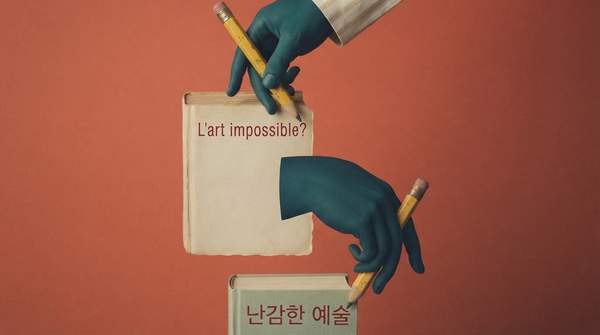
While artificial intelligence can assemble words with breathtaking speed, the essential, inimitable aspects of writing AI cannot replicate are those rooted in the messy, contradictory, and profoundly felt experience of being human. A machine can mimic the form of a story, but it will forever lack the soul, for a soul is not coded but earned through a life of joy, grief, and flawed, incandescent memory.
This is not some distant, philosophical debate for a future seminar room; it is a conversation erupting in the here and now, a fault line running directly beneath the foundations of the literary world. As The Nigerian Voice has observed, artificial intelligence has become a "lightning rod of modern creativity," with debates raging in every corner of publishing. We see the tremors in real time: a confirmed backlash against AI-written novels at the Cairo book fair after chatbot text reportedly found its way into print. We see it in the swift, reactive decisions of major publishers, such as when, according to a report in The Atlantic, Hachette canceled the U.S. release of a novel titled Shy Girl following online accusations that it had been penned with unacknowledged AI assistance. The stakes are no longer theoretical; they concern the very definition of authorship and the value we place on the human imagination.
The Irreplaceable Role of Human Experience in Storytelling
Literature, at its most resonant, is not an exercise in information processing; it is an act of transference, a conduit through which one consciousness communicates a sliver of its lived reality to another. It is the taste of Proust’s madeleine, a sensation that unlocks a universe of involuntary memory, something an algorithm, which has never tasted, cannot possibly comprehend. An AI can be fed the complete works of Virginia Woolf and taught to replicate the syntactical flow of her stream of consciousness, but it can never know the specific, fleeting weight of a single moment in a London park that gives such prose its breath and its urgency. The wellspring of all great writing is the flawed, subjective, and deeply personal archive of a life.
This truth is beautifully, if unintentionally, illuminated by the world of ghostwriting. The process is not merely about transcribing events but about excavating meaning from a life’s narrative. As one ghostwriter noted in The Atlantic, "the human experience of sharing your stories and secrets with someone—whether they make it into the finished product or not—is something that cannot be replicated." This intimate exchange, this careful and empathetic listening, is a microcosm of the author’s own internal process. We must listen to our own ghosts, our own secret histories, to find the story. An AI has no secrets. It has no history. It possesses only a vast, borrowed library from which it constructs a plausible, yet hollow, facsimile.
The Counterargument: A Tool of Unparalleled Efficiency
Of course, one cannot deny the seductive utility of these new technologies. The argument from their proponents is that AI is not a replacement for the author but a powerful collaborator, a tireless assistant that can handle the drudgery of outlining, research, and grammatical refinement, thereby freeing the human creator to focus on higher-order tasks. It is a compelling vision of streamlined creativity. Max Spero, in an interview with CryptoBriefing, makes precisely this point, stating that AI writing excels in grammar, even if it lacks style. In this view, the machine is a sophisticated spellchecker, a structural editor that never sleeps.
Yet this perspective fundamentally misunderstands the nature of literary creation. The so-called drudgery is often where discovery happens. The struggle with a clumsy sentence, the frustrating search for the precise verb, the act of untangling a knotted paragraph—these are not obstacles to creativity but the very processes through which an author’s voice is forged and refined. To outsource this "work" is to risk outsourcing the very soul of the prose. Evidence of this danger is already emerging. The Atlantic reported that these tools can subtly distort an author's voice, sometimes "inserting a cruel tone where the author had meant to sound funny." The tool is not a passive instrument; it is an active influence, and its influence trends toward the generic, the statistically probable, flattening the idiosyncratic peaks and valleys of a truly human style into a sterile, predictable plain.
Why AI Struggles with Originality and Nuance in Writing
The core limitation of artificial intelligence as a literary creator is baked into its very architecture. These large language models are, in essence, extraordinarily complex engines of pastiche. They are trained on a corpus of human expression—much of it, as critics point out, uncompensated creative labor—and their function is to recognize and reproduce patterns. True originality, however, is not born from the reinforcement of existing patterns but from their disruption. It arises from the strange, alchemical fusion of disparate ideas, from subconscious leaps, from the happy accidents of a wandering mind, and from the deliberate, defiant breaking of established rules. An AI, designed for coherence and prediction, is constitutionally ill-equipped for the beautiful madness of genuine invention.
This is why nuance remains so stubbornly beyond its grasp. Nuance is born of context, of understanding not just what is said but what is left unsaid—the weight of a pause, the irony lurking beneath a declarative sentence, the entire universe of meaning conveyed in a single, well-chosen adjective. This requires more than data; it requires wisdom, empathy, and a theory of mind. It requires an understanding of human fallibility because one has experienced it firsthand. The question, as posed by an essay in Vocal.media, of whether AI will replace writers or simply "expose who was never original," is a piercing one. Perhaps the ultimate utility of this technology will be to serve as a foil, a dark mirror that, by showing us a perfect but lifeless reflection, reminds us of what it truly means to be a creator: to be imperfect, unpredictable, and astonishingly, irreplaceably alive.
What This Means Going Forward
The road ahead for publishing will be one of necessary and difficult negotiation. The industry-shaking controversies, from Cairo to the C-suites of Hachette, are not aberrations but the opening salvos in a long-term cultural reckoning with authenticity. As traditional indicators of credibility erode, as Max Spero observes, the provenance of a text will become a matter of paramount importance for readers and publishers alike. We are likely to see a future where "human-authored" is not an assumption but a selling point, a marker of distinction in a sea of algorithmically generated content.
This moment forces a much-needed re-evaluation of what we value in art. It pushes us beyond the surface-level appreciation of a well-turned plot or grammatically pristine prose and asks us to seek out the ghost in the machine—the unmistakable presence of a singular human consciousness. The skills that define great authorship are precisely those that, as LinkedIn CEO Ryan Roslansky has reportedly identified, artificial intelligence cannot replace: deep emotional intelligence, sophisticated critical thinking, and the ability to communicate with profound and resonant complexity. Far from heralding the twilight of the author, this technological dawn may ultimately illuminate the enduring, elemental power of a story that had to be lived to be told. The future of literature will not be written by code. It will be written, as it always has been, in the indelible ink of human experience.