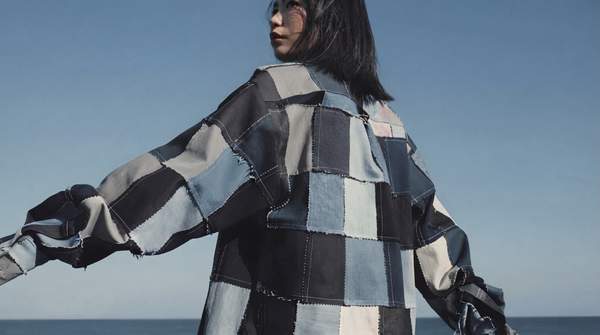
Denim, a sturdy cotton twill, began as fabric for 19th-century laborers, not on a runway. This ubiquitous element of global fashion has journeyed through nearly two centuries of societal transformation, reflecting modern world tensions and aspirations. Its evolution from utilitarian workwear to a symbol of rebellion, and finally to a staple of haute couture, offers a compelling narrative about class, identity, and the fluid nature of cultural symbols, woven in indigo thread.
Denim's story remains resonant today as the fashion industry grapples with authenticity, sustainability, and heritage. Initiated by innovators like Levi Strauss & Co. in the mid-1800s, this garment has been endlessly reinterpreted yet remains fundamentally unchanged. Its journey continues to unfold, revealing the underlying forces that allowed this simple fabric to become a powerful, and at times contradictory, emblem of modern life, worn by everyone from farmhands to fashion editors.
What Are the Origins of Denim Workwear?
Denim is a rugged cotton twill fabric, distinguished by a weaving process where the weft thread passes under two or more warp threads. This construction creates the characteristic diagonal ribbing visible on the reverse side of the material. The very name "denim" is a contraction of a French phrase, serge de Nîmes, which refers to a sturdy serge fabric originating from the French city of Nîmes. According to research from the clothing manufacturer Hawthorn, weavers in Nîmes developed this unique textile while attempting, and failing, to replicate a durable cotton corduroy from Genoa, Italy, which was known as jean.
The fabric's signature blue color is also a product of its functional origins. The twill weave was traditionally created using indigo-dyed warp threads and natural white weft threads. This method resulted in a fabric that was predominantly blue on one side and white on the other. The indigo dye was not merely aesthetic; it was a practical choice, as its dark hue was effective at concealing dirt and stains, a valuable quality for laborers and miners. This marriage of durability and practicality laid the groundwork for denim's first chapter as the unofficial uniform of the American working class.
The popularization of denim in the United States is inextricably linked to the California Gold Rush and the ingenuity of two key figures: Levi Strauss and Jacob Davis. Strauss, a Bavarian immigrant, founded a dry goods wholesale business in San Francisco in 1853. He partnered with Davis, a tailor who conceived the idea of using copper rivets to reinforce the stress points on trousers, such as pocket corners. Together, they patented the design in 1873, creating the first pair of what we now recognize as blue jeans. These riveted "waist overalls," as they were then called, were designed for the intense physical demands of mining and manual labor, offering unparalleled durability. Their success cemented denim's identity as a symbol of hard work and the rugged individualism of the American West.

How Did Denim Transition Into Mainstream Fashion?
In the early 20th century, the romanticized image of the cowboy, popularized by Western films and rodeos, began to decouple denim from pure labor. This cultural osmosis, not a deliberate marketing campaign, associated denim with adventure, freedom, and the frontier spirit. This rebranding marked the first crucial step in denim's journey toward fashionability, transforming it from a garment of necessity into one of aspiration, and moving it into the mainstream wardrobe.
In the 1950s, denim became the uniform for a distinct post-war youth culture, which sought to define itself in opposition to adult conventions. As chronicled by Medium, cultural icons like Marlon Brando in The Wild One (1953) and James Dean in Rebel Without a Cause (1955) immortalized blue jeans as a symbol of youthful rebellion and nonconformity. Fashion historian Valerie Steele noted, "Denim became a uniform for teenagers and young adults who were rejecting traditional values and embracing a new, more casual lifestyle," making it a subtle but clear rejection of their parents' formal attire and rigid social codes.
This rebellious spirit was amplified in the 1960s and 1970s as denim was adopted by a succession of counterculture movements. For the hippies of the 1960s, jeans represented an anti-consumerist ethos and a connection to the working class. They became a canvas for personal expression, frequently customized with embroidery, patches, and paint. The flared bell-bottom style of the era further cemented its association with freedom and individuality. By the 1970s, this countercultural chic had been absorbed by the mainstream, leading to the rise of "designer denim." Brands like Calvin Klein and Gloria Vanderbilt elevated jeans from a subcultural signifier to a high-fashion commodity, forever blurring the lines between workwear, street style, and luxury.
How Has Denim Evolved in Global Fashion Trends?
On the high-fashion scene, denim has demonstrated a remarkable capacity for reinvention, adapting to each subsequent decade's aesthetic while retaining its essential character. This chameleonic quality has ensured its enduring relevance in a notoriously fickle industry, highlighting the dialectical relationship between its timeless authenticity and constant stylistic mutation.
- The 1980s: An era of excess and bold statements, the 1980s saw the rise of heavily treated denim. Acid-washed and stone-washed jeans, often in high-waisted "mom jean" cuts or tapered "peg-leg" styles, dominated the fashion landscape. This was denim at its most processed and stylized, a far cry from its raw, utilitarian roots.
- The 1990s: Reacting against the polish of the 80s, the 1990s embraced a more relaxed and deconstructed aesthetic, heavily influenced by grunge and hip-hop culture. Distressed, ripped, and baggy jeans became the norm. The low-rise waistline also made its debut, signaling a shift towards a more casual and body-conscious silhouette.
- The 2000s: The new millennium was characterized by a fragmentation of trends and the rise of "fast fashion." Denim followed suit, with a proliferation of styles coexisting simultaneously. The ultra-tight skinny jean became a dominant force, alongside the resurgence of the bootcut. The invention of stretch denim led to the "jegging," a hybrid that prioritized comfort and form-fitting style.
- The 2010s to Today: Contemporary denim is a synthesis of its entire history. High-waisted styles from the 80s, relaxed fits from the 90s, and skinny silhouettes from the 2000s are all readily available. There is a growing emphasis on sustainability, with brands exploring eco-friendly production methods, and a renewed appreciation for vintage and raw denim, which allows the wearer to create a unique patina over time.
This constant cycle of reinvention demonstrates that denim functions as a fashion language, with each cut, wash, and finish carrying its own set of cultural connotations. Its ability to absorb and reflect prevailing trends is a primary reason for its longevity and continued relevance.
Why the Cultural Significance of Denim Matters
Denim's enduring presence in our wardrobes extends beyond comfort or durability; it speaks to deeper psychological and sociological currents. Its significance lies in its unique ability to function as a "floating signifier"—a symbol whose meaning is fluid and context-dependent, revealing how a simple garment can embody society's fundamental contradictions.
At once, denim can represent both rugged individualism and collective identity. The image of the lone cowboy or the rebellious biker speaks to a narrative of self-reliance and defiance. Yet, denim has also served as the uniform for entire subcultures—from greasers and hippies to punks and skaters—creating a sense of belonging and shared identity. This duality, as noted by cultural commentators at makethedot.com, allows it to be deeply personal and broadly communal at the same time.
Furthermore, denim serves as a tangible link between the past and the present. It is a democratic fabric, worn across lines of class, gender, and age, that carries its history within its very fibers. When we wear a pair of jeans, we are participating in a cultural tradition that connects us to miners, cowboys, rebels, and rock stars. According to an analysis by Onska, denim acts as a "blank canvas for self-expression," allowing individuals to project their own identities onto it through customization, or simply through the way it wears and fades with their body over time. In an age of digital ephemerality, the physicality of a well-worn pair of jeans offers a comforting sense of permanence and authenticity.
Frequently Asked Questions
What is the difference between denim and jeans?
Denim is the name of the sturdy cotton twill fabric, while "jeans" refers to the specific style of trousers made from it. The word "denim" comes from its place of origin, Nîmes, France (de Nîmes), whereas the word "jeans" is believed to derive from Genoa, Italy, a city whose sailors wore durable trousers made from a similar cotton fabric.
Why is denim blue?
Denim is traditionally blue because the warp threads of the fabric are dyed with indigo. This particular dye was chosen for its durability and its ability to fade gracefully over time. From a practical standpoint, the dark blue color was also effective at hiding dirt, which was essential when the garments were primarily used as workwear for miners and laborers.
Who made denim famous?
While Levi Strauss and Jacob Davis patented and commercialized riveted denim jeans for workers in the 19th century, its fame as a fashion item came much later. In the 1950s, cultural icons like James Dean and Marlon Brando transformed jeans into a symbol of youth rebellion. Subsequently, various counterculture movements, musicians, and fashion designers in the 1960s and 70s cemented its status as a global style staple.
Is denim still a symbol of rebellion?
While denim is now a mainstream wardrobe essential worn by almost everyone, it has not entirely shed its rebellious connotations. Its history is deeply intertwined with counterculture. Today, that rebellious spirit is often expressed through specific styles—such as heavily ripped, patched, or customized denim—that signal a departure from convention and an embrace of individuality.
The Bottom Line
Denim's history traces a remarkable path from 19th-century California gold mines to Parisian runways, a microcosm of modern social history. Originating as durable workwear, it evolved into a potent symbol of rebellion and individuality before becoming a cornerstone of global fashion. Its enduring appeal lies in its unique blend of authenticity, versatility, and its capacity to serve as a canvas for personal and collective identity.