Claire Donovan
Editorial byline
Claire Donovan is an editorial byline for The Cultural Review, with a focus on Books, Media, Literary Trends. Biographical credentials and external profiles are published only after verification.
Learn more about our editorial process and use of automation in our AI & Automation disclosure.
Coverage Areas
Latest Articles
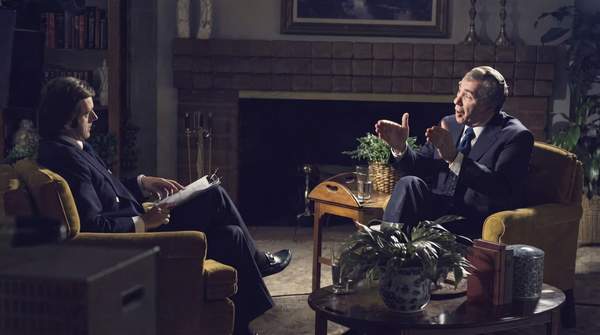
From Author Interviews to Textual Deep Dives: Which Literary Podcast Fits Your Critical Appetite?
Discover literary podcasts by categorizing them into author-centric interviews, text-driven deep dives, and industry commentary. This guide helps you choose shows based on whether you prefer hearing from authors or engaging with critical analysis of texts.
Nov 10, 2026 · 6 min read

Short-Form Video vs. Micro-Drama: Two Formats, Two Different Jobs
Short-form video encompasses two distinct formats: standalone clips designed for discovery and algorithmic feeds, and micro-dramas built for serialized storytelling and viewer loyalty. Understanding this difference is crucial for effective content strategy and budget allocation.
Nov 9, 2026 · 4 min read

Romantasy, Slipstream, and New Weird: Emerging Genres Reflecting Modern Anxieties
Emerging literary genres like Romantasy, Slipstream, and New Weird are hybrid forms that arise as responses to contemporary social anxieties and pressures, offering new ways to process modern concerns about identity, relationships, and reality. The article explores how genre evolution reflects societal shifts when older conventions become insufficient.
Oct 31, 2026 · 5 min read

Weird Girl Lit, Explained: The Reader-Made Subgenre of Feral Heroines, Dark Humor and Female Rage
Weird Girl Lit is a reader-created subgenre of contemporary fiction characterized by alienated, often unlikable female protagonists, dark humor, and themes of female rage. It has gained traction online and in bookstores, defined by its unique narrative style and thematic concerns.
Oct 31, 2026 · 6 min read
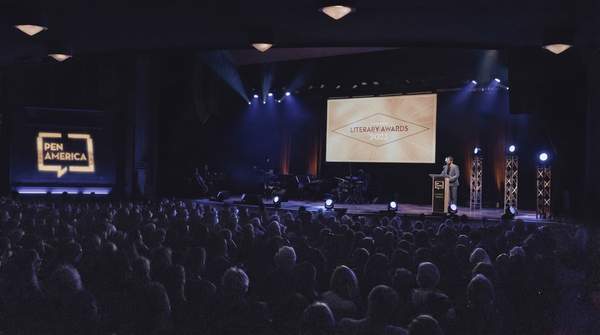
Three Literary Awards That Put Diverse Voices in the Spotlight: A Comparison of Mission and Reach
This article compares three literary awards—the Diverse Book Awards, the Before Columbus Foundation America Book Award, and the Hurston/Wright Legacy Awards—highlighting their distinct missions, target communities, and geographic scopes to help readers and authors identify relevant prizes for diverse voices. Understanding these differences is key to recognizing which award best serves specific authors and reading interests.
Oct 31, 2026 · 4 min read

Five Books That Reveal How Music Does Politics: Propaganda, Protest, Identity, and Listening
This article explores five influential books that reveal the complex relationship between music and politics, demonstrating how music functions as propaganda, a tool for protest, a shaper of identity, and a medium for community formation. The selected works offer diverse analytical lenses on music's political power across different eras, genres, and regions.
Oct 28, 2026 · 5 min read
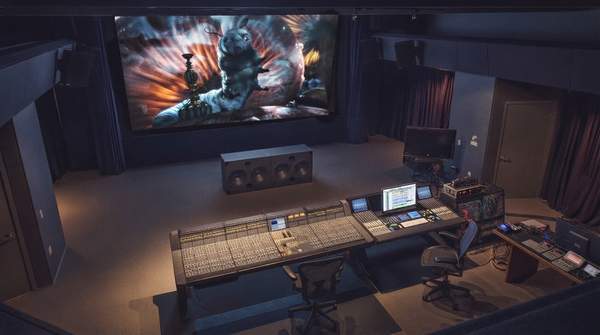
Two Kinds of Listening: How Sound Design Builds a Film's World and Its Characters' Minds
Sound design in film serves two crucial functions: building the objective reality of the world and immersing the audience in a character's subjective experience. Understanding this distinction helps decipher how sound shapes perception, directs emotion, and manipulates anticipation.
Oct 27, 2026 · 6 min read
Slow Cinema, Explained: Why Long Takes and Minimal Plots Ask You to Contemplate, Not Consume
Slow cinema utilizes long takes, minimal plots, and extended duration as philosophical tools to invite contemplation and active engagement, reframing viewer boredom as a gateway to deeper artistic appreciation. It challenges passive consumption by demanding sustained attention to cinematic time and presence.
Oct 24, 2026 · 5 min read

Five Routes In, One Decision: Which Emerging Writer Award Actually Fits Your Career Stage
Emerging writers should strategically select literary awards that align with their current career stage and specific needs, such as journal publication, a debut novel, or experimental second book projects. Understanding the distinct benefits and application pathways of awards like the PEN Emerging Writers Award, Desmond Elliott Prize, and UEA New Forms Award is crucial for gaining visibility and professional growth.
Oct 24, 2026 · 5 min read

Mission Over Margin: Why Independent Presses Drive Diversity in Publishing
Independent presses are the primary drivers of diversity in publishing, prioritizing literary and cultural value over commercial constraints. Their mission-driven approach and structural differences create essential pathways for underrepresented authors and stories.
Oct 23, 2026 · 4 min read

The Prix Pascal and the Two Competing Models for AI in Literature
The article contrasts the traditional "detection and exclusion" model for AI in literature with the new "transparency and collaboration" paradigm, exemplified by the Prix Pascal, advocating for the latter.
Oct 22, 2026 · 6 min read

From Close Reading to Distant Reading: How Digital Humanities Reshaped Literary Criticism
Digital Humanities has reshaped literary criticism by introducing 'distant reading,' a computational approach that complements traditional 'close reading.' This expansion allows scholars to analyze vast text corpora for patterns, offering a more comprehensive understanding of literature.
Oct 22, 2026 · 5 min read

How Interactive Narrative Structures Redistribute Power Between Author, Reader, and Text
Digital literature's interactive narrative structures, including hypertext fiction, choice-based narratives, and collaborative forms, fundamentally redistribute storytelling power. These forms transform readers from passive consumers into active participants and authors from singular creators into architects of interactive systems.
Oct 20, 2026 · 4 min read

AI Is Redistributing Narrative Power: How Independent Creators Can Seize the Opportunity Without Surrendering Their Ethics
Generative AI is redistributing narrative power, lowering barriers for independent creators to produce high-quality stories. However, this democratization raises critical ethical questions about authorship, appropriation, and data privacy that creators must navigate.
Oct 20, 2026 · 6 min read

How Literary Fiction Builds Empathy: The Science, and the Technique That Puts It to Work
Literary fiction measurably enhances empathy by engaging readers' "Theory of Mind" through the inference of psychologically incomplete characters, with techniques like free indirect discourse blurring narrative voices to compel active interpretation and connection.
Oct 18, 2026 · 5 min read

Three Novels Where Magic Does the Work of History: Allende, Mo Yan, Morrison
Explore how Isabel Allende, Mo Yan, and Toni Morrison masterfully blend historical fiction with magical realism to examine themes of exile, political upheaval, and trauma. This article compares their distinct narrative approaches to revealing deeper truths about the past.
Oct 17, 2026 · 5 min read

How Diaspora Literature Turns Identity Into a Negotiation: Themes and the Techniques That Build Them
Diaspora literature explores cultural identity as a fluid, negotiated construct rather than a fixed entity, using specific narrative strategies to dramatize this condition. The article maps these core themes to the techniques authors employ, offering a framework for analysis.
Oct 17, 2026 · 4 min read

Digital media transformed independent storytelling through three shifts: accessible tools, direct distribution, and interactive narrative forms
Digital media has fundamentally reshaped independent storytelling by democratizing production tools, enabling direct distribution, and introducing innovative interactive narrative forms. These three pillars empower creators to bypass traditional gatekeepers and engage audiences in new ways.
Oct 16, 2026 · 5 min read
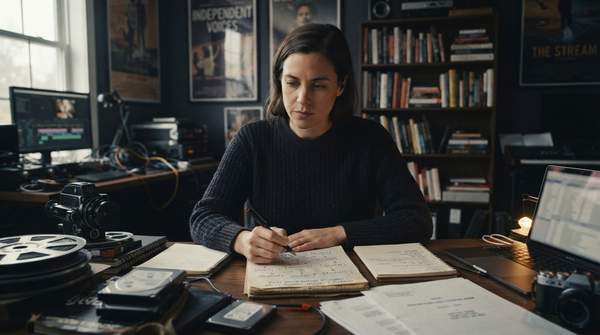
DIY, Aggregator, or Hybrid: Choosing an Independent Film's Distribution Path in the Streaming Era
Independent filmmakers now face a strategic choice among DIY, aggregator, or hybrid distribution models, each with distinct trade-offs in revenue, control, reach, and marketing effort. The decision requires filmmakers to act as entrepreneurs, developing non-creative skills to navigate the evolving landscape.
Oct 15, 2026 · 6 min read

Beyond the Printed Page: New Critical Frameworks for Interactive Fiction
Interactive fiction challenges traditional literary criticism due to its programmatic and participatory nature, necessitating new analytical frameworks. Espen Aarseth's cybertext theory offers a robust model, viewing digital narratives as dynamic programs that require active reader engagement.
Oct 9, 2026 · 5 min read