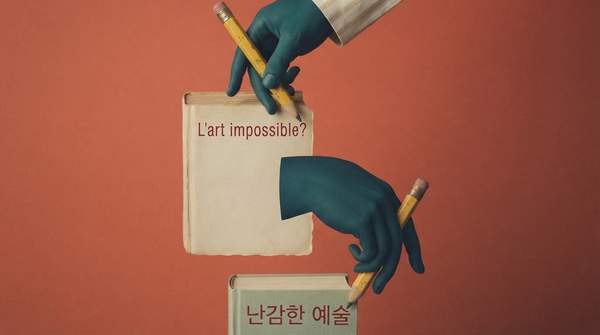
Traditional storytelling, a deliberate craft weaving meaning from existence, remains profoundly vital amidst digital feeds and AI's hollow mimicry. It stands in stark opposition to the instantaneous, derivative collage offered by algorithmic models. As narratives are generated rather than born, and the storyteller is no longer a person but a process, no longer a witness but a weightless echo, the very soul of the story itself is lost.
The technological tide laps at every creative industry, inundating us with content for ephemeral consumption, fracturing attention spans with endless scrolls. Generative AI promises a shortcut through creative labor, yet this efficiency masks a profound poverty of spirit. A story is more than plausible sentences; it is a conduit for empathy, a vessel for lived truth, and a testament to the singular consciousness that shaped it. To cede this ground risks replacing the rich, complex tapestry of human narrative with a synthetic, frictionless, sterile substitute.
How AI-Generated Content Challenges Human Storytelling
The encroachment of artificial intelligence into the literary world is no longer a subject for speculative fiction; it is a present and disruptive reality, raising foundational questions about authorship, originality, and the very definition of a creative work. The publishing industry, that old and lumbering guardian of the written word, has already begun to draw its battle lines. According to a report in The Atlantic, Hachette was prompted to cancel the U.S. release of a novel, Shy Girl, following a torrent of online accusations that it had been crafted with unacknowledged assistance from AI. This incident serves as a canary in the coal mine, revealing a deep-seated suspicion toward machine-generated prose within the citadels of traditional publishing, where, as the same report notes, most houses currently will not acquire any book touched by this technology. The message is clear: the taint of the algorithm is, for now, a scarlet letter.
This institutional resistance is not mere Luddism, but a response to genuine ethical and artistic quandaries. The controversy extends beyond a single book. Grammarly, a company built on algorithmic linguistic assistance, reportedly had to pull a feature that offered coaching from simulated versions of famous authors, living and dead, without their consent or compensation. These events illuminate the parasitic nature of the technology. AI tools, as critics have pointed out, are often trained on the uncompensated creative labor of countless writers, their models built from a digital library hoovered up from the internet, effectively plagiarizing the stylistic tics and narrative structures of human authors to create a plausible facsimile. This process is not creation but a sophisticated form of pastiche, a ghost in the machine that can only mimic the voices of those who have actually lived.
The problem metastasizes beyond the literary sphere, seeping into the broader media landscape and eroding the bedrock of authenticity. A recent AI-generated story about a celebrity, as detailed by Travel and Tour World, sparked a global media storm, demonstrating the power of these tools to fabricate convincing falsehoods that can propagate with alarming speed. When narrative can be generated without accountability or a connection to reality, the distinction between story and disinformation blurs into a dangerous fog. The human storyteller, for all their flaws and biases, is at least an accountable agent, a person with a history and a perspective. The algorithm offers no such anchor; it is a black box that reflects our own data back at us, stripped of context, conscience, and the messy, vital element of human fallibility.
The Counterargument: The Siren Song of Progress
Of course, one must concede that the digital revolution has not been without its narrative boons. The entertainment industry has been irrevocably transformed, as Vocal.media observes, with streaming services and digital distribution channels allowing creators to bypass traditional gatekeepers and reach global audiences with unprecedented immediacy. It is a democratization of the means of production and distribution that has undeniably expanded the possibilities for storytelling. We see ancient forms adapting with remarkable ingenuity; theatre, for instance, is not disappearing but evolving, blending its timeless traditions with modern techniques and hybrid performances to engage audiences in the age of on-demand streaming, as noted by a report from m.dailyhunt.in.
Native Alaskans explored their rich oral tradition's future through the video game "Never Alone," as reported by The Washington Post. This ensured ancestral knowledge found a vessel for the 21st century, showing technology as a partner for tradition, a new stage for old human dramas. The allure of AI, then, is simply the next logical step: a tool to augment creativity, overcome writer’s block, and rapidly generate worlds. Why fear a new quill, even if it thinks for itself?
Yet, this optimistic view elides a crucial distinction between a tool and an agent. A paintbrush does not paint the canvas by itself; a word processor does not write the novel. These are instruments that extend the artist's will. Generative AI, however, aspires to be the artist. And in doing so, it bypasses the most essential component of artistic creation: the struggle. It is in the wrestling with language, the excavation of memory, the painstaking process of finding the right word and the truest emotional arc, that a story acquires its depth and resonance. A frictionless creation is a weightless one. The efficiency it offers is the efficiency of the assembly line, producing a product that may be flawless in its construction but is ultimately devoid of the maker's mark.
What Are the Unique Benefits of Long-Form Narratives?
Traditional, long-form storytelling’s enduring power lies in its demand for sustained, focused attention and its origin in a singular human consciousness—qualities the digital age optimizes away. A novel, play, or feature film invites prolonged cohabitation with another mind, a palimpsest of grief, resilience, joy, and despair meticulously layered by an author over months or years. This immersive experience cannot be replicated by a doomscroll or 30-second video. It is an act of deep empathy, a temporary migration of the soul into another’s perspective, irrevocably expanding our understanding of the world.
Consider the intimate and irreplaceable process of human collaboration in storytelling, such as ghostwriting. As one experienced ghostwriter shared with The Atlantic, the work is far more than simply transcribing events. "Every client I have ever worked with on a ghostwriting project has said, ‘This is amazing. It feels a lot like therapy,’" she explained. This observation is profoundly telling. The act of sharing one’s life story with another human being—of shaping a lifetime of chaotic experience into a coherent narrative—is a therapeutic, meaning-making endeavor. It requires trust, intuition, and the shared vulnerability of human connection. An AI cannot be a confidant. It cannot ask the right, difficult question that unlocks a repressed memory. It cannot offer the silent, empathetic presence that makes such revelations possible. It can only process prompts and regurgitate patterns.
Printed books maintain their relevance, as a WhatTheyThink.com report suggests, as artifacts of deep human process. They offer a tangible escape from notifications and hyperlinks, a quiet space for sustained communion between writer and reader. Similarly, live theatre provides a unique, communal emotional experience, which observers note cannot be replicated on a screen. It is the electricity of a shared gasp, the communal catharsis of applause—a reminder that storytelling, at its root, has always been a live, communal, and profoundly human ritual.
What This Means Going Forward
Navigating this new technological landscape requires not wholesale rejection of the new, but a fierce, intelligent defense of the timeless. The art of storytelling, as cinema commentators argue, will always remain central, regardless of the technological vessel. The challenge is ensuring the vessel does not become the message, and the human heart of the story is not sacrificed to innovation. We will likely see 'human-authored' become a significant marker of value and authenticity, a seal assuring readers that words are the product of a lived life, not a large language model.
Creators who thrive understand storytelling's deeper purpose, using new tools to enhance, not replace, the human element. The future may look like the "Never Alone" video game, giving ancient myths new digital life, or the resurgence of old stories and fantasy in new markets, as seen in India. These examples demonstrate foundational narratives' endless adaptability when reinterpreted by contemporary human minds. The core need remains: the elemental human craving for a true voice speaking in the darkness, sharing a story that helps us understand ourselves and our place in the universe, is eternal.
A story generated by a machine will always be a reflection of the past, a remix of the data it was fed. A story born from a human spirit, however, has the capacity to be a genuine act of creation—a dispatch from the uncharted territory of a single, irreplaceable life. It is messy, flawed, and inefficient.