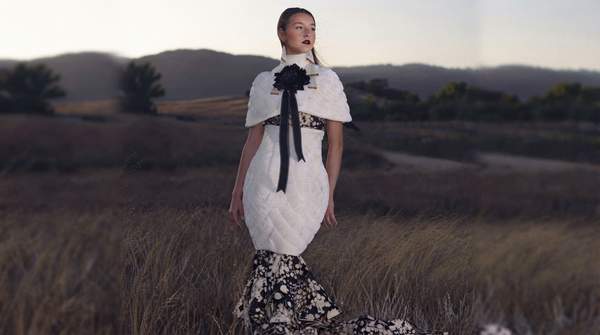
In March 2022, the Beijing Contemporary Art Foundation partnered with VOGUE China, connecting ethnic craftspeople with designers. This collaboration yielded creations like a traditional handwoven carpet, which Gabriela Hearst edged with modern black leather, showcasing how unique cultural expressions can integrate into contemporary fashion.
Such efforts to preserve traditional craft through modern collaborations are gaining momentum. Yet, the broader fashion industry's economic model actively devalues artisanal production, posing a significant challenge to heritage practices.
Companies and consumers now face a stark choice: support culturally rich, sustainable craft, or perpetuate a system prioritizing speed and low cost. Without deliberate intervention, the future of traditional fashion remains uncertain.
1. Gabriela Hearst's Dulong Weaver Collaboration
Gabriela Hearst's collaboration with Dulong ethnic minority weavers exemplifies integrating heritage crafts into luxury lines. For the 'Keeping Traditional Craftsmanship' initiative, Hearst used recycled wool yarn and modern black leather to edge a traditional handwoven carpet. This approach, as noted by BCAF, elevates traditional crafts to high fashion by blending ancestral techniques with contemporary design. The result is unique, high-value products, though this model faces limitations in scalability and high production costs, reflecting artisanal labor and unique design.
The True Cost: Craft vs. Fast Fashion
| Feature | Traditional Craft Production | Fast Fashion Production |
|---|---|---|
| Value Proposition | Emphasis on unique design, cultural heritage, artisanal skill, and material quality. | Focus on rapid trends, low price points, and high volume. |
| Pricing Model | Reflects labor-intensive processes, skilled craftsmanship, and premium materials, leading to higher costs. | Driven by mass production, outsourced labor, and synthetic materials to achieve lowest possible consumer prices. |
| Consumer Expectation | Appreciation for longevity, ethical production, and unique artistic expression. | Demand for frequent new styles at disposable prices, often undervaluing production true costs. |
| Economic Impact | Supports local economies and preserves specialized skills, often struggling against market price distortions. | Contributes to a global industry that has distorted consumers' sense of what clothing should cost, according to Laagra. |
Fast fashion's economic model distorts the perceived value and pricing of handcrafted goods. The contrast between projects like BCAF/VOGUE China celebrating artisanal craft and Laagra's analysis of fast fashion's economic distortions is stark. Companies preserving traditional techniques are effectively trying to sell luxury goods in a discount market, a strategy unlikely to succeed without systemic market intervention.
Bridging Cultures: How Projects Preserve Heritage
The Beijing Contemporary Art Foundation's 'Keeping Traditional Craftsmanship' project offers a strategic model for cultural preservation. By facilitating direct collaboration between ethnic craftspeople and contemporary designers, these programs create new contexts for traditional skills. The goal extends beyond museum preservation; it seeks to infuse ancestral methods with new life, making them appealing and economically viable for a modern audience.
The Looming Threat to Artisanal Labels
Small fashion labels, despite the cultural value of their collaborations, face significant economic challenges. Increasing global tariffs on imported textiles and garments make it difficult to maintain pricing, sourcing, or core values, according to Laagra. These tariffs are not merely economic hurdles; they pose an existential threat to craft integrity. Policy designed for broad trade might inadvertently accelerate the demise of niche, valuable cultural practices, making it incredibly difficult for smaller, craft-focused businesses to implement sustainable strategies.
Your Questions Answered
What are some examples of traditional crafts in modern fashion?
Beyond weaving, modern fashion integrates traditional crafts like embroidery, natural dyeing, block printing, and intricate beadwork. Designers use these for embellishments on contemporary silhouettes or unique fabric patterns.
How are designers incorporating heritage techniques into contemporary clothing?
Designers adapt traditional motifs, experiment with new color palettes for age-old dyeing methods, or use artisanal textiles in unexpected ways. This blends original craft with current trends and functionalities.
Where can I find sustainable fashion brands using traditional methods?
Online marketplaces and specialized boutiques often showcase ethical brands partnering directly with artisans. These platforms offer supply chain transparency, helping consumers avoid the hidden costs of global fast fashion that burden people and the planet, as noted by Laagra.