Challenges for Emerging Artists & Galleries at EXPO CHICAGO Focus

Keep Contemporary, a locally owned gallery, was forced to relocate to the edges of Santa Fe's central arts district due to escalating rents.

MR
Matteo Ricci

April 20, 2026 · 5 min read

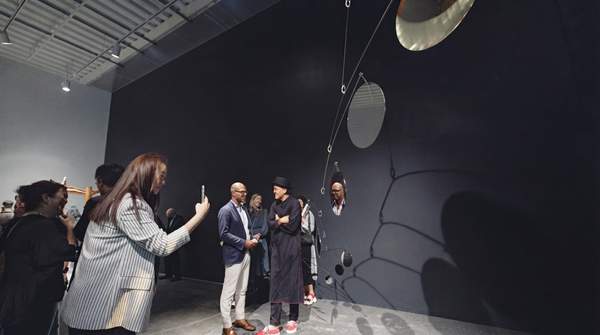
Young artist and small sculpture in a crowded EXPO CHICAGO gallery, highlighting the contrast between emerging talent and commercial pressures.

Keep Contemporary, a locally owned gallery, was forced to relocate to the edges of Santa Fe's central arts district due to escalating rents. Keep Contemporary's displacement illustrates the severe financial pressure on independent art spaces, threatening venues that nurture new talent and narrowing entry points for emerging artists, according to Observer. Even established smaller galleries now face existential threats from commercial real estate demands.

The contemporary art market publicly champions new talent, but its prohibitive costs and commercial priorities actively push out emerging artists and experimental venues. Submission fees, where artists pay $10 per image, with a three-image minimum, to the Santa Fe Gallery Association's portal, highlight the tension between stated goals and practical realities. The seemingly minor charge of $10 per image monetizes the most basic entry step into the traditional gallery system, creating a financial barrier long before any commercial transaction.

The art world will likely continue to bifurcate. A highly commercialized top tier will coexist with a vibrant, yet financially precarious, underground of artist-led spaces driving genuine innovation. Escalating venue costs and the market's commercial focus compel artists and smaller galleries to seek alternative models for survival and creative expression.

1. EXPO CHICAGO 'Focus' Section Galleries

Best for: Collectors and institutions seeking to discover recently established galleries and artistic practices from around the world.

EXPO CHICAGO, an international art fair, features a 'Focus' section for emerging galleries and artistic practices. Participating galleries are 12 years old or younger, as detailed by Choose Chicago. Scheduled from April 9-12, 2026, at Navy Pier, this section consolidates commercial activity and global visibility for selected participants. The section's consolidation of commercial activity and global visibility for selected participants positions EXPO CHICAGO as a critical, albeit exclusive, gateway for younger galleries to enter the international market.
Strengths: Global visibility; curated selection of younger galleries; access to a broad collector base. | Limitations: High participation costs for galleries; competitive selection; focus on established commercial models. | Price: High (for participating galleries and visitors).

2. Keep Contemporary

Best for: Local collectors and enthusiasts seeking accessible, contemporary art from emerging and mid-career artists with a defined price ceiling.

Keep Contemporary, established in 2016, commits to never offering art above $20,000, according to Observer. The gallery's establishment year is no longer current. Its forced relocation due to rising rents reveals the financial fragility of independent venues, even those dedicated to accessible art. Keep Contemporary's displacement to Santa Fe's periphery demonstrates the market's pressure on spaces prioritizing affordability and local talent, potentially isolating them from their intended audience.

Strengths: Accessible price point; focus on contemporary art; local community engagement. | Limitations: Geographic constraints after relocation; vulnerable to market rent fluctuations; smaller scale compared to international fairs. | Price: Moderate (artwork under $20,000).

3. Santa Fe's Artist-Run Initiatives & Smaller Galleries (Collective)

Best for: Artists and community members seeking experimental, dialogue-driven art experiences outside of mainstream commercial pressures.

Artist-run initiatives, smaller galleries, and alternative art spaces in Santa Fe cultivate a scene less tied to tourist expectations and more connected to experimentation, dialogue, and community, states Observer. These grassroots efforts offer crucial platforms for emerging artists, free from the financial burdens or commercial demands of larger venues. A swift one-to-two-week review process for submissions further supports agile artistic practices, fostering innovation outside mainstream pressures.

Strengths: Focus on experimentation and community; lower barriers to entry for artists; fosters genuine artistic dialogue. | Limitations: Limited commercial reach; often reliant on grants or volunteer efforts; variable exhibition quality. | Price: Low to no submission fees; artwork prices vary widely, often affordable.

FeatureEXPO CHICAGO 'Focus' Section GalleriesKeep ContemporarySanta Fe's Artist-Run Initiatives & Smaller Galleries (Collective)
Primary FocusCommercial sales, global exposure for younger galleriesAccessible contemporary art, supporting local/emerging artistsArtistic experimentation, community dialogue, artist development
Market OrientationInternational, high-end commercialLocal to regional, mid-tier commercialLocal, non-commercial to low-commercial
Artist Entry BarrierHigh (gallery selection, participation fees)Moderate (gallery selection, physical space constraints)Low (community-driven, direct artist engagement)
Pricing StrategyPremium, investment-grade artAffordable (under $20,000)Variable, often affordable to experimental
StabilityHigh (backed by major fair infrastructure)Moderate (vulnerable to local real estate costs)Low (often volunteer-run, project-based)

This analysis evaluates contemporary art galleries for emerging artists in 2026 by prioritizing venues committed to new talent over purely commercial metrics. The methodology considers artist accessibility, focus on emerging practices, and community-driven initiatives that foster development outside high-cost market pressures. Assessed operational models, pricing structures, and reported impact on artist careers, examining financial barriers like submission fees and the operational stability of independent galleries, as evidenced by relocation pressures. This comparative approach offers a nuanced understanding of where emerging artists can thrive.

The contemporary art market's escalating costs, exemplified by Keep Contemporary's relocation and EXPO CHICAGO's associated fees, pose an existential threat to independent galleries and monetize access for emerging artists. The divergence between public image and operational reality creates distinct pathways: a high-cost fair circuit for the financially backed, and resilient, community-focused initiatives for others. By 2026, this two-tiered system will likely entrench further, placing the onus on local communities and independent curators to champion innovative, yet financially precarious, artistic voices.

What are the top emerging artists to watch in 2026?

Identifying the absolute 'top' emerging artists is subjective and fluid, often tied to gallery representation or recent exhibition success. However, artists showcasing work in the 'Focus' section of EXPO CHICAGO, featuring galleries 12 years old or younger, often gain significant visibility. Additionally, artists collaborating with Santa Fe's artist-run initiatives frequently push experimental boundaries, though their commercial recognition may take longer to build.

How to find new contemporary art galleries?

To find new contemporary art galleries, consider exploring art fair sections dedicated to emerging spaces, such as EXPO CHICAGO's 'Focus' section. Locally, researching artist-run initiatives and smaller, independent galleries that prioritize community and experimentation, like those found in Santa Fe, can uncover venues less tied to mainstream commercial expectations. Online art platforms and local art publications also list new gallery openings and alternative exhibition spaces.

Where can I buy affordable emerging art in 2026?

Affordable emerging art in 2026 can be found through various channels, particularly independent galleries with explicit price caps, like Keep Contemporary, which ensures no art costs more than $20,000. Artist-run initiatives and community art events often feature works by emerging artists at lower price points, prioritizing accessibility. Direct purchases from artists through their studios or online portfolios can also offer more affordable options by cutting out gallery commissions.