Ignoring a community's cultural heritage in health initiatives doesn't just miss an opportunity; it actively creates compounding negative impacts, leading to inadequate care and mistrust, according to Vanderbilt University's Cultural Contexts of Health. This systemic oversight leaves individuals feeling unseen and unheard, eroding their faith in the very systems designed to support them.
Cultural engagement is scientifically proven to enhance well-being and community health, offering a rich tapestry of protective factors. Yet, current public health and healthcare systems frequently overlook or actively exclude cultural considerations. This creates a fundamental tension: a disconnect between scientific evidence and real-world practice for diverse populations.
Therefore, without a fundamental shift to culturally centered health approaches, existing health disparities will likely worsen, and efforts to improve public health will remain incomplete and inequitable. This article explores how embracing cultural wellness and heritage can forge a more equitable path, challenging current practices to foster genuine well-being.
What is Cultural Wellness?
Cultural wellness, often overlooked, refers to the active practice and celebration of one's cultural heritage, vital to community health and well-being, states Vanderbilt University's Cultural Contexts of Health. This understanding moves beyond individual self-care, recognizing that shared traditions, ancestral practices, and communal expressions are foundational elements of health. Our stories, rituals, and artistic expressions are not mere accessories; they are integral to our health, providing structure and meaning. Cultural wellness forms a fundamental pillar supporting a community's collective health and resilience. Ignoring this pillar actively sabotages health equity, creating voids where connection and healing should thrive. How can we truly support health without acknowledging the cultural roots that sustain individuals?
The Science of Cultural Engagement
Neuroscientific evidence reveals that engaging with arts and culture leads to neurological activities related to emotional regulation and stress reduction, as reported by Nature. This validates what many cultures have intuitively known: practices like rhythmic chanting or traditional crafts activate specific brain regions, promoting calm and resilience. My own experiences with traditional storytelling circles show firsthand how shared narratives bring profound emotional release. Public health strategies that sideline cultural engagement are not just culturally insensitive; they are biologically negligent. They actively deprive individuals of proven mechanisms for stress reduction and emotional regulation, leaving them more vulnerable to modern life's stressors. Are we truly prioritizing well-being if we ignore such fundamental biological truths?
Beyond the Individual: Community Benefits
Engaging in cultural activities—concerts, museums, creative pursuits—is associated with increased life satisfaction, better health, reduced anxiety and depression, and enhanced social bonding, according to Nature. A profound sense of belonging, a critical component of public health, is fostered by engaging in cultural activities. I often reflect on how community festivals, with their shared music and food, strengthen social ties and create enduring collective memory. The broad impact of cultural activities on social cohesion and individual well-being is often overlooked by systems that inadvertently sabotage health equity by neglecting communal aspects. When communities share cultural experiences, they build resilience and mutual support networks, creating a collective strength that formal healthcare alone cannot replicate.
Community-Driven Solutions for Health Equity
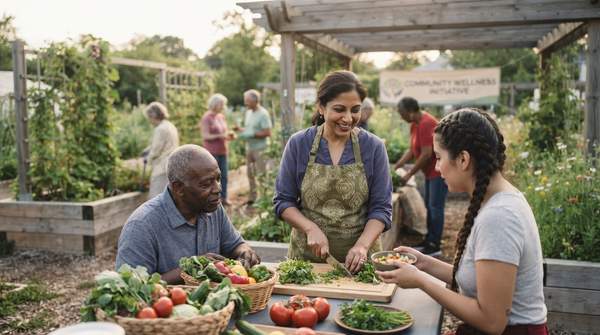
Community-driven health initiatives effectively improve health outcomes and reduce disparities, notes NNSI at Northwestern University. They succeed by building on specific cultural contexts and needs, fostering trust and relevance that top-down approaches miss. Community-driven health initiatives directly counter the systemic mistrust and inadequate care fostered by culturally insensitive mainstream health systems, allowing interventions to resonate more deeply. Empowering communities to integrate their own cultural practices is a powerful, proven method for achieving equitable health outcomes and holistic well-being. How can we expect trust to flourish when cultural identities are consistently ignored in healthcare settings?
The Cost of Cultural Blindness in Healthcare
Culturally insensitive healthcare directly leads to inadequate care, miscommunication, and ineffective interventions. Culturally insensitive healthcare fosters deep mistrust within communities, making future health efforts difficult to implement and sustain. Patients often disengage from treatment, leading to poorer long-term health outcomes. The systemic failure of culturally insensitive healthcare not only compromises individual health but also erodes the very foundation of public trust necessary for effective health initiatives.
The Path Forward: Centering Culture for Health Equity
Not centering culture results in disparities in health literacy, reduced care access, and worse health outcomes for marginalized groups, according to Vanderbilt University's Cultural Contexts of Health. Not centering culture perpetuates and deepens health inequities for the most vulnerable. The consistent findings from Vanderbilt and NNSI reveal that by failing to center culture, public health systems are not merely inefficient; they actively exacerbate health disparities. They foster a deep-seated mistrust that undermines all future health initiatives, especially within marginalized communities, leaving a lasting impact on generations.
If public health institutions fail to integrate cultural wellness frameworks into their core strategies, existing health disparities will likely worsen, and efforts to rebuild trust may prove futile.