Xania Monet, an AI artist, has appeared on at least five Billboard charts since her first song release, a remarkable achievement for her human creator, Telisha 'Nikki' Jones, who taught herself AI just four months prior to the artist's debut. Xania Monet's rapid ascent signals a powerful shift in the music industry, where AI proficiency now offers a fast track to mainstream recognition.
AI-generated music is rapidly achieving mainstream commercial success and deep listener engagement, but the industry still grapples with how to ethically attribute, compensate, and define the 'artist' in this new paradigm. This tension between rapid technological advancement and slower ethical evolution creates a complex landscape for creators and consumers.
Based on accelerating adoption by creators and platforms, coupled with surprising listener physiological responses, the music industry is poised for a fundamental redefinition of artistry, ownership, and consumption. Human-AI collaboration becomes the norm, potentially challenging established power structures and demanding a re-evaluation of traditional artist development and revenue models.
From Bedroom to Billboard: AI's Mainstream Breakthrough
Xania Monet, the AI artist created by Telisha 'Nikki' Jones after just four months of AI self-study, became the first known AI artist to earn enough radio airplay to debut on a Billboard radio chart, according to cbsnews. The AI artist has since appeared on at least five Billboard charts, proving its commercial viability. The rapid ascent demonstrates AI offers a viable path to mainstream recognition for individual creators, challenging the belief that extensive industry backing is essential for charting success. It suggests traditional artist development pipelines may be obsolete, with raw AI proficiency becoming the new fast track.
Empowering the Creator: New Tools, New Business Models
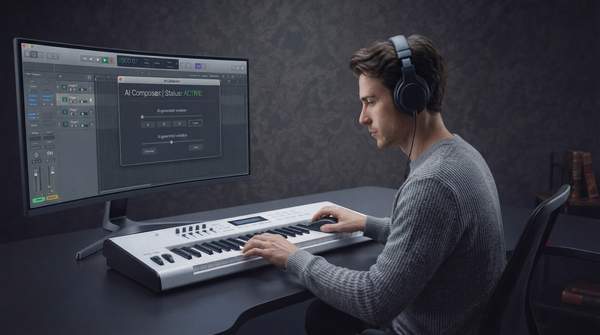
Accessible AI tools fundamentally shift who can become a commercially viable artist, placing sophisticated music generation at creators' fingertips and drastically lowering the financial barrier to advanced production. These platforms empower individuals to experiment, innovate, and monetize without traditional industry gatekeepers, inviting a wider range of voices into the music scene.