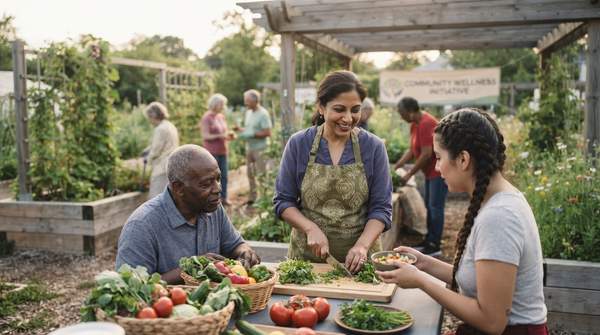
This Friday, July 17, the Citizens Community Block Party & Grand Opening event offers a tangible example of the informal gatherings crucial for our collective well-being. More than just a social occasion, this gathering fosters the essential connections that underpin local life, laying groundwork for future community resilience.
Many believe well-being stems from robust structural social capital. Yet, evidence shows informal trust built through local interactions is far more impactful. This tension, between formal structures and organic connections, shapes our understanding of true community health, suggesting a re-evaluation of current approaches.
Communities that prioritize and invest in accessible local events are likely to see a significant increase in both individual subjective well-being and overall social cohesion. Local community events, often dismissed as mere recreation, are in fact primary drivers of individual well-being, demanding a shift in how we value them.
Local Events and Personal Happiness
Individuals who frequently participate in traditional local festivals exhibit higher subjective well-being compared to those who never attend, according to a study published on pmc. Engaging with local festivals is not merely a leisure activity; it significantly contributes to personal happiness and life satisfaction. The true value of these local festivals extends beyond the event itself, serving as a conduit for strengthening informal trust—a connection often overlooked by policymakers, despite its profound impact on individual flourishing.
Informal Trust vs. Formal Community Structures
Trustful relationships with family, friends, and neighbors are more significantly related to subjective well-being than structural social capital, the pmc study reveals. Our sense of well-being is not underpinned by the number of organizations we join, but by the quality of our everyday, informal relationships. This suggests current policy and community efforts might be misdirected, focusing on formal structures when informal ties hold greater sway over individual happiness and collective resilience.