Brain scans reveal that when a musician improvises, a distinct neural network activates, allowing for spontaneous creation biologically different from recalling a memorized piece. This discovery challenges conventional views, suggesting improvisation is not merely a performance skill but a unique cognitive function. Generating novel rhythms and melodies in real-time taps into a profound wellspring of human creativity, distinct from memory retrieval involved in playing a learned score.
Yet, musical improvisation, a biologically distinct and deeply creative act, is often overlooked or undervalued in conventional music learning cultures. This disconnect between scientific understanding and pedagogical practice creates tension, potentially limiting a student's innate creative potential. The prevailing emphasis on rote memorization in music education may inadvertently suppress a unique biological pathway essential for fostering spontaneous creativity.
Integrating improvisational practices into mainstream music education appears likely to foster greater creativity and cognitive flexibility in musicians, challenging long-held pedagogical norms. Such an approach moves beyond an incomplete education, embracing a pathway to cognitive liberation. In 2026, the discussion around musical improvisation across genres and traditions will likely focus on its capacity to redefine learning.
What Exactly Is Musical Improvisation?
Improvisation involves spontaneous creation in the moment, without prior notation or extensive rehearsal, according to the Oxford Handbook of Critical Improvisation Studies. A musician composes and performs simultaneously, navigating musical structures and personal expression in real-time. This process is not simply playing 'wrong notes,' but a structured, intuitive engagement guided by deep musical knowledge and contextual awareness, as noted by Music Theory Spectrum.
Unlike interpreting a fixed score, which reproduces a composer's intent, improvisation demands constant decision-making and adaptation, states Psychology of Music. This real-time creation involves a unique cognitive process, setting it apart from mere reproduction. It pushes musicians to engage with their instrument and the music dynamically, fostering a direct connection to their inner musical voice.
The Brain on Improv: A Unique Cognitive Workout
Expert improvisers show increased functional connectivity between auditory and motor cortices, facilitating rapid translation of musical ideas into physical action, according to Brain Imaging and Behavior. This heightened connection allows seamless execution of spontaneous thoughts. The medial prefrontal cortex, a brain region associated with self-expression and autobiographical memory, also becomes highly active during improvisation, as observed in studies like those published in PLOS One.
Improvisation often involves a temporary deactivation of brain regions linked to self-monitoring and inhibition, allowing for a freer creative flow, according to Scientific Reports. This 'letting go' enables musicians to explore new ideas without the self-censorship of planned performance. These distinct neural pathways confirm improvisation as a unique form of human creativity and cognitive function, demanding a delicate balance of control and surrender to unlock its full potential.
Improvisation as Liberation: Reshaping Music Education
Improvisation can be liberatory by resisting, undermining, and refocusing forces within music education and learning cultures, according to PhilPapers. Traditional pedagogy, often prioritizing technical mastery and faithful reproduction, may inadvertently limit a student's creative development. Curricula focused on achieving perfection in pre-written pieces stifle the spontaneous generation of music.
Embracing improvisation fosters a more inclusive, less hierarchical approach to musical expression, valuing individual voice over strict convention, as noted by the International Journal of Music Education. This shift moves beyond rigid structures, allowing students to develop unique artistic identities. Improvisation becomes a critical tool for evolving music pedagogy, fostering genuine artistic freedom and a more equitable learning environment that celebrates personal expression.
Beyond the Stage: Why Improvisation Matters for Everyone
Engaging in improvisation enhances problem-solving skills, adaptability, and critical thinking in non-musical contexts, according to Psychology of Music. The rapid decision-making required in spontaneous creation translates into improved cognitive flexibility in everyday situations. It also fosters emotional expression and resilience, offering a unique outlet for personal development and stress reduction, as suggested by the Arts & Health Journal.
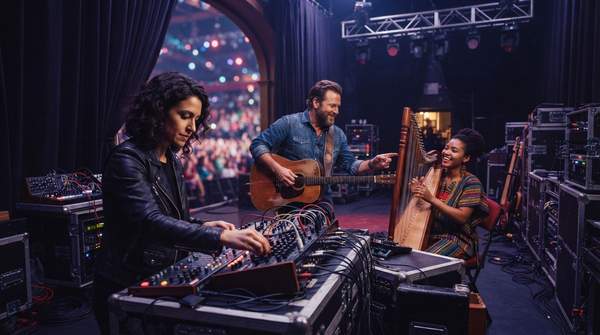
Collaborative improvisation builds stronger interpersonal communication, empathy, and teamwork among participants, according to Group Dynamics: Theory, Research, and Practice. Musicians learn to listen actively, respond intuitively, and build upon each other's ideas in real-time, mirroring essential social interactions. Beyond musical skill, improvisation cultivates essential life skills, making it relevant for personal growth, cognitive development, and improved social interaction.
Your Improvisation Questions, Answered
Is improvisation only for jazz musicians?
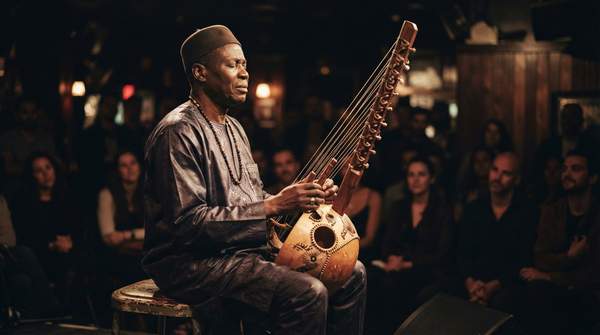
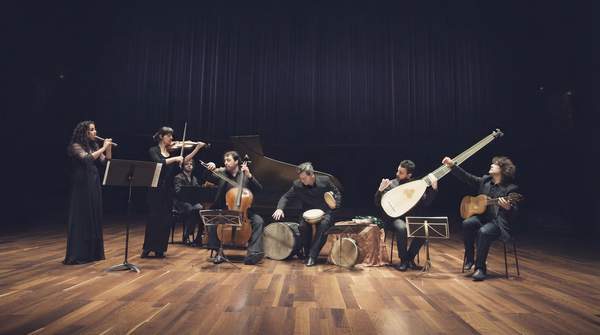
No, improvisation extends far beyond jazz. It appears in classical cadenzas, various folk traditions globally, contemporary experimental music, and even the natural flow of everyday speech, according to Grove Music Online. Many cultures integrate spontaneous musical creation as a fundamental aspect of their artistic heritage.
Do you need extensive theory knowledge to improvise?
While extensive theory knowledge can be helpful, it is not a prerequisite for beginning improvisation. Basic musical understanding, active listening, and a willingness to experiment are more crucial starting points, as noted by Berklee Online. Many improvisers begin by exploring simple scales, rhythmic patterns, and call-and-response techniques.
Can improvisation be taught?
Yes, improvisation can certainly be taught through structured exercises, active listening, encouraging experimentation, and creating a supportive environment. The Journal of Music Teacher Education emphasizes methods that build confidence and provide frameworks for creative exploration rather than just rote memorization. Educators worldwide are developing innovative curricula focused on improvisational skills.
The Future is Improvised
Musical improvisation is a biologically distinct, cognitively enriching activity, offering unique benefits beyond rote performance. This understanding reveals its critical role in cognitive development, activating neural networks not engaged by simply recalling memorized pieces. It serves as a powerful tool for liberation within music education, challenging traditional methods and fostering genuine creativity.
Embracing improvisation leads to enhanced personal growth, problem-solving abilities, and a deeper connection to music. This approach nurtures a fundamental human capacity for spontaneous creation. By the close of 2027, initiatives like the 'Global Improvise Collective' are expected to have integrated improvisational modules into over 500 music schools worldwide, championing this vital shift in pedagogy.