Cultural societies play a profound role in heritage preservation and community building, serving as essential connective tissue between our past, present, and future. Culture and cultural heritage are dynamic forces that shape identity, foster social cohesion, and often promote economic development, rather than static relics to be observed behind glass. As we navigate an increasingly globalized and digital world, understanding these institutions is a crucial endeavor for maintaining the rich tapestry of human experience.
The conversation surrounding the value of culture has gained new urgency in recent years. The global pandemic, for instance, starkly revealed the fragility of our cultural institutions. According to one analysis from Philosocom, establishments like theaters and concert halls were severely impacted by lockdowns in 2020, with some facing existential threats from digital alternatives. This disruption forces us to reconsider the fundamental purpose of these collective spaces and the heritage they protect. It behooves us to examine the underlying mechanisms by which culture operates and the vital function of the societies dedicated to its cultivation.
What Are Cultural Societies and Their Significance?
Cultural societies are organized groups sharing a common interest in preserving, celebrating, or promoting a particular aspect of culture or heritage. This encompasses historical preservation groups, folk music guilds, literary circles, and museums. At their core, these societies are stewards of a community's unique identity, serving as institutional memory and active cultivators of a shared way of life. The etymology of 'culture,' from Latin coltura ('to cultivate'), underscores this active, nurturing role.
Understanding cultural societies requires untangling 'culture' and 'cultural heritage.' While often used interchangeably, they represent distinct, though related, ideas:
- Culture is the living, breathing expression of a group's values, beliefs, and practices. The anthropologist Edward Tylor defined it as the "accumulation of human accomplishment," while Franz Boas memorably described it as a set of "cultural glass lenses" that provide a means of perceiving the world. It is, in essence, a society’s shared software for interpreting reality.
- Cultural Heritage refers to the inheritance from past generations. This includes both tangible artifacts—such as historical monuments, artworks, and documents—and intangible attributes like folklore, traditions, language, knowledge, and even sport, which a Commonwealth debate reinforced as a form of "intangible cultural heritage."
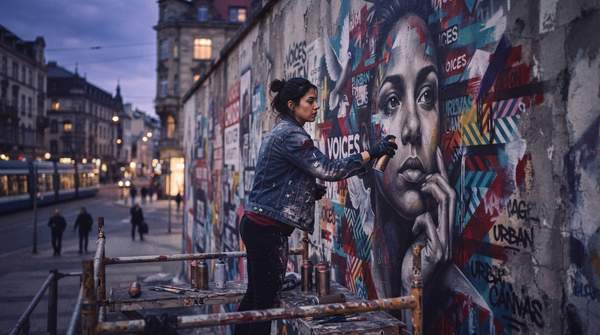
Cultural societies, therefore, operate at the intersection of these two domains. They are the entities, like museums, tasked with the collection, preservation, and education surrounding tangible heritage. Simultaneously, they create the spaces and opportunities for the practice and transmission of intangible culture, ensuring that a "way of life" is not just remembered but actively lived. Their significance lies in their ability to make the abstract concept of culture a concrete, shared experience.
How Cultural Societies Contribute to Heritage Preservation
Heritage preservation is a meticulous and multifaceted endeavor, central to the mission of most cultural societies. This process extends beyond mere artifact storage; it is an active effort to maintain the continuity of a community's narrative. By safeguarding the legacy of both physical and non-physical attributes, these organizations provide a foundation upon which future generations can build their understanding of identity and history.
Museums and historical societies are perhaps the most visible agents of this work. As institutions, they are fundamentally involved in the professional collection and preservation of objects that tell a story about the past. Yet, their role is equally educational. By curating exhibitions and developing programs, they translate historical artifacts into accessible narratives, allowing individuals to, as one publication from Medium puts it, "experience the places, artifacts, and activities that authentically represent the stories and people of the past." This educational mandate is critical; integrating the values and knowledge from cultural heritage into learning helps students develop critical thinking, a sense of their own identity, and an informed understanding of others.
Preservation, however, is not limited to the tangible. The loss of a language, a tradition, or a local custom represents the erasure of a unique form of human knowledge. Cultural societies focused on folklore, music, or indigenous practices play an indispensable role in documenting and revitalizing these intangible assets. They create forums for elders to pass on knowledge to younger generations, host festivals that celebrate traditional arts, and publish materials that codify oral histories. In doing so, they ensure that the subtle, yet powerful, elements of a culture’s identity are not swept away by the homogenizing forces of modern life.
The Impact of Cultural Societies on Community Development
Beyond preservation, the most profound impact of cultural societies is their ability to foster community. Culture provides a common collective consciousness, offering shared symbols, stories, and subjects for discussion that strengthen social bonds. It is a fundamental pillar of society, giving people a sense of collective identity and belonging. This function is dialectical; culture both shapes the individual and is shaped by the collective, creating a dynamic interplay that builds resilient communities.
This social cohesion is a direct result of shared experience. When people gather for a cultural festival, attend a historical lecture, or participate in a traditional craft workshop, they are not merely consuming entertainment. They are engaging in a communal act that reinforces shared values and fosters dialogue. This process helps to integrate individuals into a social fabric, giving them, as some have noted, "roles to fit in." While this can sometimes limit extreme individuality to preserve cohesiveness—acting as a sort of "fashion police" for social norms—its primary effect is the creation of a stable, supportive social environment.
The economic dimension of cultural societies, while often secondary to their social mission, is also significant. Cultural heritage can be a powerful driver for economic development, primarily through tourism. Visitors are often drawn to historic sites, museums, and cultural festivals, which in turn creates jobs and generates income for local communities. However, it is essential to maintain a realistic perspective on these economic benefits. According to a report discussed in Tafter Journal, which reviewed over 550 policy evaluations, the overall measurable economic effects of specific cultural projects on a local economy "tend not to be large and are more often zero." The same analysis, however, notes that cultural facilities are likely to have a positive impact on very local property prices. This nuanced reality underscores that while culture can generate economic returns, its primary value remains social and intrinsic.
Challenges and the Future of Cultural Societies
Despite their foundational role, cultural societies in the contemporary era face a host of challenges that test their resilience and adaptability. Perhaps the most pervasive force is globalization. The unprecedented interconnectedness facilitated by the internet, social media, and dominant international languages presents a direct threat to localized cultures. As individuals become global content creators and consumers, their ties to national or local identity can weaken, potentially leading to what some analysts fear may be less interconnectivity within local societies.
The digital age also presents a double-edged sword. While it offers powerful new tools for preservation and dissemination—as seen in the rise of digital archives and virtual museum tours—it also creates new forms of competition. The aforementioned impact of the 2020 lockdowns on live performance venues highlights a broader shift in consumption habits, where on-demand streaming services can supplant communal cultural experiences. This necessitates a reimagining of how cultural societies engage their audiences and demonstrate their relevance in a crowded digital landscape.
These modern pressures are layered upon a more timeless philosophical challenge. Cultural stability, especially in the Western world, has often been described as a fragile state. The writer Mary Douglas, as cited on LinkedIn, argued in 1992 that cultural homogeneity is achieved with great difficulty and is "always on the brink of dissolution." This inherent fragility makes the work of cultural societies a perpetual act of renewal. In an era of income stagnation and growing inequality, the role of policymakers becomes even more critical in supporting these institutions, ensuring they have the resources to navigate these complex challenges and continue their essential work.
Why This Matters
Ultimately, the work of cultural societies matters because culture itself is inextricable from the human condition. It is not an optional accessory to society but its foundational operating system. It shapes our identities, informs our values, and provides the very language we use to make sense of the world and each other. To neglect the cultivation of culture is to risk a kind of societal amnesia, where we lose the context for our own lives and the tools for building a meaningful future.
Engaging with our cultural heritage is an act of self-discovery. It allows us to understand the long chain of events and ideas that led to our present moment. It fosters empathy by exposing us to the diverse ways in which other peoples and other generations have navigated the world. The transformative power of culture lies in this ability to broaden our perspective, to foster dialogue between peoples, and to provide a sense of belonging in a world that can often feel isolating. In this light, cultural societies are not merely curators of the past but essential architects of a more cohesive and self-aware future.
Frequently Asked Questions
What is the main purpose of a cultural society?
Cultural societies primarily preserve and promote a community's shared heritage, traditions, and values. They do this by safeguarding historical artifacts, documenting intangible practices like language and folklore, and creating events and educational programs that foster shared identity and social cohesion.
How does culture contribute to social cohesion?
Culture contributes to social cohesion by providing a common framework of understanding, including shared values, traditions, language, and symbols. This creates a collective consciousness, strengthening social bonds and a sense of belonging as people connect through shared identity and history.
Can cultural heritage benefit the economy?
Cultural heritage benefits the economy, primarily through tourism. Historic sites, museums, and cultural festivals attract visitors, creating jobs and revenue. While cultural facilities can positively impact local property values, some research indicates the broader economic effects of individual cultural projects are often modest.
Is globalization a threat to local cultures?
Globalization can pose a significant challenge to local cultures. The dominance of international media and languages can overshadow unique local traditions, potentially weakening a community's connection to its own heritage. However, globalization also provides new digital platforms that can be used to share and preserve local culture with a worldwide audience.
The Bottom Line
Cultural societies preserve the heritage that informs our collective identity and foster the community that sustains us. In an era of rapid change and digital fragmentation, their role in cultivating a shared sense of place and purpose is crucial. Supporting and participating in these institutions is an investment in the social fabric that connects our past to a more resilient and meaningful future.


