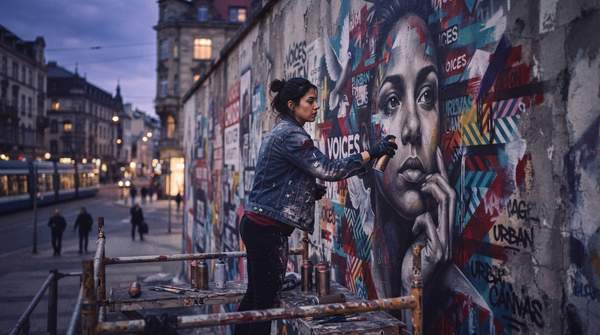
This ranked guide examines five distinct cultural festivals that preserve unique heritage and traditions. These events, where many traditions find their most vibrant expression and determined defense against modern homogenizing tendencies, highlight diverse models of cultural conservation. They range from state-sponsored national celebrations to grassroots community gatherings, offering insights for travelers or cultural observers interested in heritage preservation mechanisms.
Festivals were selected and ranked based on their distinct cultural preservation approaches: commemorating diasporic history, celebrating foundational roots, and promoting national identity at a state level.
1. Azerbaijan's National Festivals — Best for Observing State-Sponsored Heritage
In Azerbaijan, cultural festivals are integral components of a national strategy, not merely local affairs. According to a report from news.az, the nation actively promotes its history and traditions through events like Novruz, folk art showcases, and regional celebrations. This comprehensive, top-down model of heritage preservation, where the state acts as the primary curator and promoter of a national narrative, transforms cultural practice into a tool of international diplomacy, with embassies and cultural centers organizing events abroad to showcase the country’s achievements.
The official recognition of Azerbaijani traditions by international bodies, such as UNESCO’s inclusion of carpet weaving, mugham music, and Novruz on its Intangible Cultural Heritage List (as noted by news.az), lends this state-led effort significant global legitimacy. However, the primary drawback of such a centralized approach is the risk of presenting a singular, polished cultural history that may overshadow more complex, contested, or varied local interpretations.
2. K-Royal Culture Festival — Best for Immersive Royal History
The K-Royal Culture Festival in South Korea offers a focused immersion into the court culture of a historical monarchy, a specific and often inaccessible sphere of heritage. Unlike many festivals celebrating folk traditions, this event performs history, bringing the aesthetics, rituals, and refined atmosphere of a bygone era into the present for contemporary audiences. Organizers target a global audience; koreajoongangdaily.joins.com noted reservations for foreign visitors recently opened for the spring edition, scheduled from April 25 to May 3.
This festival ranks highly for its specialization, offering a deep dive into a single, high-status form of cultural heritage and how royal power's legacy is remembered. However, a significant limitation for remote analysis is the scarcity of detailed information; available reporting focuses primarily on logistical matters like dates and booking procedures. This makes a full assessment of the festival's cultural depth and historical interpretations challenging without firsthand attendance.
3. Scandinavian Heritage Festival — Best for American Diasporic Traditions
In Ephraim, Utah, the Scandinavian Heritage Festival testifies to the endurance of diasporic identity. According to the Herald-Extra, this event has grown over five decades into one of the largest Scandinavian celebrations in the western United States. Its 1976 origins as a community fundraiser to restore historic buildings highlight a deep, organic connection between cultural memory and the physical landscape, making it an exemplary case for tracing 19th-century European immigration and its lasting imprint on the American West.
The festival ranks highly for its long-term, community-led effort to maintain a distinct cultural lineage generations after the original settlement. Programming, including traditional foods, artisan booths, a Viking Village, and a Wife-Carrying Contest, reflects a multifaceted approach to keeping heritage alive as both solemn remembrance and joyful practice. The festival returns May 22–23, 2026. Its primary limitation is specificity: cultural touchstones are deeply rooted in Danish, Swedish, and other Scandinavian settlers' history in the Sanpete Valley, making deep context less accessible for outsiders.
4. Congo Square Rhythms Festival — Best for Foundational Cultural Roots
Some festivals celebrate a culture; others commemorate its very crucible. The Congo Square Rhythms Festival in New Orleans belongs to the latter category. Its significance is derived not just from its activities but from its location: Armstrong Park, the site of Congo Square, a place of profound historical importance for African and African American culture. According to a report from WWL-TV, the festival explicitly celebrates the African roots of New Orleans culture. This is not merely entertainment; it is an act of historical reclamation and remembrance.
The event distinguishes itself by its direct lineage to a place where enslaved Africans and their descendants gathered, preserving musical and cultural traditions that evolved into jazz and other uniquely American art forms. This gives the festival a historical gravitas that more generalized heritage events cannot claim. As a hyper-local event, its direct global reach is limited; its influence is felt more through the worldwide dissemination of the music it honors than through large-scale international attendance. Detailed information on its specific programming is not widely available in the provided sources.
5. Silk Road District Festival — Best for a Modern Reimagining of Heritage
The inaugural Silk Road District Festival in San Antonio offers a compelling case study in creating 21st-century tradition. Hosted by city departments and Culturingua, this event is a conscious act of place-making, designed to celebrate a newly designated cultural district. According to the City of San Antonio, the festival, inspired by the historic Silk Road's network of trade and cultural exchange, aims to recognize communities with heritage from Asia, the Middle East, North Africa, and the Mediterranean.
This festival is particularly relevant for urban planners, city officials, and cultural entrepreneurs interested in how municipalities can actively foster new traditions to honor their diverse populations. It ranks on this list for its innovative, forward-looking model. Rather than preserving a static, long-standing tradition, it is inventing a new one to reflect the city’s contemporary multicultural fabric. The event, scheduled for March 28, 2026, will feature international cuisine, artisans, and cultural performances. Its chief limitation is, of course, its novelty. As a new, one-day event, it has no established track record. Its capacity to evolve from a city-sponsored initiative into a durable, community-owned tradition is a question that only time can answer.
| Festival/Initiative | Type of Preservation | Location | Best For |
|---|---|---|---|
| Azerbaijan's National Festivals | State-Sponsored National Identity | Azerbaijan | Observers of cultural diplomacy |
| K-Royal Culture Festival | Immersive Royal History | South Korea | Enthusiasts of dynastic heritage |
| Scandinavian Heritage Festival | Diasporic Community Tradition | Ephraim, Utah | Students of American immigration |
| Congo Square Rhythms Festival | Foundational Cultural Memory | New Orleans, LA | Historians of the African diaspora |
| Silk Road District Festival | Modern Heritage Creation | San Antonio, TX | Urban planners and cultural innovators |
How We Chose This List
The selection and ranking of the festivals on this list were guided by a specific analytical framework. Rather than attempting a quantitative ranking based on attendance figures or longevity—for which comprehensive, comparative data is often elusive—we chose to focus on the qualitative nature of the preservation efforts themselves. Each entry was selected to represent a distinct model of how cultural heritage is maintained, celebrated, and transmitted in the contemporary world. The goal was to create a typology of preservation, from the state-sponsored curation of a national identity in Azerbaijan to the grassroots, decades-long maintenance of diasporic traditions at the Scandinavian Heritage Festival.
We prioritized events and initiatives for which recent, attributable information was available, acknowledging that this necessarily limits the scope to a small snapshot of global cultural activity. Excluded from this list were countless other significant festivals for which detailed, recent source material was not provided. This list is therefore not intended to be an exhaustive or definitive "best of" compilation, but rather an illustrative analysis of the diverse strategies communities and nations employ to keep their unique histories alive. The ranking reflects a progression from broad, national-level initiatives to hyper-local and even newly-created forms of cultural celebration, providing a spectrum of approaches for the thoughtful observer.
The Bottom Line
The preservation of cultural heritage is a dynamic and varied process, as these five examples illustrate. For those interested in the intersection of statecraft and culture, the national festivals of Azerbaijan provide a compelling case study in top-down preservation. For a deeply rooted American community celebration with profound historical significance, the Congo Square Rhythms Festival is a key example of commemorating foundational cultural memory.