Ukraine and Sweden have confirmed their interest in a strategic partnership focused on cultural heritage protection, resilience, and recovery, formalizing their cooperation during a high-level ministerial meeting in Lviv.
An ongoing collaboration has been elevated into a structured alliance, marked by an agreement to coordinate joint initiatives for the upcoming Ukraine Recovery Conference (URC2026). This partnership signals a significant shift in cultural preservation during conflict, aiming to create a durable framework for immediate protection and long-term post-war recovery. It embeds cultural revitalization into the blueprint of national reconstruction, moving beyond treating heritage merely as an artifact to be saved.
What We Know So Far
- Ukraine and Sweden confirmed their mutual interest in developing a strategic partnership for cultural heritage protection within the framework of the Cultural Resilience Alliance, according to reports from ukrinform.net and mezha.net.
- The two nations agreed to continue their dialogue and coordinate joint initiatives in preparation for the Ukraine Recovery Conference, scheduled for 2026.
- The agreement was reached during a meeting between Tetiana Berezhna, Ukraine's Vice Prime Minister for Humanitarian Policy and Minister of Culture, and Parisa Liljestrand, Sweden's Minister of Culture.
- This key meeting took place in Lviv during the international conference "Cooperation for Resilience," providing a formal platform for the discussions.
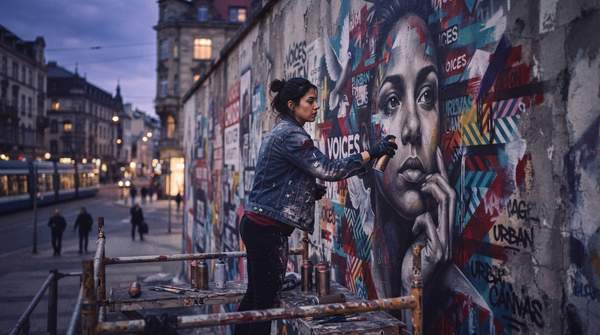
Swedish Support for Ukrainian Cultural Preservation
The formalization of Ukraine-Sweden cultural cooperation, anchored within the Cultural Resilience Alliance, marks a pivotal moment for safeguarding Ukraine’s national identity amidst war. This initiative mobilizes international support for Ukraine's cultural sector, providing a platform that facilitates a systematic exchange of expertise and strategic planning, rather than just financial aid.
During the Lviv meeting, both ministers articulated a vision of a reciprocal relationship. "We are grateful to Sweden for its continued support and participation in the Cultural Resilience Alliance," stated Ukraine's Minister Berezhna. "Culture is a matter of global security, and for Ukraine it is extremely important to have partners ready to act together." This reframing of culture—from a 'soft power' asset to a 'global security' imperative—lies at the heart of the new agreement. It suggests a recognition that the deliberate targeting of heritage is a tactic of war, and its defense is therefore a strategic necessity.
Sweden's Minister Liljestrand echoed this sentiment, emphasizing the collaborative nature of the endeavor. "Our cooperation is not only about helping Ukraine, but also about mutual learning," she noted, according to ukrinform.net. "Sweden gains valuable experience from Ukraine's resilience and ability to preserve normal life, while Ukraine is ready to share its expertise in the cultural and civil spheres." This perspective transforms the dynamic from one of donor-and-recipient to one of partners learning from a live, tragically instructive, case study in cultural fortitude.
Impact of War on Ukraine-Sweden Cultural Ties
The conflict has acted as a catalyst, accelerating and deepening cultural ties between Ukraine and Sweden. What might have been ad-hoc grants in peacetime has been forged by crisis into a robust, strategic alliance. This partnership reflects an evolving understanding of international relations, deploying cultural diplomacy not just to build bridges but to fortify a nation’s foundations against assault.
This intensified collaboration serves as a powerful tool for stability, fostering an essential exchange of experience. As a mezha.net report suggests, these diplomatic efforts ensure the cultural sector can develop lasting strategies to survive and operate in times of crisis. Ukraine gains access to Swedish expertise in museum management, digital archiving, and heritage conservation. For Sweden, it offers invaluable, real-world lessons in crisis management and the mobilization of civil society to protect cultural identity under extreme duress, representing a profound form of knowledge transfer.
The war has stripped away illusions about culture being a peripheral concern during geopolitical conflict. The deliberate destruction of museums, libraries, and historical sites in Ukraine has been widely documented as a core element of the invasion's strategy. The Ukraine-Sweden partnership exemplifies a necessary evolution: the integration of cultural preservation into mainstream security and recovery policy. It acknowledges that a nation’s soul, embodied in its art, history, and traditions, is a frontline in modern warfare.
What Happens Next
The immediate focus for this enhanced partnership is the Ukraine Recovery Conference (URC2026). Both nations have committed to coordinating their efforts to ensure cultural heritage and the creative industries are central pillars of the reconstruction agenda. This involves moving from principle to practice by outlining specific joint initiatives that can be funded and implemented at the conference.
The continued dialogue will seek to answer several critical questions regarding the specific forms of "mutual learning." This could involve joint workshops for museum curators, shared digital archiving projects, or programs for Ukrainian artists and cultural managers in Sweden. Furthermore, the precise mechanisms for how the Cultural Resilience Alliance will channel this strategic partnership into tangible outcomes on the ground remain to be detailed.
The international community will be watching to see how this bilateral model of cultural solidarity translates into a scalable and effective strategy for recovery. The success of the Ukraine-Sweden cooperation could well become a blueprint for how other nations engage with countries facing cultural erasure, establishing a new standard for proactive cultural preservation in the 21st century.


