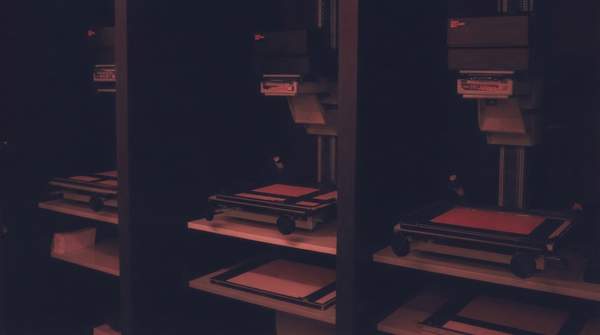
Analog photography survives in a digital-dominated world not because of nostalgia alone, but because it offers artists something digital workflows struggle to replicate: a slow, tactile creative process, an aesthetic built from material imperfection, and a philosophical claim to authenticity. Research by Darmawan and colleagues, published in 2023 and summarized by fine art photographer Tim Layton, argues that film photography "brings back the value of authenticity and 'aura' in art… not just as nostalgia, but as a way to foster awareness and reclaim human creativity." The appeal is best understood as three interlocking drivers—intentional process, distinctive aesthetics, and the philosophical value of a unique physical object—each of which contrasts sharply with the digital alternative.
The Intentionality of the Analog Process
Film photography records images on film or paper through chemical processes, where digital cameras capture them with electronic sensors. That technical difference produces a psychological one. Writing on the contemporary revival of analog, Ester Vella observes that the limited number of exposures on a roll pushes photographers to "put more intention into their shots," since the goal is to avoid wasting expensive, unrepeatable film on something not worth capturing. Every frame gains value precisely because it is unique and cannot be redone.
The absence of a preview screen deepens this deliberation. As Layton explains in his analysis of the 2023 research, with analog "there is no 'preview' button—only the photographer's understanding of light, form, and chemistry." This slowness fosters heightened awareness of the subject and surroundings—a key ingredient, the researchers argue, in creating expressive, emotionally resonant art. They frame the practice as what Heidegger calls poesis: a process of revealing truth through making, aligning film with traditional fine art forms in which the hand of the artist is inseparable from the final piece.
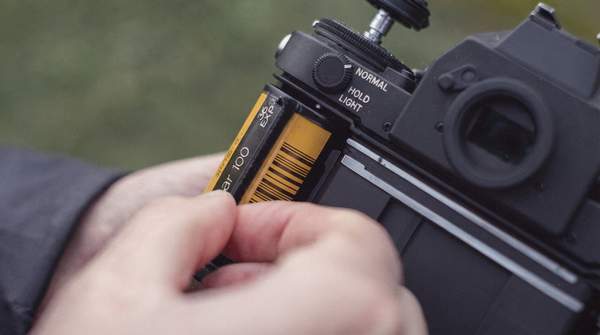
The tactile dimension matters too. Writing for The Conversation, Rotem Rozental compares loading a roll of film to other physical media rituals—rewinding a cassette, browsing a video store—describing these as "objects of belonging that signal specific cultural moments, rituals and aesthetics" that younger people are now discovering for the first time. The handling of the medium is not a chore before photography; for many practitioners it is part of the art itself.
Aesthetic Qualities: Grain, Imperfections, and Tangibility
Film's look is inseparable from its physical chemistry. Writing at Analog.Cafe, photographer Michael Elliott notes that "film's inherent imperfections, such as subtle colour shifts and (in the case of black-and-white film) grain, add character and authenticity to the photographs." Crucially, these imperfections often become part of the narrative, conveying nostalgia, emotion, and timelessness. In this reading, grain and unpredictable color are not technical deficiencies but expressive instruments.
Elliott is emphatic that these qualities resist imitation: digital filters and effects "struggle to emulate authentically" the look of film, and in his own experience the medium's colors and tones arrive "absolutely perfect straight out of the box," producing a "dreamy, surreal, grainy, gorgeous aesthetic" that he has never been able to match with a digital camera. That is a practitioner's testimony rather than a measured comparison, but it points to why artists prize film's texture: the aesthetic emerges from the material itself rather than from a post-processing layer applied afterward.
Philosophical Value: Walter Benjamin's 'Aura' and Authenticity
The deepest layer of film's appeal is philosophical. At its center sits Walter Benjamin's concept of aura—the unique presence and authenticity of an artwork, grounded in its creation by a human hand and its existence in a specific time and place. Benjamin argued that mechanical reproduction strips art of this aura, and the 2023 research by Darmawan, Piliang, Saidi, and Mutiaz extends the argument: digital photography magnifies the problem through its limitless replication.
Analog photography, by contrast, preserves aura. As Layton summarizes the researchers' position, each image—shaped by physical tools, chemical processes, and the artist's intent—carries an irreplaceable materiality. Where a digital file can be copied endlessly with no diminishment of any "original," a film negative and a hand-made print exist as particular objects, tied to a moment and a making. This is not merely a romantic preference; the researchers position analog practice as a philosophical response to the alienation of modern image-making, resisting commodification by demanding personal involvement and craftsmanship. Each print is a product of deliberate human effort rather than algorithmic efficiency, reinforcing both the artist's integrity and the piece's uniqueness.
Analog vs. Digital: A Creative Framework
The three drivers above can be organized into a single comparative framework. Each row contrasts what the medium asks of the photographer, what it looks like, and what it is—and the digital side of the comparison is drawn only where the underlying analysis actually addresses it.
| Dimension | Analog Photography | Digital Photography |
|---|---|---|
| Creative Process | Limited exposures per roll and no preview foster intentionality, careful consideration, and heightened awareness of the subject; each shot is unique and unrepeatable, and the slowness is treated as an ingredient of expressive art. | Images are captured by electronic sensors; the deliberate, ritual engagement of film—loading, manual operation, chemical development—is absent. |
| Aesthetic Qualities | Inherent imperfections such as subtle color shifts and grain add character and authenticity, becoming part of the narrative and conveying nostalgia, emotion, and timelessness. | Practitioners report that digital filters and effects struggle to authentically emulate film's grain and color character. |
| Philosophical Value / Authenticity | Each image—shaped by physical tools, chemical processes, and the artist's intent—carries an irreplaceable materiality and preserves Benjamin's 'aura' through its presence in a specific time and place. | Limitless replication strips images of aura; they can be endlessly copied without diminishing any 'original,' detaching them from a unique presence in time and space. |
Read across the rows, the framework reveals a consistent pattern: analog's constraints—few shots, no preview, chemical development—are the very sources of its intentionality, its distinctive texture, and its claim to aura. The digital column's strengths, efficiency and reproducibility, are the exact qualities that dilute uniqueness. An artist choosing between them is not choosing better or worse image-making; they are choosing which trade-off serves their creative intent.
Embracing the Art of Intentionality
Artists and enthusiasts seeking a more deliberate, tactile, and authentic creative experience should explore analog photography to cultivate a deeper connection with their craft and produce images imbued with unique character and 'aura'. The researchers' own conclusion frames the choice plainly: analog photography reaffirms the value of time, touch, and intention, reconnecting the artist with their subject and the viewer with a physical object.
For anyone testing whether the medium suits them, the evidence suggests a concrete way to gauge adoption: increased engagement with manual camera settings, film loading, and darkroom processes, alongside a shift towards more thoughtful composition and fewer overall shots, indicates a successful adoption of analog principles. Notably, the sources document that limited frames push photographers toward more intentional shooting—the observable signal is the engagement with the manual, chemical workflow itself, and the deliberation it demands. If a few rolls of film change how carefully you look before you press the shutter, the appeal of analog has done its work.