Contemporary art reaches audiences through three very different channels, and choosing among them is mostly a question of what you want from the encounter. Art festivals offer a bustling, multidisciplinary, often free night out; galleries provide a focused, contemplative setting built around a single artist or theme; and public art turns up unbidden in parks and on city streets. Understanding how these formats differ in atmosphere, cost, scale, and commercial intent helps you match the experience to your interests, budget, and available time.
Art Festivals: A Bustling Community Experience
The festival model concentrates a large amount of art into a short window. San Antonio's Luminaria Contemporary Arts Festival, for example, announced a slate of 44 visual artists, artist collectives, performers, poets, and music groups for its free one-night event running from 6 p.m. to midnight—a format that lets visitors move through an expansive downtown footprint and encounter work from dozens of creators in a single evening. Now in its sixteenth year, the festival shows how the format favors breadth and spectacle over depth.
Community-oriented festivals work similarly at the local scale. The Vero Beach Art Club's fall fine arts festival featured works by 50 artists from the surrounding area, alongside food trucks, a children's tent, and other activities. That mix is characteristic: the festival is as much a social gathering as an art event, with food, music, and family programming woven around the artworks themselves. If you enjoy energy, crowds, and variety, this is your format.
Gallery Exhibitions: Focused and Contemplative Encounters
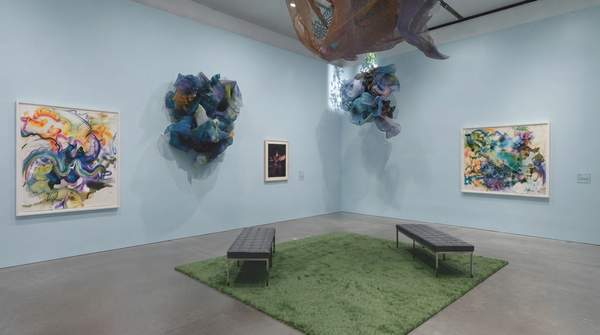
The gallery experience is nearly the opposite. Writing for Contemporary Art Issue, Julien Delagrange describes the solo exhibition as a significant career milestone for an artist, typically showcasing a specific series of works or a particular period—preferably recent ones. The format concentrates attention: instead of forty-four artists in six hours, you get one artist's sustained vision, often in a quiet room designed for slow looking.
Group exhibitions follow a different logic. As Delagrange explains, they let a gallery present multiple represented artists in one show, frequently combined with one or two new faces to keep things exciting and to try out emerging talent. Solo shows, however, tend to dominate gallery programming. The gallery environment is built for concentrated viewing of specific artists or themes, which makes it the right choice when you want to understand one artist's practice rather than sample many.
Choosing Your Art Experience: A Comparative Guide
The table below aligns the three models across five dimensions drawn from the evidence. Where a cell is thin, that reflects what the sources support rather than a claim that the format lacks that characteristic.
| Dimension | Art Festivals | Gallery Exhibitions | Public Art Installations |
|---|---|---|---|
| Atmosphere & Experience | Bustling, social, multidisciplinary; food trucks, children's activities, and music alongside the art | Focused and contemplative; designed for concentrated viewing of specific artists or themes | Encountered in the course of everyday life, as with the public installations and mural incorporated into Luminaria's festival footprint |
| Scale & Duration | Large-scale, short-duration events—Luminaria runs one night, 6 p.m. to midnight, with 44 participating artists and groups | Structured around solo or group exhibitions of a single artist's series or several represented artists | — |
| Cost & Accessibility | Luminaria's one-night event is free; some fairs carry high participation costs for exhibitors | — | — |
| Types of Art | Diverse: visual art, performance, poetry, and music; some fairs specialize in particular media such as photography or prints | Specific series, periods, or rosters of represented artists, often recent work | Installations and murals sited in public space, such as the mural by the artist Rubio near San Pedro Culture Park |
| Commercial Focus | Fairs function as marketplaces and starting points for collectors | Primary point of sale; galleries are commercial enterprises that promote and sell their artists' work | — |
Commercial Aspects: When Art Is for Sale (and When It Isn't)
Commercial intent is one of the sharpest distinctions between these formats. Art galleries, as Delagrange puts it plainly, are commercial enterprises: they need to promote their artists and sell their work, and the solo exhibition has proven the ideal format for generating buzz, interest, and exposure. Walking into a gallery means walking into a sales environment, even if no one pressures you.
Art fairs sit somewhere between the gallery and the festival. Art-collecting.com's fair guide describes fairs as "an excellent starting point for anyone interested in collecting art," large-scale events that let visitors view a diverse selection of quality artworks in a short amount of time. Prestigious fairs like Art Basel and Frieze feature top-tier galleries and dealers, largely because of the high cost of participation. Miami Art Week, the guide notes, is an opportunity to experience, purchase, and learn about contemporary art at once—buying is present but optional.
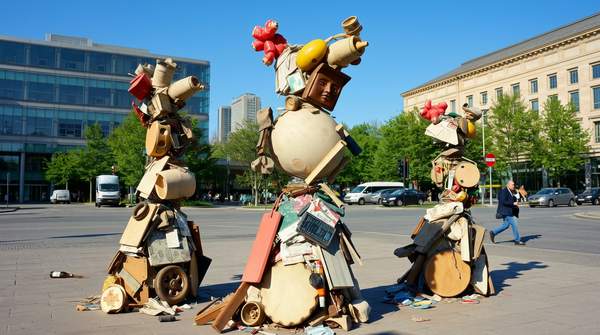
Public art, by contrast, exists outside the sales relationship entirely. The mural and installations around San Pedro Culture Park that Luminaria weaves into its footprint are not there to be purchased; they are encountered in place, as part of the civic landscape. If you want to look at art without any transaction hovering in the background, this is the model that offers it.
Your Next Art Adventure: Making the Right Choice
To choose the best contemporary art experience, consider your desired atmosphere, budget, time commitment, and interest in purchasing art. Each format answers a different question. If you have one free evening and want variety, energy, and a social scene—possibly at no cost—a festival like Luminaria packs dozens of artists into a single night. If you want to go deep on one artist's recent work, and don't mind that the room exists to sell it, a gallery solo exhibition is the format built for that encounter. If your time is unpredictable and you'd rather not plan at all, public installations and murals are there when you pass them.
The formats also mix well in practice: Luminaria's downtown footprint incorporates existing public art, meaning a festival visit can double as a public-art tour. The practical test is simple—before your next art outing, decide whether you want breadth or depth, social energy or quiet, and whether or not you're open to buying. The reader who can answer those three questions will have identified their preferred model, whether festival, gallery, or public art, and can plan accordingly.
Sources
- Luminaria Contemporary Arts Festival Announces Artist Lineup — Glasstire
- What are the Different Types of Art Exhibitions? — CAI — Contemporary Art Issue - Magazine & Educational Art Platform
- U.S. & International Art Fairs — ART Collecting