Analog photography is popular again because it offers what digital workflows quietly removed: a tangible process, a slower pace, and a sense of authentic authorship. Photographers who return to film consistently describe the medium not as superior technology but as a different creative experience—one where the making of the image matters as much as the image itself. Understanding that distinction requires looking at how the two workflows actually differ, stage by stage, and what psychological needs the analog process satisfies.
The Analog Resurgence: A Counter-Narrative to Digital Speed
The comeback is best understood as a reaction rather than a revival for its own sake. Writing in an academic analysis of photography and digital automation, researchers argue that digital camera automation has absorbed many of the technical skills photographers once held, transforming them "from experts into operators who only need to understand how to use the equipment." The result, that analysis contends, is a form of alienation: photographers feel a loss of control and authentic expertise in their own creative process.
Practitioner writing echoes the same diagnosis from the other side of the desk. Michael Elliott, writing for Analog.Cafe, frames the resurgence of film as evidence of "our innate desire for connection, authenticity, and a tangible experience" in a digital age. A studio essay on film's comeback makes the same point in plainer terms: returning to film "isn't just about nostalgia; it's a cultural shift speaking volumes to an appeal for authenticity, tangible experiences, and imperfections."
What unites these accounts is that none of them claims film produces objectively better pictures. The claim is narrower and more interesting: the analog process itself—its pace, its materials, its demands—delivers an experience that digital photography, however capable, does not.
Analog vs. Digital: A Creative Workflow Comparison
The clearest way to see the appeal is to juxtapose the two workflows across the stages a photograph passes through, from capture to final output. The table below contrasts them on pace, materiality, feedback, and the resulting psychological experience, drawing on academic analysis and photographer accounts.
| Dimension | Analog Photography | Digital Photography |
|---|---|---|
| Process Stage | Manual camera operation, deliberate film selection, anticipation during development, and physical print creation. | Often segmented expertise—camera operation, digital processing, and output handled separately—with extensive post-capture manipulation possible. |
| Pace & Deliberation | Encourages slowing down, careful composition, and understanding of exposure and timing for each frame. | Allows rapid, dynamic capture with less pre-shot deliberation, given immediate feedback and endless manipulation options. |
| Materiality & Tangibility | A rich, multi-sensory experience: mechanical cameras, physical film, and a tangible print as a record of light and time. | Primarily screen-based interaction with intangible files; physical prints are an optional, separate step. |
| Feedback Loop | Delayed—results are unseen until development, building anticipation and reward. | Immediate—review on the camera or screen allows instant adjustment. |
| Psychological Experience | Reported authenticity, mindfulness, and connection to craftsmanship, with imperfection embraced as part of the result. | Efficiency and flexibility, but with the alienation from the process that academic analysis describes. |
Read across the rows, the comparison shows why the slower method attracts practitioners: every dimension that digital optimizes for speed and flexibility is precisely where analog photographers locate the value. The framework also clarifies that this describes typical workflows—variations exist on both sides, and a digital photographer can print, slow down, and work deliberately too. The point is what each process structurally encourages.
Seeking Authenticity and 'Aura' in a Digital World
At the center of the academic explanation is the concept of "aura"—the quality of a work that carries the presence of its maker's subjectivity. The analysis of digital automation treats aura as "an essential aspect pursued in every artistic process," one that allows subjectivity to be fully expressed in each work, including photographs. When cameras automate away the technical decisions, that expression of subjectivity thins, and the photographer's authorship becomes harder to feel.
The Southeastern China study published through PMC frames the same longing as a desire for the "real," a desire that it says "challenges the very nature of representation in the digital age." A film negative is a physical trace: light struck a strip of chemically sensitive material, and the resulting image cannot be infinitely re-rendered. For photographers seeking authenticity, that irreversibility is the point. The studio essay on film's comeback describes the appeal in almost identical terms—a demand for authenticity and tangible experience among artists, enthusiasts, and young creators alike.
Mindfulness and Deliberation: The Appeal of a Slower Creative Pace
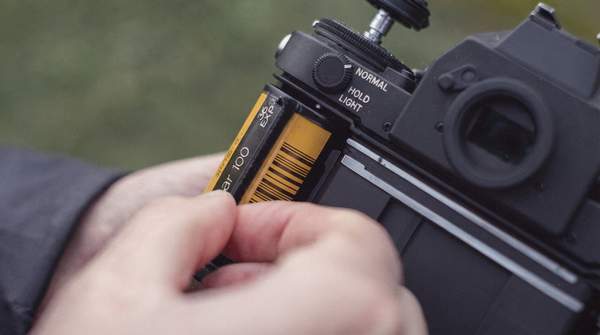
The PMC study identifies the mechanism most photographers describe in practice: analog photography "demands a different kind of attention, a slowing down that runs counter to the digital flow." Its account of the process—manual operation of mechanical cameras, deliberate selection and handling of film, anticipation during development, and the eventual creation of a physical print—describes a multi-sensory engagement that contrasts with what it calls the "often-disembodied nature of screen-based interactions."
That slowing down is not incidental; it is enforced by the medium's constraints. Film costs money per frame, and development takes time, so each exposure invites consideration before the shutter fires. Elliott's essay names mindfulness explicitly among what film photographers value, alongside artistic expression and rich aesthetics. The academic automation analysis adds the complementary point: digital's instant feedback and endless manipulability reduce the pressure to deliberate before capture, because mistakes can be corrected afterward.
These are reported experiences and academic interpretations, not clinical findings—no one should read the trend as a prescription. But the consistency of the accounts across academic and practitioner sources is itself evidence that the slowness is a feature, not a bug.
Embracing Imperfection and the Craft of Creation
The final motivation is the one most alien to digital thinking: imperfection as a value. The studio essay on film's comeback lists imperfections alongside authenticity and tangible experience as the core of the cultural shift. Grain, light leaks, and unpredictable chemistry are not defects to be engineered away; they are marks of the process, and embracing them reframes photography as craft rather than optimization.
The academic analysis deepens this with its observation about segmented expertise. In professional digital workflows, different specialists often handle capture, processing, and output; the analog ideal, by contrast, is closer to a single maker overseeing the entire creation—an interpretation of the classical concept of techne applied to photography. When a photographer loads the film, makes the exposure, develops the roll, and makes the print, the result is unambiguously theirs.
Cost and practicality remain real constraints. BBC reporting on the trend notes that film is not cheap—disposable cameras around £17–20 plus development, or film rolls at roughly £4–12 with £8–12 to develop—and quotes one practitioner advising hobbyists to "do a bit less of it, or buy old film, or learn to develop yourself." Another adds that it "doesn't have to be one or the other," mixing phone photos with film. The resurgence, in other words, is a chosen practice within a digital life, not a rejection of it.
Embracing the Deliberate: The Enduring Appeal of Analog
Readers seeking a more deliberate, tangible, and authentic creative experience in photography should explore analog methods, understanding that the process itself is a significant part of its value. The evidence across academic and practitioner sources converges on one framework: digital optimizes speed, flexibility, and instant feedback, while analog offers embodiment, anticipation, authorship, and a physical record—and people are choosing film precisely for that difference, not because it is better.
The measurable indicator of this appeal is increased engagement with physical photographic materials—film, darkroom chemicals, and vintage cameras—paired with a slower, more intentional approach to image-making. For an individual reader, the test is concrete: load a roll of film, shoot it frame by frame with consideration, and see whether the delayed, tangible result changes how taking a photograph feels. That shift in attention, not any technical superiority, is what the resurgence is about.
Sources
- Journal
- The Enduring Allure of Film Photography: In the Digital Age — ANALOG
- Film’s Comeback: Why Analog Photography Is Back — Nordieartstudio
- Analog photography enhances identity, well-being, and social connection, in Southeastern China - PMC
- Film cameras: The resurgence of analogue from digital cameras — BBC