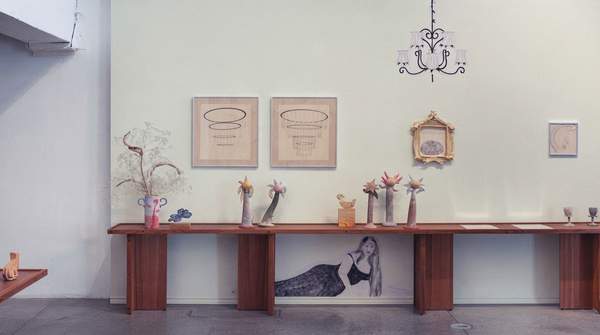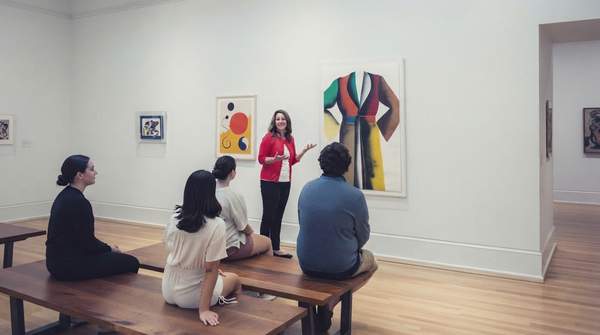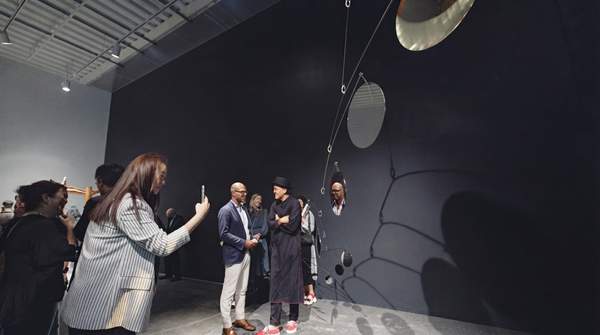
Contemporary installation art is defined by two things that set it apart from painting and sculpture: it is built for a specific space, and it is completed by the viewer's presence within it. As the Irish Museum of Modern Art explains, the form emerged from artists who abandoned the frame and the plinth, shifting attention "to the totality of the actual experience of the artwork – its materials, context and site." Understanding this shift is the key to interpreting installations, and this article offers a comparative model and a practical framework for doing so.
What is Installation Art? A Redefinition of Space and Experience
Installation art typically involves arranging objects, multimedia elements, sound, light, and sometimes performance within a defined space, with the goal of immersing the audience in an environment that challenges perceptions, evokes emotions, or provokes thought. That definition, from the auction platform AstaGuru's art education blog, captures the form's essential ambition: unlike a painting confined to a frame or a sculpture resting on a pedestal, an installation occupies entire spaces and invites viewers to step inside, move around, and interact with the work.
The Irish Museum of Modern Art traces this redefinition to Minimalist artists who resisted the representational strategies characteristic of painting and sculpture, alongside developments in Environmental Art, Land Art, Conceptual Art, Performance Art, Happenings and Video Art. These movements produced temporary, performative and site-specific work that, in IMMA's account, subverted the commodification of the artwork and shifted consideration from what the artwork represents to what it communicates.
Site-specificity is central to this identity. Installation art is typically created for a particular location and often integrates features of that site, making the environment an essential part of the artwork rather than a neutral backdrop. The Art Story's overview of the movement illustrates this with works that physically choreograph the visitor's body: a site-specific crack that demands viewers come up close and then shift their distance, and Random International's Rain Room, a fully immersive environment consisting of an entire room filled with rain.
Installation Art vs. Traditional Art: A Fundamental Shift
The clearest way to understand installation art is to contrast it with traditional forms across the attributes that matter most: the viewer's relationship to the work, the use of space, the focus of the work, and its permanence. The table below synthesizes definitions from IMMA, AstaGuru, and The Art Story into a single comparative overview.
| Characteristic | Traditional Art (e.g., Painting/Sculpture) | Installation Art |
|---|---|---|
| Viewer Relationship | Viewers are typically passive observers, admiring the artwork from a distance. | Viewers are active participants whose presence and interaction are integral to the artwork's meaning; the work is often completed by the viewer's movement and engagement within the space. |
| Use of Space | Works are typically contained within a frame or pedestal, existing independently of their exhibition space, which serves as a neutral backdrop. | Works are designed to transform the perception and experience of a specific space, often site-specific; the exhibition space itself becomes an integral part of the artwork. |
| Focus | The primary focus is on the aesthetic object, its visual representation, and the artist's technical skill; meaning derives from inherent beauty or craftsmanship. | The focus is concept-driven, prioritizing ideas, social commentary, experiences, and communication; the main idea and the reactions it causes are more important than materials or techniques. |
| Permanence | Works are typically permanent, portable objects intended for collection and commodification, with value tied to physical existence and marketability. | Works are often temporary, site-specific, and experiential, challenging traditional notions of permanence and commodification; their value lies in the unique experience they offer rather than their physical longevity. |
Read together, these contrasts describe a fundamental shift: from passive observation to active participation, and from object-centric beauty to concept-driven communication. AstaGuru characterizes installation art as concept-driven, focused on ideas—concepts, social commentary, or experiences—rather than permanent aesthetic objects, while IMMA's account of the form's origins emphasizes the deliberate subversion of the artwork as a commodity.
The Viewer's Role: From Observer to Participant
The most consequential of these differences is the viewer's changed position. Installation art blurs the line between observer and participant, dissolving the traditional distance between the audience and the artwork and encouraging active engagement rather than passive viewing. AstaGuru describes this as breaking boundaries between art and life: by enveloping the viewer, the installation makes the person part of the work rather than someone standing outside it.
The Art Story's examples show this participation operating physically. A crack in a gallery floor hands viewers an experience that brings to mind notions of boundaries, discomfort, and safety—but only because they must walk along it, adjusting their distance as its variations unfold. The meaning is not visible from a single fixed viewpoint; it is produced by the body moving through the space.
Research on aesthetic engagement supports treating this encounter as genuinely interactive. A study published in the National Library of Medicine's journal archive proposes that an artwork can be treated as an intentional extension of the artist, so that engagement constitutes a social interaction in which meaning-making is inferred from projected communicative intent. The same model suggests viewers mentally "enter" the artwork, integrating sensory, spatial, temporal, and conceptual information into a coherent environment explored both perceptually and imaginatively.
Interpreting Installation Art: A Practical Framework
Because meaning in installation art arises from experience rather than from an object's inherent beauty, interpretation must be an active, constructive process. Tate's research on contemporary art education, by Helen Charman and Michaela Ross, argues that the skills of interpretation must be taught—meaning is not simply received but made through dialogue and critical engagement. A practical framework for any viewer follows from the evidence gathered above.
- Start with the site. Ask how the work uses its specific location. Since installations are typically created for a particular place and integrate its features, the environment is part of the content, not a container for it.
- Read the materials. Consider what the chosen materials communicate. IMMA notes that the form draws attention to the totality of the experience—materials, context, and site together—so material choices carry conceptual weight.
- Track your own movement. Notice how the work directs your body: where it draws you close, where it pushes you back, what discomfort or comfort it produces. Your interaction is part of the work's meaning.
- Infer the communicative intent. Treat the work as a message from the artist about a concept, a social commentary, or an experience, and ask what it communicates rather than what it represents.
- Articulate the experience. Name the emotion or idea the encounter produced. The value of an installation lies in the unique experience it offers, so your response is evidence, not decoration.
This process moves beyond observing visual representations to inferring meaning from the artist's communicative intent and the experiential impact of the environment. It is a general framework, not a definitive method for any single artwork—but it equips you for works that can otherwise seem abstract or unapproachable.
Engaging with Installation Art: A Call to Active Interpretation
To fully appreciate contemporary installation art, viewers should actively engage with the artwork by considering its specific context, the materials used, and their own interactive experience within the transformed space. The decision this article supports is simple: walk in, move through, and interpret rather than merely look.
The reader will demonstrate understanding by articulating how a specific installation challenges traditional art norms and identifying key elements for its interpretation—for example: "This piece uses [material] to evoke [concept] within [space], and my interaction with it makes me feel [emotion]." That sentence, completed for any installation you encounter, is the measurable test of the framework at work.