Art education is far more than a recreational pursuit; it is a rigorous discipline that systematically cultivates the essential skills of critical thinking. By teaching students to observe the world with precision, interpret complex information, and form reasoned judgments, art education builds a foundation for analysis and evaluation applicable to every area of life. The process of engaging with art—whether through creation, analysis, or critique—is a structured exercise in the cognitive abilities that underpin academic success, professional innovation, and thoughtful civic engagement.
The Foundational Role of Art in Critical Thinking
The power of art education to foster critical thinking begins with the fundamental act of observation. According to materials from Walden University, art teaches students to look at the world more closely. A work of art is often a complex and layered object, filled with multiple elements and potential meanings that are not immediately apparent. The process of examining these details—identifying patterns, questioning the artist's choices, and considering context—trains the mind to move beyond surface-level impressions. This practice of deep observation and analysis forms what the university's resources call "the bedrock of critical thinking."
This training in observation translates directly into other domains. The ability to detect detail, honed by studying a painting or sculpture, supports careful reading, nuanced scientific analysis, and the capacity for evidence-based reasoning in any subject. By engaging with artistic creation and analysis, students strengthen their ability to think independently, solve complex problems, and understand multifaceted ideas. This cognitive development is not accidental but a direct result of the structured, hands-on thinking that art demands.
The Art-to-Critical Thinking Pathway
The journey from a classroom art activity to a well-developed critical mind follows a clear, multi-stage path. Specific practices inherent in art education systematically build distinct cognitive skills, which in turn yield significant benefits for both the individual and society. The following table illustrates this developmental pathway.
| Art Education Activity | Cognitive Skill Developed | Broader Life and Societal Benefit |
|---|---|---|
| Detailed Observation and Interpretation Students learn to look closely at complex works, identifying elements, patterns, and potential meanings that are not immediately obvious. |
Analysis and Evidence-Based Reasoning This practice trains students to analyze visual information, draw inferences, and support their interpretations with evidence from the work itself. |
Situational Awareness and Empathy The habit of careful observation fosters a greater awareness of one's surroundings and a deeper understanding of different perspectives, which enhances empathy. |
| Creative Problem-Solving Art projects present open-ended challenges that require students to plan, experiment with materials, and adapt their approach when faced with obstacles. |
Adaptability and Independent Thinking This process builds resilience and resourcefulness, strengthening a student's ability to think independently and devise innovative solutions to problems without a single correct answer. |
Innovation and Professional Readiness The capacity for creative problem-solving and adaptability is highly valued in the professional world and contributes to a more innovative society. |
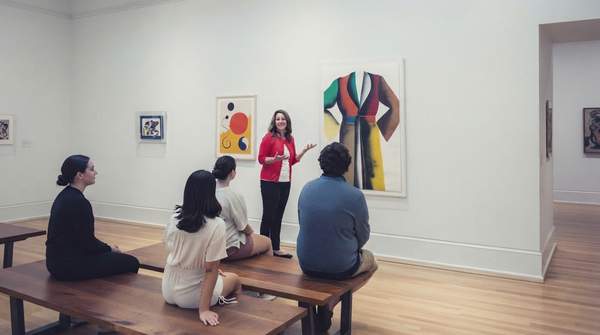
| Constructive Critique and Debate In group critiques, students articulate their own artistic choices, listen to the interpretations of others, and engage in respectful, reasoned debate. |
Synthesis and Justification Students must synthesize feedback, evaluate different viewpoints, and justify their own decisions, developing sophisticated communication and reasoning skills. |
Tolerance and Civic-Mindedness Engaging with diverse perspectives in a diplomatic and compromising manner fosters mutual respect, tolerance, and a more civic-minded society. |