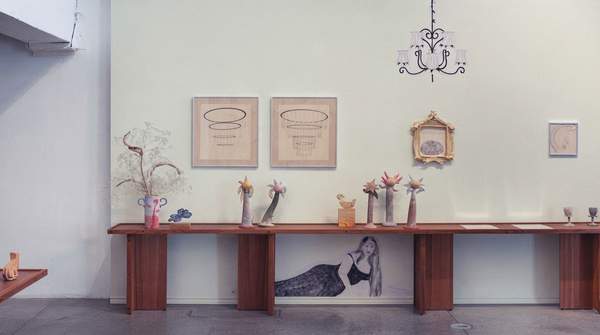
In 1965, art journals were already publishing lengthy articles dissecting 'Minimalism' and its emerging principles, a full year before any major museum exhibition officially brought the art form to public prominence. Early critical engagement ensured intellectual discourse preceded widespread visual exposure, fundamentally shaping the movement's initial understanding, defined by stark simplicity and industrial materials.
Critical discourse and intellectual debate around Minimalism flourished before significant public exhibitions, yet the movement still achieved widespread popular triumph across continents. The movement's trajectory upends conventional notions of how art movements gain cultural traction.
The early intellectual framing of Minimalism, rather than initial broad public exposure, appears to have been a crucial factor in its eventual widespread acceptance and enduring cultural impact.
What Defines Minimalist Art?
Minimalism emerged as a reaction against the perceived excesses of Abstract Expressionism, which artists considered overly personal and emotionally charged. The new aesthetic emphasized a reduction to essential forms, often employing geometric shapes and industrial materials like steel, Plexiglas, and concrete. The movement sought to strip away narrative, symbolism, and subjective expression, focusing instead on objective presence and the viewer's direct experience with the object in space.
Artists working within this style aimed to create works that were self-referential, meaning the art was about itself rather than representing something else. The simplicity of form often belied a complex intellectual underpinning, inviting viewers to engage with the artwork on a purely visual and spatial level, free from traditional artistic narratives.
The Intellectual Genesis and Cultural Triumph of Minimalism
Lengthy articles discussing Minimalism appeared in art journals in 1965, preceding any major exhibitions and initiating critical discourse before prolonged public observation, according to Artforum. Early intellectual validation by critics likely pre-seeded its widespread acceptance, suggesting that critical pre-approval can accelerate an art movement's cultural triumph. The Jewish Museum's April 1966 exhibition of 'Younger American and British Sculptors' was a significant event in bringing Minimalism to prominence, according to Artforum, which also notes that lengthy articles discussing Minimalism appeared in 1965 before any major exhibitions were held. The situation reveals 'prominence' can manifest differently, either through intellectual discourse or public exhibition.