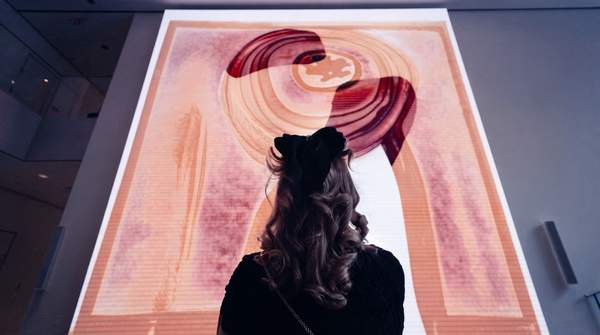
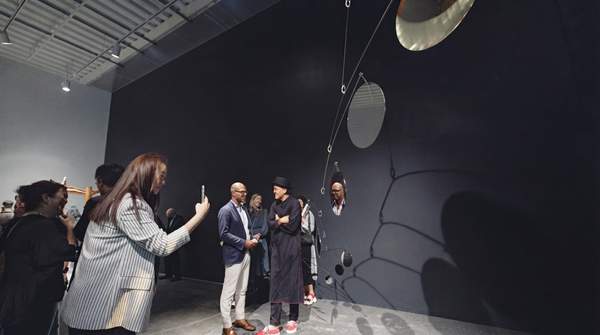
In San Francisco, a private foundation plans to install up to 100 large-scale public art pieces over three years, largely bypassing the city's official Arts Commission.
Private initiatives often aim to boost civic engagement through public art, but they frequently bypass the very public bodies designed to ensure artistic integrity and community input.
Therefore, the current trajectory suggests that public art, without robust and transparent oversight, is increasingly vulnerable to commercialization and a loss of its intended civic purpose.
The Sijbrandij Foundation's 'Big Art Loop' project, planning up to 100 temporary large-scale public art installations over three years, proceeds with minimal oversight from the San Francisco Arts Commission, KQED reports. This rapid expansion of privately funded public art, unchecked by established art bodies, shifts control over public artistic expression and its vetting. It blurs the line between civic beautification and commercial advertising, creating a regulatory vacuum cities are ill-equipped to fill.
When Art Becomes an Ad: The Salina Mural Controversy
In Salina, Kansas, city officials deemed a mural on Steve Howard's hamburger restaurant, The Cozy Inn, an advertisement, Kansas Public Radio reported. The mural, depicting UFO-like hamburgers and the phrase 'Don’t Fear the Smell! The Fun Is Inside!!', fit the city code's definition of a sign used to 'announce, direct attention to, or advertise'. This ruling exposes a crisis in urban planning. Without clear, modern definitions, cities risk stifling genuine artistic expression or inadvertently endorsing commercial messaging as public art. Salina's case reveals how municipal codes struggle to differentiate between artistic expression and commercial messaging, particularly when art directly references a business.
The Promise of Engagement vs. The Reality of Oversight
The Sijbrandij Foundation claims its 'Big Art Loop' encourages civic engagement through city and community partners, sfrecpark states. This goal, however, directly contradicts the foundation's actions, which actively bypass established democratic channels for public input on art. Bypassing established public art processes undermines the very community input it purports to encourage. This reveals a fundamental hypocrisy: community involvement is touted, but democratic oversight is actively undermined.
The Systemic Erosion of Public Art Governance
The Sijbrandij Foundation installs art through city agencies not specializing in art, bypassing the usual art commission approval process, KQED reported. This systemic circumvention of specialized art bodies prioritizes expediency over expert review and public accountability, altering public art governance and character. The Sijbrandij Foundation's strategy sets a dangerous precedent: private money can bypass democratic oversight, turning public spaces into curated galleries without public consent. Private initiatives exploit bureaucratic loopholes by engaging non-specialized city agencies, effectively privatizing public aesthetic decisions.
Legal Battles and Policy Shifts: The Future of Public Space
Steve Howard, owner of Salina's Cozy Inn, filed a federal lawsuit against the City of Salina over the mural, Kansas Justice Institute reports. The lawsuit, notably not seeking monetary damages, reveals a fundamental clash: private expression versus a city's authority to regulate commercial messaging. In response, Salina retained Wendy Moeller, Principal/Owner of Compass Point Planning, to assist with community listening sessions and potential policy amendments to its sign code. This proactive step, prompted by a hamburger mural lawsuit, shows how a single dispute can force a municipality to re-evaluate its regulatory framework for public expression. The combined examples of San Francisco's 'Big Art Loop' and Salina's 'Cozy Inn' mural demonstrate that cities are ill-equipped to manage the influx of privately funded public art. This leaves them vulnerable to unchecked commercialization or protracted legal battles over artistic intent. Legal challenges and policy reviews confirm current frameworks are inadequate for navigating the complex intersection of private art initiatives and public space. Urgent re-evaluation of public art definition and governance is necessary.
Wendy Moeller's ongoing efforts in Salina to propose policy amendments by 2026 will likely prove critical in shaping how cities nationwide define and regulate public expression amidst increasing commercial pressures. This outcome appears to determine the future integrity of public art.