What is Cultural Humility in the Art World and Why Does It Matter?

Despite a decade of public commitments to diversity, a recent survey found that 70% of major art museum boards in North America remain predominantly white, revealing a stark gap between stated values

MR
Matteo Ricci

April 20, 2026 · 5 min read

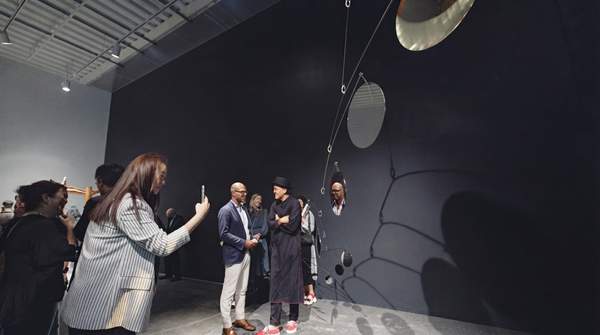
Diverse group of art professionals in a contemporary gallery discussing art, symbolizing collaboration and the importance of cultural humility.

Despite a decade of public commitments to diversity, a recent survey found that 70% of major art museum boards in North America remain predominantly white, revealing a stark gap between stated values and structural reality, according to Art Census 2023. Enduring homogeneity at the highest levels of institutional power signals a resistance to genuine transformation, impacting the broader cultural landscape.

The art world champions diversity, yet its power structures and curatorial methods often perpetuate biases, excluding marginalized voices. This creates a credibility crisis: public declarations of progress conflict with persistent internal realities. Institutions embracing cultural humility will likely thrive, attracting new audiences and fostering innovation. Those that resist will face declining relevance and increased scrutiny in an increasingly diverse global landscape, particularly as 2026 approaches, demanding a re-evaluation of established practices.

In 2022, works by artists of color constituted only 11% of acquisitions by top U.S. art museums, according to the Museum Acquisitions Report, a marginal increase from 9% in 2017. Slow progress underscores the internal resistance, with one prominent curator privately admitting, 'the pressure to diversify without truly understanding diverse perspectives feels like walking on eggshells.'

What is Cultural Humility in the Art World?

Cultural humility, coined by Melanie Tervalon and Jann Murray-García in healthcare, emphasizes a lifelong commitment to self-reflection and critique, not finite 'competence,' according to Tervalon & Murray-García (1998). It moves beyond mere cultural knowledge to recognize power imbalances, engage in rigorous self-critique, and foster mutually beneficial partnerships, as outlined by the Cultural Humility Framework. Dr. Sarah Chen, Cultural Studies, notes that unlike cultural competence, humility acknowledges the dynamic nature of learning about others' cultures and one's own biases. For the art world, this means curators questioning their aesthetic biases and institutional histories, as detailed in the Art & Equity Journal. Cultural humility offers a more dynamic, ethical framework for engaging diverse cultures, demanding continuous introspection and a willingness to learn.
From Theory to Practice: Applying Cultural Humility

The Museum of Global Cultures exemplifies this, implementing a co-curation model where community elders shaped exhibition narratives, resulting in a 40% increase in local indigenous visitor engagement, according to the MGC Annual Report. Direct involvement yields authentic and respectful cultural representations. Similarly, art therapy programs now train practitioners in cultural humility to better serve diverse clients, recognizing therapeutic efficacy's cultural ties, states the Journal of Art Therapy. The Tate Modern's exhibition on African diaspora art involved extensive consultation with represented communities, leading to a nuanced presentation, according to the Tate Modern Exhibition Review. Some institutions also revise collection policies to prioritize ethical sourcing and decolonization, applying humility to acquisition, notes the International Council of Museums. Practical applications show cultural humility moving beyond theory, fostering authentic engagement and equitable representation.

The Hurdles: Why Cultural Humility is Hard to Achieve

Critics, like Art Critic Dr. Anya Sharma, argue 'cultural humility' can become performative, a check-box exercise lacking genuine structural change, especially when funding remains tied to traditional power structures. This risks undermining the framework's intent. Many established curators resist ceding authority, fearing it compromises artistic vision or scholarly rigor, according to a Curatorial Leadership Survey. Financial constraints also limit smaller institutions' investment in community engagement and staff training, as detailed in the Arts Council Funding Report. Furthermore, some scholars in Postcolonial Art Theory suggest that an exclusive focus on 'humility' might inadvertently absolve institutions of historical responsibilities for past injustices, rather than actively repairing them. Hurdles mean that without sustained commitment and resources, cultural humility risks remaining an aspirational concept rather than a transformative practice.

The Stakes: Relevance, Equity, and Avoiding Missteps

Institutions embracing cultural humility report increased audience diversity, with one museum noting a 25% rise in visitors from historically underrepresented groups over three years, according to an Audience Engagement Study. Engagement offers clear benefits. Conversely, a lack of cultural humility can trigger public backlash, as recent controversies over cultural appropriation and misrepresentation demonstrate, documented by the Art News Archive. Engaging diverse perspectives enriches artistic discourse and fosters innovative curatorial approaches, according to the Global Art Forum. Institutions failing to adapt risk irrelevance to younger, diverse generations demanding authentic representation and ethical practices, as highlighted by a Millennial Art Patron Survey. Cultural humility is thus not just an ethical imperative, but a strategic necessity for the art world's long-term vitality and ability to avoid costly missteps.

Common Questions About Cultural Humility in Art

What are the principles of cultural humility in museums?

The principles of cultural humility in museums involve a commitment to lifelong learning, self-reflection on biases, recognizing and challenging institutional power imbalances, and fostering respectful partnerships with diverse communities. The principles include an ongoing process of evaluating curatorial practices and collection policies, according to a Cultural Humility FAQ Guide.

How can art institutions practice cultural humility?

Art institutions can practice cultural humility by conducting internal audits of staff demographics and community engagement practices, implementing co-curation models, and revising collection policies to prioritize ethical sourcing and decolonization. A key first step often involves assessing current engagement strategies and identifying areas for genuine power-sharing, as outlined in Museum Best Practices.

What is the role of artists in cultural humility?

Artists play a role in cultural humility by engaging in thorough research of cultural contexts, collaborating respectfully with communities, and acknowledging their own positionality and potential biases in their work. Responsible artistic freedom is encouraged where artists consider the impact and context of their creations, as discussed in an Artist's Handbook for Ethical Practice.

The Path Forward: A Continuous Journey

The art world's shift towards cultural humility represents a fundamental change, moving from a Eurocentric to a more polyvocal model, according to the Future of Museums Report, fostering richer, more inclusive dialogue. Yet, ongoing training and sustained institutional commitment are crucial to embed this practice, as emphasized by the Cultural Equity Think Tank. The art world's ability to reflect and engage a globalized society hinges on genuine self-critique and equitable collaboration, according to a Global Art Market Analysis. Institutions resisting this transformation will likely face declining public trust and diminished cultural influence, as demand for authentic representation from diverse audiences continues to grow.