Gothic Lolita fashion is a Japanese substyle of Lolita dress that fuses the silhouette and modesty of historical European clothing with the darkness and mystery of the Gothic aesthetic. It emerged from Japanese street culture in the 1990s as a hybrid of Western and non-Western influences, and it has since spread far beyond Japan. Today it sustains active communities in Europe, where a gathering in Berlin in 2026 drew enough participation that one organizer is planning further events in Germany and beyond.
The Hybrid Identity of Gothic Lolita Fashion
Understanding Gothic Lolita begins with recognizing that it is deliberately neither one thing nor the other. It is generally understood as a substyle of Lolita fashion, one that combines the doll-like modesty of Lolita dress with darker visual motifs drawn from Gothic aesthetics. The clothing was originally based on traditional European dress, which Japanese street culture began adopting in the 1980s before the Gothic Lolita look crystallized in the 1990s.
Scholars have emphasized the hybrid character of this fusion. Citing the fashion scholar Monden, one account describes the style as having "formed a style that is neither European nor Japanese, but at the same time both European and Japanese." That framing is useful: Gothic Lolita does not reproduce any single historical wardrobe. Instead, it reworks fragments of European visual history into a stylized language within Japanese popular culture, producing something recognizable as its own mode of dress rather than costume revival.
European Echoes: Victorian, Rococo, and Gothic Aesthetics
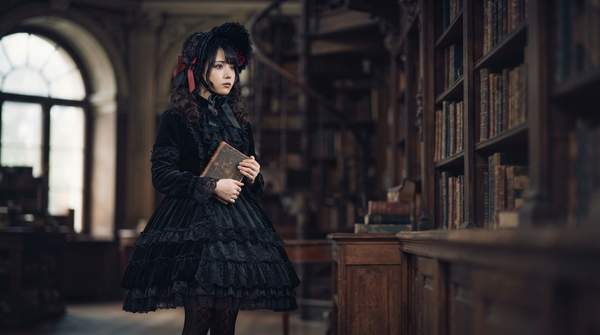
The European side of the style's lineage comes from several distinct historical sources. Lolita clothing in general has been linked to elements of eighteenth-century Rococo dress and nineteenth-century Victorian clothing, particularly in its structured bodices, knee-length or longer skirts, abundant lace, and an emphasis on decorative formality. Typical Gothic Lolita garments follow this template: bell-shaped or A-line skirts and dresses, blouses, and headwear.
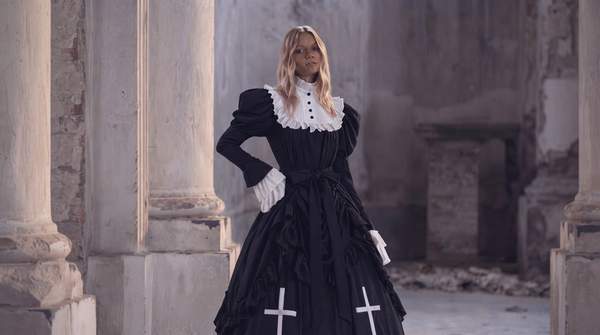
Layered onto this historical foundation is the Gothic contribution. Gothic Lolita draws on visual conventions associated with Gothic art and architecture, including religious imagery, dark colour palettes, stained-glass motifs, crosses, roses, and a general atmosphere of melancholy and theatricality. One description of the aesthetic notes that it specifically incorporates elements from 19th-century Gothic fiction and medieval Gothic architecture, with common motifs including crosses, bats, coffins, and grand castles, rendered in a palette dominated by black and often accented with deep jewel tones such as royal blue, crimson, navy, and purple.
Crucially, these elements are not usually employed in historically accurate ways. Scholarship on Japanese fashion has described street styles such as Lolita as reinterpretations of Western historical dress rather than direct reproductions of it, and the Gothic motifs in particular are reworked into a fashion language rather than reconstructed as period detail.
Japanese Roots: The 'Cute' and Subcultural Blend
The Japanese contribution is just as essential to the style's identity. Gothic Lolita combines what one account calls the loveliness of Lolita fashion with the darkness of the gothic style, and it is renowned for its abundant use of black elements such as lace, ruffles, and straps. The "lovely" side of that equation, the cute, doll-like aesthetic at the heart of Lolita dress, is a distinctly Japanese subcultural sensibility.
The style also sits within a broader Japanese street-fashion context. Gothic Lolita is related to the Goth subculture but combines it with the street fashions of Harajuku and elsewhere. Within Japan, the style is known as "gosurori," a contraction of the phrase "gothic lolita." An essay on Lolita and Japanese society notes that while the fashion has a historical look and feel, it blends multiple historical looks together, including influences from the 1950s and the French Rococo style, into its own individual and recognizable form.
Deconstructing the Gothic Lolita Aesthetic
The table below breaks the style into its core visual components and traces each back to its origin. The pattern that emerges is consistent: the silhouette and decorative vocabulary come from European historical dress, the darkness and imagery come from Gothic art and fiction, and the doll-like loveliness comes from Japanese street culture.
| Visual element | Origin tradition | How it appears in the style |
|---|---|---|
| Bell-shaped and A-line skirts, structured bodices, blouses, headwear | European historical dress (Victorian and Rococo) | Forms the modest, formal silhouette of Lolita clothing, with knee-length or longer skirts and decorative formality |
| Abundant lace and ruffles | European historical dress | Used lavishly as decoration, contributing to both the gothic and the "lovely" aspects of the style |
| Crosses, religious imagery, stained-glass motifs, roses | Gothic art and architecture; 19th-century Gothic fiction | Employed as stylized motifs rather than historically accurate details, alongside bats, coffins, and castles |
| Black-dominated palette with deep jewel-tone accents | Gothic aesthetic | Black as the base colour, accented with royal blue, crimson, navy, and purple |
| Darkness, mystery, melancholy, theatricality | Gothic fiction and architecture | Provides the atmosphere that distinguishes Gothic Lolita from other Lolita substyles |
| Doll-like loveliness and cuteness | Japanese street culture, including Harajuku fashion | The "Lolita" half of the hybrid, adopted by Japanese street culture from the 1980s onward |
Read this way, Gothic Lolita is not a European costume preserved in amber. Each row is a reinterpretation: historical European garments filtered through Japanese subcultural sensibility, and Gothic imagery translated from architecture and literature into wearable decoration.
From Niche to Global: The Evolution of a Subculture
Gothic Lolita's journey from Japanese street corners to international wardrobes tracks the broader export of Japanese culture. The origin of Japanese cultural influence in the West can be traced to the late nineties, when cultural goods such as Hello Kitty, Pokémon, and translated manga appeared in Western markets. Lolita fashion followed the same channels.
Accounts of the style's overseas popularity point to a growing interest in Japanese culture combined with the Internet as a place to share information, which enabled worldwide shopping and allowed enthusiastic foreign Lolitas to purchase fashion items directly. In China, Lolita ranks among the three most popular types of clothing for Gen Z consumers, alongside JK uniforms and hanfu, evidence of how far the style has traveled from its Harajuku origins.
Gothic Lolita in Europe: A Thriving Community
Europe illustrates what this global spread looks like on the ground. Reporting by Kyodo News on a Gothic Lolita gathering in Berlin in 2026 documented an active local community and interest from Japanese brands in reaching it. One participant, Connie, credited digital platforms for the growth: "I think because of social media and everything, it gains more popularity and more people come to it."
She also pushed back against the narrative of decline that sometimes surrounds the style. "Sometimes you hear people saying Lolita is dying out, but I feel more than ever Lolita fashion is spreading and evolving," she said, noting that she had encountered children as young as 11 or 12, and sometimes younger, showing an interest in wearing Lolita fashion. Encouraged by the turnout in Berlin, she hopes to organize more events in Germany and elsewhere in Europe, bringing together fans of a fashion culture shaped by influences from both continents.
Embracing a Global Aesthetic: The Future of Gothic Lolita
The Gothic Lolita subculture continues to thrive globally, particularly in Europe, by adapting and connecting through digital platforms. The style's defining strength, its hybrid identity, is also what makes it portable: because it belongs fully to neither European history nor Japanese street culture, wearers on any continent are engaging with the same reinterpreted aesthetic rather than borrowing someone else's tradition wholesale.
For readers tracking the subculture's trajectory, the measurable indicator is continued growth in international community events and online engagement, exemplified by the 2026 Berlin gathering. Watch for the follow-up events Connie hopes to organize in Germany and elsewhere in Europe, and for the ongoing participation of Japanese brands in European gatherings, both of which would confirm the style's enduring appeal and its continued evolution beyond Japan.
Sources
- Gothic Lolita - Wikipedia — EN
- Gothic Lolita; European & Japanese subculture — fashionphantasmagoria
- FEATURE: Japan's Gothic Lolita fashion finds growing following in Europe — Japan Wire by Kyodo News
- Lolita fashion - Wikipedia — EN
- Aesthetics
- Essay on lolita and Japanese society — EGL