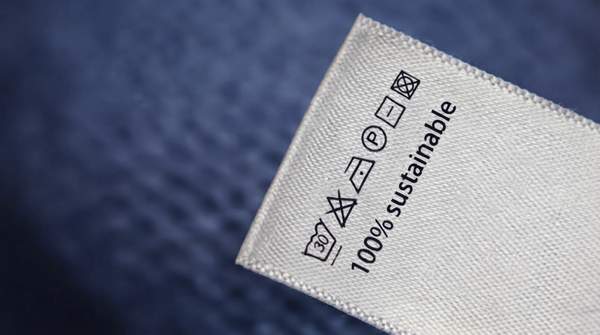
No single certification covers everything. A label like OEKO-TEX STANDARD 100 tells you a garment was tested for harmful substances; the Responsible Wool Standard tells you about sheep welfare and grazing land; SA8000 tells you about working conditions. Understanding which focus area a label addresses—chemical safety, materials, animal welfare, or labor—is the fastest way to judge whether a product matches your values, because a garment can be certified on one dimension while remaining unverified on others.
Why Sustainable Fashion Certifications Matter
Eco-labels generally refer to environmental and social sustainability, and they help shoppers identify companies aiming to reduce their environmental footprint through organic and sustainable material sourcing, safer chemicals, or improved energy efficiency, as Mara Fasano explains in her guide for Eco-Stylist. But the term "sustainable" on its own guarantees nothing specific. A certification, by contrast, ties a claim to defined criteria and, in many cases, third-party verification.
The practical value lies in the gaps. Fasano highlights a case where something eco-certified still fell short on basic labor rights—precisely the kind of mismatch that a focus-area framework exposes. FashionUnited's industry overview likewise notes that certifications span distinct specializations: fibre standards, chemical control, labour rights, circular standards and fair trade. Some organizations perform audits only, while others add education, business support and lobbying. The label tells you what was checked, not that everything was.
Understanding Key Sustainability Focus Areas
Most fashion certifications cluster around four broad concerns. The first is chemical safety and toxicity—whether the substances in or used to make a textile are safe for humans and the environment. The second is environmental impact, emissions and resource use, covering how materials are grown, processed, and manufactured. The third is social and ethical standards, including labor rights and supply-chain responsibility. The fourth is animal welfare, from wool and fur policy to fully animal-free products.
These categories overlap in practice. Eco-Stylist splits environmental metrics into two areas—Environmental Impact, Emissions & Resource Use, and Chemicals & Toxicity—while treating ethical standards as a broader separate domain covering labour rights, animal care, and supply chain responsibility. A single certification may touch several areas to varying degrees, which is why the table below records each label's primary stated focus rather than its full scope.
Comparison of Key Sustainable Fashion Certifications
The table below categorizes seven widely encountered labels by their primary focus, based on how each certification is publicly described. Read it as a decoder: find the label on your garment, then check which column it sits in.
| Certification | Primary Focus Area | What It Guarantees |
|---|---|---|
| OEKO-TEX STANDARD 100 | Chemical safety | Textile and leather products tested for harmful substances, safe from a human-ecological perspective |
| OEKO-TEX MADE IN GREEN | Chemical safety & social responsibility | Textiles tested for harmful substances and manufactured under sustainable working conditions |
| bluesign | Chemical safety & environmental impact | Consumer safety, water and air emissions, and occupational health, with particular focus on reducing harmful substance usage early in production |
| Global Organic Textile Standard (GOTS) | Organic materials & environmental/social criteria | Environmental and social criteria across processing, manufacturing, packaging, labeling, trading, and distribution of natural fibers |
| Responsible Wool Standard (RWS) | Animal welfare & land management | Wool from farms with a progressive approach to sheep welfare and the land they graze on; accredited by Textile Exchange |
| The Vegan Trademark | Animal welfare | No animal-derived ingredients or animal testing involved; run by The Vegan Society since 1990 |
| SA8000 | Labor rights & social performance | Social performance on child labor, forced labor, health and safety, and working hours; developed by Social Accountability International |
The pattern is visible at a glance: OEKO-TEX STANDARD 100 is primarily about chemical safety, while MADE IN GREEN extends that to working conditions. RWS is about animal welfare and land management for one specific material, and SA8000 is about labor rights. Note the scope differences even within a family—OEKO-TEX also runs STeP and DETOX TO ZERO for optimizing ecological and socially responsible production, and ECO PASSPORT for environmentally friendly chemicals, per FashionUnited's descriptions.
Making Informed Choices Aligned with Your Values
Use the framework as a checklist rather than a ranking. If chemical safety is your priority, look for OEKO-TEX STANDARD 100 or bluesign. If animal welfare drives your decisions, RWS covers wool specifically, while the Vegan Trademark certifies no animal-derived ingredients or testing across a wide range of industries. If labor conditions matter most, SA8000 and MADE IN GREEN address working conditions directly. For material origin, GOTS certifies organic natural fibers through the supply chain.
Two caveats keep expectations accurate. This guide covers common labels, not an exhaustive directory, and it reflects publicly available descriptions of the certifications rather than a deep audit of their technical standards documents. Some certifications cover multiple aspects to varying degrees, so a label's absence of coverage in one area is not a failure—it is simply a different mandate. Project Cece's guide makes the same point from the shopper's side: certifications let you focus on the kind of "ethical" that matters most to you.
Empowering Your Sustainable Fashion Choices
Consumers can make more informed purchasing decisions by understanding the specific focus areas of sustainable fashion certifications, rather than relying on a general "sustainable" claim. The measurable test is simple: the next time you pick up a garment, identify the certification label on it and name its primary focus—chemical safety, animal welfare, labor practices, or material sourcing—before deciding whether it aligns with your values. If the label's focus matches what you care about, it is doing its job; if it does not, you now know exactly what question to ask next.