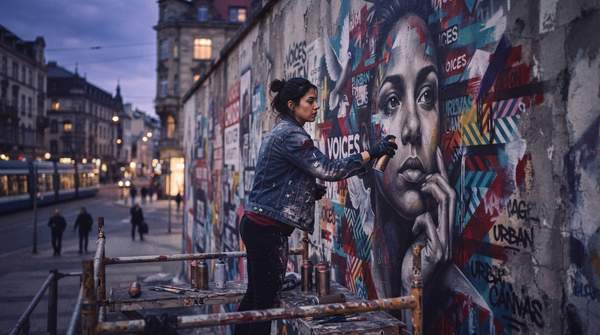
In Sacramento County alone, the arts and culture industry generated $241.7 million and supported nearly 4,400 jobs in just one year, according to Comstock's magazine. This substantial economic activity also yielded $164.8 million in personal income, demonstrating a deep financial contribution to the local economy. These figures challenge the traditional image of cultural activities as mere amenities, revealing their robust impact on employment and individual prosperity.
Cultural philanthropy was once primarily seen as supporting artistic output, but it is now demonstrably a powerful driver of economic growth and community development. This evolving perspective reveals a tension in how the success of cultural investment is measured, moving beyond purely artistic merit to encompass broader societal benefits.
By 2026, cultural funding models will increasingly integrate with urban planning, public health, and economic development strategies, demanding broader metrics of success beyond artistic merit.
The Broad Reach of New Cultural Funding
Mass Cultural Council awarded more than 2,200 grants totaling almost $35 million in Fiscal Year 2026, a significant financial commitment to the cultural sector. This extensive investment supports a wide array of initiatives designed to foster creative expression and community engagement across Massachusetts, as reported by Mass Cultural Council. The proliferation of these grants is a strategic effort to decentralize cultural funding and empower local initiatives.
Moreover, Cultural Districts reported over 2.7 million visitors and 264 new businesses within their boundaries in FY26, according to Mass Cultural Council. This data reveals the direct economic output of cultural investment, contrasting with the purely financial metrics often emphasized by publications like Comstock's magazine. While Comstock's focuses on direct economic output and job creation, the Mass Cultural Council's data broadens the definition of 'return' to include vibrant community spaces and entrepreneurial growth. This shift signals a more sophisticated understanding of cultural investment, recognizing its multifaceted contributions to both economic vitality and social cohesion.
Community Engagement at the Core
The Card to Culture program expanded to include over 600 participating organizations, providing more than 3 million free or discounted admissions. This program, detailed by Mass Cultural Council, ensures that cultural experiences are accessible to a wider demographic, dismantling economic barriers that often limit participation. This scale points to a deliberate strategy to embed cultural engagement deeply within communities, moving away from an exclusive model.
Furthermore, over 2,400 volunteers serve on 329 Local Cultural Councils and four Tribal Cultural Councils, reviewing approximately 13,140 applications in FY26, according to Mass Cultural Council. This extensive volunteer network and high volume of applications processed reveal a robust grassroots infrastructure. The localized decision-making and extensive community involvement in grant allocation exemplify a powerful, scalable model for local development and civic participation, often outpacing top-down approaches. This grassroots engagement cultivates a profound sense of shared ownership and cultural relevance, proving essential for sustainable community building.
Measuring Beyond Artistic Merit
The Neighborhood Vitality Index (NVI) survey collects neighborhood-level indicators related to schools, safety, parks, and health care, as detailed by Urban. This comprehensive data collection tool signifies a growing recognition that community well-being is multifaceted, extending beyond traditional economic indicators to include social and environmental factors. Such tools enable a more nuanced evaluation of cultural interventions by connecting them to broader community health metrics.
In a related development, the Washington DC Office of Planning (DCOP) received a $1 million grant from the Kresge Foundation in 2016 to support equitable creative placemaking and civic engagement, according to urban.org. The targeted funding for creative placemaking illustrates a deliberate strategy to integrate cultural initiatives with urban planning, aiming for measurable community well-being and equitable development. Such integration represents a critical evolution, acknowledging that cultural vitality is inextricably linked to the holistic health and equity of urban environments.
Direct Impact on Diverse Communities
In the first two years of the Kresge Foundation-funded initiative, the DCOP completed 17 projects in 12 different types of spaces, engaging over 17,000 participants, as reported by urban.org. These projects spanned various community settings, from public parks to neighborhood centers, ensuring broad accessibility and relevance. The extensive participation numbers show the effectiveness of community-led initiatives in generating widespread civic engagement and fostering local transformation.
Such initiatives demonstrate how cultural projects can serve as catalysts for social cohesion and revitalization, particularly in underserved areas. By actively involving residents in the creative process and leveraging diverse community spaces, these programs build social capital and reinforce local identity, fostering a deeper, more enduring local transformation that transcends mere aesthetic improvements.
Culture as a Public Health Strategy
Mass Cultural Council invested $75,000 across three community health centers to incorporate social prescribing into patient care plans. This program, detailed by Mass Cultural Council, directly links cultural engagement to clinical health outcomes, a far less obvious application than economic development or artistic support. The initiative recognizes that participation in arts and culture can significantly contribute to mental and physical well-being, offering a complementary approach to traditional medical interventions.
This pioneering investment in social prescribing points to a future where cultural engagement is recognized as a legitimate component of public health and holistic well-being strategies. It positions cultural institutions not just as purveyors of art, but as vital partners in community health, expanding their relevance and revealing a potent, underutilized pathway for direct societal improvement. This paradigm shift redefines the very mission of cultural organizations, embedding them within the broader public welfare infrastructure.
Local Governments Embrace Cultural Value
The Sacramento County Board of Supervisors approved grant funding for 72 nonprofit arts and culture organizations. This allocation of resources, according to Saccounty, is a clear governmental endorsement of the sector's value beyond its traditional artistic contributions. Such support ensures the continued operation and expansion of cultural programs that directly benefit local residents and contribute to the area's economic vibrancy.
This local government support, reinforcing the sector's vital role in community development, aligns with Comstock's magazine data: cultural philanthropy is not a luxury but a robust economic engine, generating hundreds of millions in local revenue and thousands of jobs, challenging the perception of it as mere artistic patronage. This strategic funding, exemplified by the Sacramento County Board of Supervisors' actions, indicates a broader embrace of cultural initiatives as integral to civic planning and community prosperity.
If current trends persist, cultural funding will likely solidify its position as an indispensable component of urban planning, public health, and economic development strategies, demanding a re-evaluation of its societal impact beyond artistic merit.