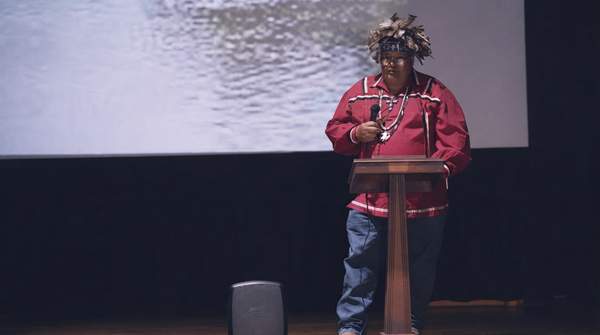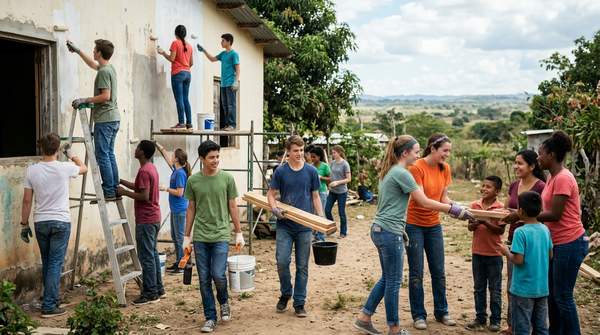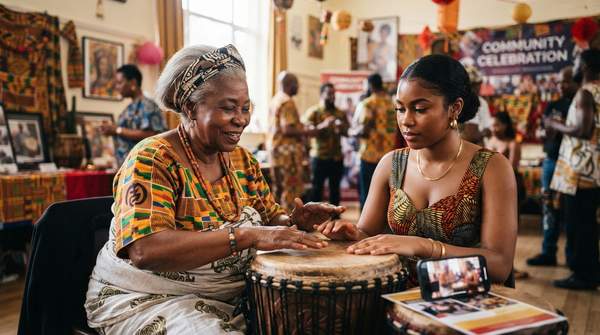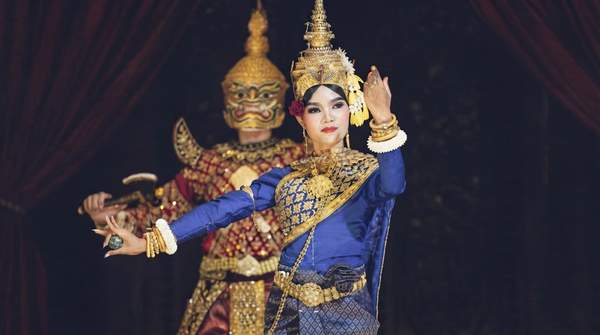
Cultural heritage does not stop at monuments and museum collections. According to UNESCO, it also includes "traditions or living expressions inherited from our ancestors and passed on to our descendants" — everything from oral traditions and performing arts to festive events, traditional knowledge of nature, and the skills behind traditional crafts. This living dimension, known as intangible cultural heritage, is what UNESCO's 2003 Convention for the Safeguarding of the Intangible Cultural Heritage is designed to protect, and it organizes this broad concept into five official domains.
Understanding Intangible Cultural Heritage
UNESCO defines intangible cultural heritage as the practices, knowledge, and expressions that communities recognize as part of their cultural identity, together with the objects and spaces associated with them. The definition has three load-bearing elements. First, recognition comes from the community itself: a practice counts as heritage because the people who perform it say it matters to who they are. Second, it is transmitted through generations — it survives only because it keeps being passed on. Third, it adapts over time, which means it is inherently dynamic rather than frozen.
UNESCO presents this heritage as a global wealth of cultural traditions and practices whose safeguarding matters for future generations. It also frames it as fragile: intangible heritage is described as an important factor in maintaining cultural diversity in the face of growing globalization. A tradition that is no longer performed, taught, or transmitted does not simply sit in storage the way an unvisited monument does — it disappears.
Distinguishing Intangible from Tangible Heritage
The boundary between the two categories is the boundary between objects and practices. Tangible heritage is physical: monuments, architectural works, and artifacts, as well as collections of objects. Intangible heritage is non-material — practices, ideologies, and traditional knowledge passed down across generations, as one explainer for educators puts it. A temple is tangible; the ritual performed inside it, the songs sung there, and the craft skills used to build and maintain it are intangible.
Two clarifications keep the distinction precise. The first is that the categories are complementary, not opposed: UNESCO's definition of intangible heritage explicitly includes "associated objects and spaces," so a festival's costumes or a craft's tools belong to the picture even though the heritage itself lies in the skills and practices, not the items. The second is that change is a feature, not a defect. A monument is conserved by preventing physical alteration; a living tradition survives precisely by adapting as each generation renews it. That is why UNESCO's expanded view of heritage, developed through its instruments over recent decades, required a separate concept and a separate convention from the one governing World Heritage sites.