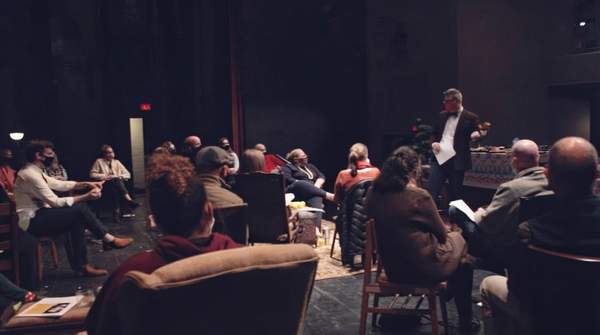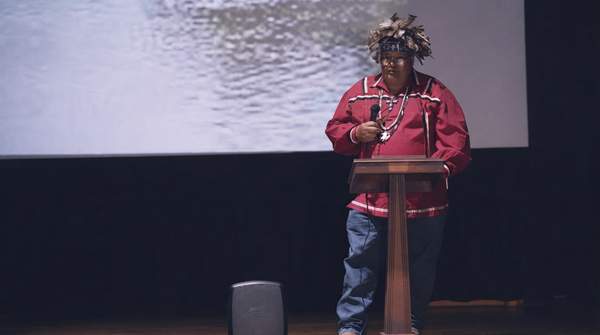
Community members who gathered at Craven Community College on Sunday, November 8, 2026, received more than a performance: presenters at the Tuscarora cultural program delivered an explicit message that their people remain present and thriving in their original homelands. The New Bern Historical Society presented the afternoon program, with the Cypress Society Singers and Dancers leading songs, dances, and stories at Orringer Auditorium.
Tuscarora Culture Shines at Craven Community College
The program formed part of the New Bern Historical Society's ongoing educational series, held at 2 p.m. in the college's Orringer Auditorium. According to the college's event listing, the Cypress Society Singers and Dancers represent the Kahtehnuaka Tuscarora peoples who reside in lands now called North Carolina, with the group primarily led by Kat Littleturtle and Kaya Littleturtle. WCTI's report on the event noted that North Carolina is home to one of the largest American Indian populations east of the Mississippi, encompassing a variety of tribes and urban Indian organizations.
Performances Reflect a Living Heritage
The Cypress Society Singers and Dancers performed songs and dances connected to the traditions of the Eastern Woodland Indigenous nations. The college's listing promised audiences "the old stories of the eastern woodland native nations" along with "the old dances and songs," framing the program as a journey that began at the beginning of creation. WCTI's account of the event described the same arc: the program took the audience through creation and offered a glimpse into the culture and traditions of the region's original inhabitants.
A Thriving, Contemporary Identity
The event's central message came directly from Kaya Littleturtle, a Tuscarora cultural practitioner and presenter. "The Tuscarora people are still here and thriving in our original homelands," Littleturtle said, according to WCTI. "We're not just the people of the past. We're people of the present and of the future and that we're still singing our songs and our dances and speaking our languages."
That framing matters because it positions the performances not as historical reenactment but as evidence of continuity. Littleturtle also said Tuscarora people continue to live in their original homelands and share their culture with future generations, explicitly countering any perception of the culture as static or confined to the past.
Connecting Cultural Expressions to Contemporary Vitality
The event's components can be mapped directly onto the presenters' stated purpose, showing how each element served the message of a living culture rather than a museum piece.
| Event element | What audiences experienced | Stated significance |
|---|---|---|
| Cypress Society Singers and Dancers | Songs and dances connected to Eastern Woodland Indigenous traditions | Continued practice of living traditions, per the college's listing of "old dances and songs" |
| Creation narrative and stories | A journey beginning at creation, glimpsing traditions of the region's original inhabitants | Roots the present community in enduring cultural foundations |
| Kaya Littleturtle's remarks | Direct statements to the audience | Tuscarora people are "still here and thriving in our original homelands" — people of the present and future |
Read together, the rows show the reasoning path: the performances demonstrated that songs and dances are still actively practiced, while Littleturtle's statements supplied the interpretation — that these expressions belong to a present and future-oriented people, not only a historical one.
Educational Impact and Community Connection
For the New Bern Historical Society, the program extended an educational series into Indigenous cultural sharing hosted at a community college venue. For attendees, it offered direct engagement with practitioners of the region's original cultures. This report covers the November 8, 2026 event only and draws on public news reporting and the college's event listing rather than firsthand attendance; it is not a comprehensive history of the Tuscarora people.
Monitoring Cultural Engagement and Educational Outreach
Community members and educational institutions should continue to support and host events that allow Indigenous cultural practitioners to share their living traditions and narratives. The measurable indicator to watch is future event listings and news reports detailing similar cultural presentations by Indigenous groups at Craven Community College or other local educational venues — the clearest signal of whether this model of cultural sharing continues.