Contemporary art projects that tackle climate change tend to fall into three distinct strategic models: artist-scientist collaborations that translate data into experience, community-based cultural exchanges that root sustainability in local tradition, and museum exhibitions that foreground Indigenous ecological knowledge. Understanding these models helps readers see past the surface of any single exhibition or residency and recognize what a project is actually trying to accomplish — and for whom.
Introduction: Art as a Bridge for Climate and Heritage
Across very different settings — a Costa Rican science lab, a fishing island in Hong Kong, a gallery wall in New York — artists and cultural organizations are converging on the same problem: climate change is often experienced as abstract data, while cultural heritage is felt as lived identity. Projects that join the two attempt to close that gap. The organization ARTPORT_making waves, for instance, describes its mission as harnessing "the transformative power of contemporary art to address climate + ocean action, sustainability, and social justice" through interdisciplinary collaboration among artists, curators, scientists, educators, and policymakers, with an explicit commitment to supporting Indigenous knowledge and community-centered practices. That mission statement captures the field's shared logic, but the operational strategies differ in ways worth distinguishing.
Model 1: Artist-Scientist Collaborations for Data Resonance
The first model embeds artists directly in scientific environments. The clearest documented example is Next Season, an initiative that promoted eight artist residencies in some of Costa Rica's most prominent scientific centers, connecting artists with organizations and researchers working on the climate crisis. According to the British Columbia Council for International Cooperation, which profiled the initiative, the project "fostered new language and aesthetics in artistic expressions that speak to the climate emergency." The resulting works were exhibited at the Museum of Contemporary Art and Design in San José, drawing roughly 700 visitors.
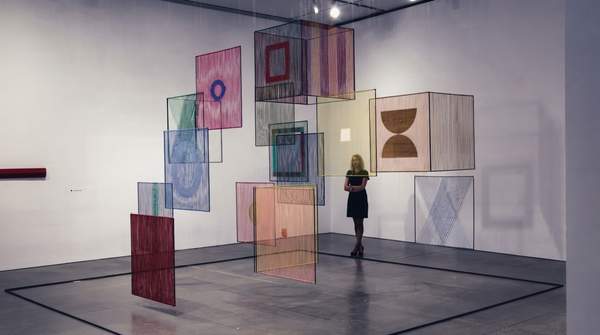
The strategy's core move is translation. The project's exhibition, Next Season: Art and Science in the Face of the Climate Future, combined the artists' research interests with climate change information, lived experiences, and data — and, notably, engaged students at different levels in discussions and reflections about the climate emergency from an artistic point of view. A related approach appears in the Peabody Essex Museum's 2023 exhibition Climate Action: Inspiring Change, which combined contemporary art, hands-on experiences, and youth artists' work with science and participation, focusing on known solutions including Indigenous practices. The aim in both cases is to bridge the gap between scientific understanding and public perception.
Model 2: Community-Based Cultural Exchanges for Local Action
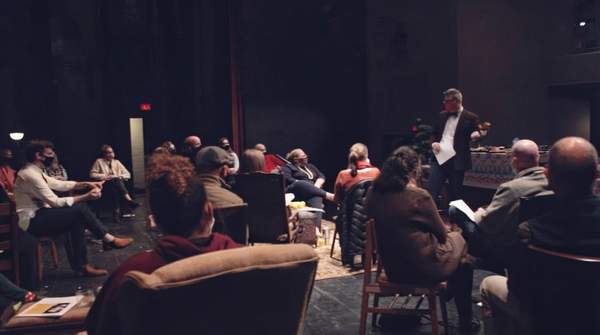
The second model works outward from place rather than inward from data. A UNESCO-supported conference in Hong Kong in October 2026 illustrates it: following a regional open call, an Artist Exchange Series facilitated cross-border mobility, peer learning, and collaboration, connecting artists with new audiences, practitioners, and cultural contexts. Two selected artists from the Republic of Korea presented under the title "From Ocean to City: How Art Reimagines Climate Action," demonstrating how visual art can make environmental issues more tangible and prompt reflection on everyday practices.
The heritage dimension became concrete in a field visit to Kat O Island, whose traditional culture festival anchored the exchange. UNESCO reports that the visit connected the artists' contemporary approaches to environmental issues with the cultural traditions, local knowledge, and community identities that shape people's relationships with place, bringing together young Korean artists and Hong Kong practitioners for cross-cultural dialogue around artistic practice, heritage, and sustainability. The encounter reflected the ambition of the Je Create framework: connecting creativity with local contexts and communities while encouraging knowledge exchange across borders and disciplines. A parallel regional logic appears in research by MoMA's Cisneros Institute, which describes artists, ecologists, and climate activists rethinking relationships to territory, resources, and cultural traditions — proposing what it calls a major cultural shift for the region's development.
Model 3: Indigenous Knowledge Exhibitions for Environmental Advocacy
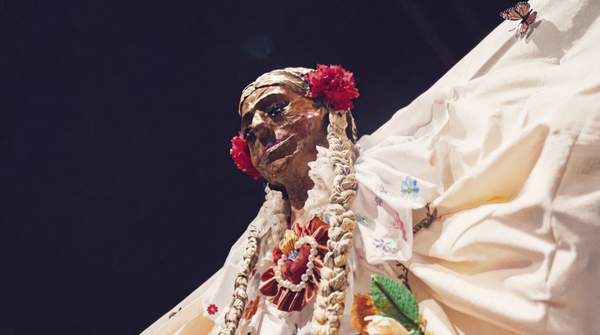
The third model operates inside museums, using institutional platforms to connect historical and contemporary Indigenous art with present-day environmental struggles. The Metropolitan Museum of Art hosted a recorded conversation, "Art and Activism: Environmental Protection and Contemporary Indigenous Art," featuring artists alongside the curator of the exhibitions "Water Memories" and "Art of Native America: The Charles and Valerie Diker Collection." The conversation explored the significance of water to diverse Indigenous peoples and Nations in the United States as expressed through historical, modern, and contemporary art.
What distinguishes this model is that the artists themselves are positioned as activists. The Met's program examined the artists' processes alongside ongoing work to protect water and land, aesthetic activism, and the specific challenges contemporary Indigenous artist-activists face. Here cultural heritage preservation is not a backdrop for climate messaging; the two are the same project — safeguarding relationships to water and land that Indigenous art both documents and defends.
Comparative Models of Art-Based Climate Activism
The table below categorizes these examples into three operational models and compares them across their core strategy, a representative project, and the role cultural heritage plays in each.
| Project Model | Core Strategy | Example Project | Role of Cultural Heritage |
|---|---|---|---|
| Artist-Scientist Collaboration | Artists and scientists collaborate to translate abstract climate data into tangible, emotionally resonant experiences, bridging scientific understanding and public perception. | Next Season: Art and Science in the Face of the Climate Future (Costa Rica; exhibited at MADC, about 700 visitors). | Connects creativity with local contexts and communities, encouraging knowledge exchange across disciplines to inform sustainable futures. |
| Community-Based Cultural Exchange | Connects contemporary artists with local communities and cultural traditions to foster dialogue on sustainability, encouraging cross-border mobility and peer learning. | UNESCO-supported conference and field visit to Kat O Island, Hong Kong (October 2026), under the Je Create framework. | Local knowledge, traditions, and community identities shape relationships to place; artists rethink territory, resources, and tradition. |
| Indigenous Knowledge Exhibition | Exhibitions and programs feature contemporary Indigenous art to advocate for environmental protection and highlight traditional ecological knowledge. | The Met's "Art and Activism" conversation with artists and the curator of "Water Memories" and "Art of Native America." | Heritage preservation and environmental advocacy are inseparable: art documents and defends Indigenous relationships to water and land. |
Readers can use this framework diagnostically. A residency inside a research institute signals the first model; a festival visit with international artists signals the second; an exhibition pairing historical and contemporary Indigenous work signals the third. The categories are illustrative rather than exhaustive — many projects blend approaches.
The Shared Purpose: Connecting Abstract Data to Lived Experience
Despite their different venues and methods, these models share one underlying goal: making climate information emotionally resonant by attaching it to lived experience and local identity. The Next Season exhibition explicitly combined research interests with lived experiences and data. The Kat O Island exchange explicitly connected environmental approaches to community identities and relationships with place. The Met's program framed water not as a resource statistic but as significant to diverse Indigenous peoples and Nations. In each case, the artistic strategy is the same move executed in a different register: replace abstraction with attachment, so that climate change is understood not only as a global measurement but as something happening to a specific place, tradition, or community.
Inspiring Action Through Art: A Path Forward
Contemporary art projects effectively merge climate activism and cultural heritage preservation by translating abstract climate data into emotionally resonant experiences connected to local identity — whether through residencies in scientific centers, community exchanges on heritage islands, or exhibitions of Indigenous ecological knowledge. The measurable indicator of their success is increased public engagement with climate issues, evidenced by participation in art-science dialogues, community-led heritage initiatives, and exhibitions featuring Indigenous ecological knowledge. The Next Season exhibition's roughly 700 museum visitors and its engagement of students in climate discussions offer one concrete early signal; the UNESCO exchange's extension of peer learning beyond the conference venue offers another. Readers evaluating any new project in this field can ask a simple question: which of the three models is it executing, and does its engagement — attendance, dialogue, community participation — actually grow?