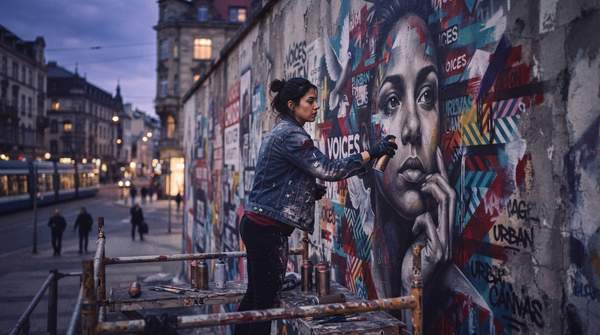
The Kuching Festival 2026, a month-long event spanning 26 days with 29 planned activities, is themed 'Building a Compassionate and Resilient City for a Sustainable Future,' as reported by DayakDaily. The Kuching Festival 2026's theme, 'Building a Compassionate and Resilient City for a Sustainable Future,' suggests a purpose beyond mere celebration, directly aligning the festival with urban development policy.
Such large-scale cultural festivals, including the Cornwall SDG International Afro and Diversity Festival scheduled for July 10-12, 2026, often appear as spontaneous community gatherings. Yet, they function as meticulously planned strategic initiatives, prioritizing significant civic and economic objectives, often elevating urban development over pure cultural expression.
Cities are increasingly employing large-scale cultural festivals as sophisticated instruments for urban development, community building, and economic branding, moving beyond simple entertainment. Employing large-scale cultural festivals as sophisticated instruments for urban development, community building, and economic branding transforms public festivities into calculated investments, designed to attract specific demographics and bolster urban resilience, thereby becoming integral to a city's strategic planning.
1. Kuching Festival 2026: A Global Diversity Showcase
Best for: Families and tech-savvy individuals interested in comprehensive urban engagement and cultural diversity.
The Kuching Festival 2026, celebrating its 40th anniversary, presents a broad spectrum of activities, including the Smart Kids, Smart City Challenge – Robotic Walk, a Cosplay Competition, and a K-Pop Dance Cover Competition, alongside various sports, as reported by DayakDaily. The Kuching Festival 2026's diverse programming, including the Smart Kids, Smart City Challenge – Robotic Walk, a Cosplay Competition, and a K-Pop Dance Cover Competition, alongside various sports, reflects a deliberate strategy to integrate modern interests with traditional cultural displays, aiming to engage a younger, digitally native audience.
Strengths: Extensive duration (26 days); wide range of modern and traditional activities; strong focus on urban development themes. | Limitations: Complexity of managing numerous simultaneous events; potential for diluting core cultural focus with diverse attractions. | Price: Free for attendees; various vendor and participation fees for specific events.
2. Cornwall SDG International Afro and Diversity Festival: Community Building Through Culture
Best for: Community members seeking interactive cultural experiences and local engagement.
The Cornwall SDG International Afro and Diversity Festival in 2025 drew over 6,400 participants through pre-festival activities and the three-day event, as reported by Standard-freeholder. Held for the third time in Cornwall's Lamoureux Park, this festival showcased music, food, community activities, interactive workshops, family activities, and art displays. Such sustained engagement, coupled with diverse offerings, suggests a successful model for fostering local pride and reinforcing a collective identity within the community.
Strengths: Proven track record of high community engagement; diverse activities fostering participation; clear local economic benefits through sponsorship. | Limitations: Shorter duration compared to larger festivals; reliance on local sponsorship tiers for funding. | Price: Free for attendees; tiered sponsorship opportunities for businesses from bronze ($250) to diamond ($5,000).
Strategic Visions and Measurable Impact
| Feature | Kuching Festival 2026 | Cornwall SDG International Afro and Diversity Festival |
|---|---|---|
| Primary Theme | 'Building a Compassionate and Resilient City for a Sustainable Future' | 'Rhythms Without Borders' (for 2025 festival) |
| Duration | 26 days (July 22 to August 16) | 3 days (July 10-12) |
| Key Engagement Metric | 29 distinct events; 40th anniversary celebration | Over 6,400 people engaged in 2025 |
| Sponsorship Model | Not explicitly detailed in provided facts, but implied by scale | Tiered plans ranging from $250 (bronze) to $5,000 (diamond) |
| Urban Development Focus | Explicitly links to 'Smart City' initiatives and resilience | Aims to enhance city's reputation for families, professionals, and entrepreneurs |
Both festivals, despite distinct cultural focuses, utilize similar strategic frameworks, encompassing thematic goals, audience engagement metrics, and diverse funding models to maximize impact. The Kuching Festival 2026 theme, 'Building a Compassionate and Resilient City for a Sustainable Future,' as reported by DayakDaily, contrasts with the Cornwall SDG International Afro and Diversity Festival's implicit aim to enhance its reputation for families, professionals, and entrepreneurs, as stated by organizers to Standard-freeholder. The divergence in explicit versus implicit goals between the Kuching Festival 2026 and the Cornwall SDG International Afro and Diversity Festival underscores a shared strategic intent: to leverage these events as instruments for civic branding and economic attraction.
Festivals as Catalysts for Urban Development
Organizers of the Cornwall SDG International Afro and Diversity Festival assert the event enhances Cornwall's reputation as a welcoming destination, appealing to families, professionals, and entrepreneurs, as reported by Standard-freeholder. Likewise, the Kuching Festival 2026 seeks to showcase Sarawak's diversity, creativity, and community spirit, with programs spanning gastronomy, culture, sports, and technology, as detailed by DayakDaily. The declarations by organizers of the Cornwall SDG International Afro and Diversity Festival and the Kuching Festival 2026 reveal a shared ambition among cities: to leverage cultural events as strategic assets for urban development, fostering local pride and attracting external investment.
As cities continue to grapple with complex urban challenges and seek distinct identities, cultural festivals will likely evolve further, becoming even more sophisticated instruments of civic policy and economic strategy, rather than simply celebrations of local heritage.