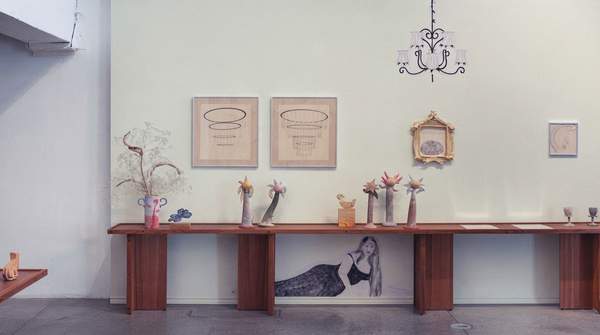
In Seoul, a historic hanok once owned by SK Group founder Chey Jong-gun now exhibits Palestinian artist Mona Hatoum's 'Web' (upcoming). This display at Sunhyewon, part of the major art exhibitions and festivals of 2025, blurs the lines between heritage and avant-garde, according to Korea JoongAng Daily. Such curatorial decisions push the boundaries of what an 'exhibition' means within culturally significant spaces.
Traditional cultural spaces increasingly host contemporary and international art. Yet, the art world simultaneously embraces deeply historical and niche subjects, creating a visible tension. This bifurcated approach challenges conventional gallery models, suggesting a redefinition of artistic presentation.
The global art scene appears to be moving towards a more integrated, experiential model. Here, context and history become as integral to the art as the works themselves, offering new audience engagement. However, this integration risks diluting both historical context and artistic integrity.
Seoul's Heritage Venues Embrace Diverse Art
Several historic hanok and estates in Samcheong-dong and Seochon, including Woonkyung Mansion—a 100-year-old hanok and former residence of politician Lee Jae-hyung now hosting Kim Dong-hee's 'A House, Arrived Again' (upcoming)—are exhibiting art during Frieze Seoul 2025, according to Korea JoongAng Daily. This expands major art exhibitions beyond traditional galleries. The strategic deployment of contemporary art within these historic Korean hanoks, exemplified by Mona Hatoum's 'Web' at Sunhyewon (upcoming), reveals a global trend: cultural institutions are weaponizing heritage to attract new audiences. This risks diluting the original context and narrative of these spaces, prioritizing broad appeal over preservation.
The blurring of lines between commercial art fairs and traditional cultural institutions, evidenced by historic hanoks hosting exhibitions during Frieze Seoul, commercializes cultural heritage. Historic spaces become temporary extensions of the art market rather than purely educational or preservationist entities, altering their fundamental purpose.
New York's Diverse Fall Exhibitions
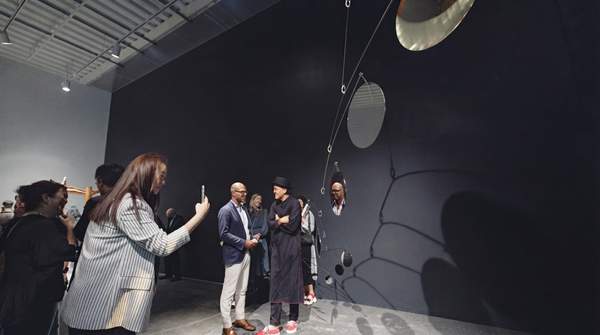
New York's fall exhibitions showcase a diverse range, from Hopi Kachina dolls at the Brooklyn Museum and doll fashion at the Museum at FIT (upcoming), to a Bowery show at the New Museum (upcoming) and Masao Gozu's photographs of New Yorkers at MoMA PS1 (upcoming), according to Hyperallergic. The New York Historical will also feature graffiti art (upcoming). This tapestry of indigenous cultures, urban subcultures, and niche subjects appeals to specialized interests and a wide audience.
While major art hubs like New York diversify with niche historical and contemporary exhibitions, the simultaneous reliance on blockbuster modern masters by institutions like The Met suggests a fragmented art market. Institutions struggle to balance broad appeal with specialized cultural exploration.
Re-evaluating History and Identity Through Art
The American Folk Art Museum will feature a show exploring what art history can reveal about girlhood (upcoming), according to Hyperallergic. Concurrently, The New York Times reviews a group show tracing the evolution of medical imaging. These exhibitions offer focused looks at overlooked perspectives and critical context for historical and societal themes, allowing institutions to maintain relevance in a crowded cultural landscape.
Anticipating Modern Masters and Contemporary Voices
The fall season anticipates a compelling dialogue between foundational modern art and cutting-edge contemporary voices. The Met and the Whitney will feature Abstract Expressionists Lee Krasner and Jackson Pollock (upcoming), while MoMA hosts Pop artist Roy Lichtenstein and modernist Constantin Brancusi (upcoming), according to Hyperallergic. These institutions reinforce established narratives with canonical modern artists, catering to a broad public. Simultaneously, surveys of artist-filmmaker Arthur Jafa, photographer Taryn Simon, and conceptual artist Teresa Margolles (upcoming) will also be presented. Varied curatorial strategies are reflected, showcasing a wide spectrum of artistic expression.
The art world appears poised for continued integration of diverse contexts and forms. However, this fusion will likely intensify the debate between commercial viability and the preservation of artistic and historical integrity.