Conceptual art is the movement, emerging internationally in the 1960s, in which the idea behind a work matters more than the finished physical object. Sol LeWitt, who gave the movement its name in his 1967 essay "Paragraphs on Conceptual Art," put the principle plainly: "The idea itself, even if it is not made visual, is as much of a work of art as any finished product." That single proposition overturned centuries of assumptions about what art is, what artists do, and what viewers should look for when they stand in front of a work. This article explains the philosophical shift, shows how two key figures embodied it, and gives you a practical set of questions for identifying conceptual art in the wild.
Introduction: What Is Conceptual Art?
The Irish Museum of Modern Art defines conceptual art as a diverse range of artistic practice from the late 1960s to the early 1970s in which emphasis was placed on the concept or idea rather than the physical art object. The museum adds an important caveat: the origin and meaning of the term are disputed, because the movement defies traditional definition and categorization and cannot be identified by any uniform style or medium. Conceptual art can be, as Tate puts it, almost anything.
MoMA's account locates the turning point in the 1960s, when artists around the globe began experimenting with art that emphasized ideas over a physical product. The movement also had a combative edge: conceptual artists used their work to question the notion of what art is, and often rejected museums and galleries as defining authorities. Their work helped put photographs, scores, and performances on an equal footing with painting and sculpture.
Challenging Tradition: Idea Over Object
The challenge to tradition was twofold. First, conceptual art demoted craftsmanship. LeWitt's formulation, quoted by Tate, holds that when an artist uses a conceptual form of art, "all of the planning and decisions are made beforehand and the execution is a perfunctory affair." The hand that makes the work becomes almost incidental; the thinking that precedes it is the creative act.
Second, conceptual art challenged the assumption that art's value is aesthetic. The Stanford Encyclopedia of Philosophy frames the philosophical stakes: if there is no decisive reason to uphold the aesthetic view of art, then aesthetic value becomes just one kind of artistic value among moral, political, historical, and financial values—some artworks have it and others do not. Conceptual art, on this view, aims at understanding rather than beauty. As the encyclopedia notes, conceptual art is not the only art form with cognitive value, but it makes that cognitive engagement the primary point of the work rather than a byproduct.
The Artist's Role: Instructions and Systems
If execution is perfunctory, the artist's job changes. Instead of making, the artist conceives: they design a system, write a set of instructions, or frame a proposition that others—or no one—may carry out. LeWitt described the idea as the "machine that makes the art," and his practice matched the theory. His instructions became, as the Contemporary Art Issue's profile of the artist observes, the standard for installation artworks, and his writings continuously challenged new thinking about what art can be.
This shift moves the creative act from physical making to intellectual conception. It also redistributes authorship: when a wall drawing is executed by assistants following a written plan, the artwork is the plan and its logic, not the particular marks on a particular wall. The same work can, in principle, exist in multiple places and times without being a copy.
Context and Interpretation: Beyond the Visual
Conceptual art also expanded what counts as art by making context part of the work. The philosopher Arthur Danto, as summarized in the Stanford Encyclopedia, suggested that it is a non-manifest relation rather than an observable property that makes something an artwork: artworks acquire their status through their relations to the historical and social setting constituted by artistic practices, conventions, heritage, and intentions—the "artworld."
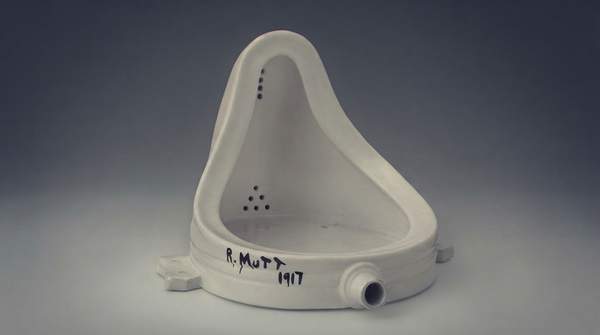
This has practical consequences for viewing. A signed urinal or a typed sentence on a gallery wall is not self-explanatory; its meaning depends on the institutional and social frame around it. The Irish Museum of Modern Art's materials describe related practices that emphasize the social context in which a work is created and presented, and the artist's role as facilitator, with art functioning as information exchanged between artist and viewer. In conceptual art, interpretation is not optional—it is the medium.
Case Study: Sol LeWitt and the Art of Instructions
LeWitt is the clearest example because he theorized what he practiced. His "Paragraphs on Conceptual Art," published in Artforum in the summer of 1967, named the movement and supplied its founding logic: the idea is the work; execution is perfunctory. His own output followed suit. He is best known for his "structures"—endless permutations of open, geometric forms such as the cube—and for his wall drawings, which exist as written instructions that trained assistants execute.
The wall drawings make the philosophy visible. What LeWitt sold and what museums acquired was not a finished surface but a certificate of instructions; each installation is a fresh realization of the same concept. The artist's conception, not his hand, is the constant. That is why MoMA credits LeWitt with giving the new art its name, and why his essay remains the movement's foundational text.
Case Study: Bruce Nauman's Experimental Approach
Bruce Nauman, born in Fort Wayne, Indiana, in 1941, shows how the same principles operate without a signature style. As the Contemporary Art Issue's profile describes, Nauman is known for an experimental, interdisciplinary oeuvre spanning sculpture, drawing, printmaking, photography, video, neon, and sound installation. The medium is not the message; the idea is.
Nauman's practice, in the profile's account, questions the human experience, challenges conventions, and examines new methodologies for creating art and meaning, with much of the work occupied by existential dichotomies. That refusal to settle into one material or format is itself conceptual: it demonstrates the movement's rejection of traditional artistic boundaries, where an artist was defined by a medium and a recognizable hand. With Nauman, the constant is the inquiry, not the object.
How to Interpret Conceptual Art: A Decision Framework
When you encounter a work that seems baffling, plain, or unfinished, these four diagnostic questions—each derived from the movement's core tenets—will help you identify whether you are looking at conceptual art and articulate why. Work through them in order; the more you answer "yes," the more strongly the work sits within the conceptual tradition.
| Question | What it tests | Evidence behind it |
|---|---|---|
| 1. Is the idea the primary "machine that makes the art"? | Whether planning and decisions made in advance, rather than the making, constitute the creative act. | LeWitt's "Paragraphs on Conceptual Art": all planning and decisions are made beforehand; execution is perfunctory. |
| 2. Is the physical object dematerialized or secondary? | Whether the work could exist as a photograph, instruction, score, or performance rather than a crafted object. | MoMA: conceptual artists put photographs, scores, and performances on an equal footing with painting and sculpture. |
| 3. Does the work challenge traditional aesthetics or skill? | Whether the work aims at understanding rather than beauty, treating aesthetic value as optional rather than essential. | The Stanford Encyclopedia's account of art that need not be aesthetic; conceptual art makes cognitive value its primary focus. |
| 4. Does the work's meaning depend on its social or art-world context? | Whether the work's status as art rests on institutional and social relations rather than observable properties. | Danto's "artworld" thesis, and IMMA's account of practices emphasizing social context and the artist as facilitator. |
Applying the framework shows the reasoning path. Take a LeWitt wall drawing: question one is yes—the instructions are the art; question two is yes—the drawing is a realization, not an original; question three is yes—the value lies in the system's logic, not the marks' beauty; question four is yes—the work's status depends on the institutional frame that certifies instructions as art. A traditional landscape painting, by contrast, would answer no to most of these: its value rests on the visible skill and aesthetic experience of the finished surface. The framework distinguishes the two not by quality but by aim.
Engaging with Conceptual Art: A New Perspective
The decision this framework supports is simple: approach artworks with an open mind, prioritizing the underlying concept and context over immediate aesthetic appeal or traditional craftsmanship. This is an introduction to the core ideas of the 1960s–70s movement, not an exhaustive survey, and LeWitt and Nauman are illustrative examples rather than a complete roster.
The measurable indicator of success is concrete: the next time you face a work that seems like nothing—a typed sentence, an empty room, a set of instructions—you can confidently articulate its conceptual elements using the four questions, moving beyond initial visual impressions to deeper intellectual engagement. If you can say what the idea is, what role the object plays, what tradition it challenges, and what context gives it meaning, you are reading conceptual art the way its makers intended.
Sources
- MOMA
- Conceptual art — Tate
- Conceptual Art (Stanford Encyclopedia of Philosophy) — PLATO
- What is Conceptual Art? Explained & Top 25 Artists — CAI — Contemporary Art Issue - Magazine & Educational Art Platform
- IMMA