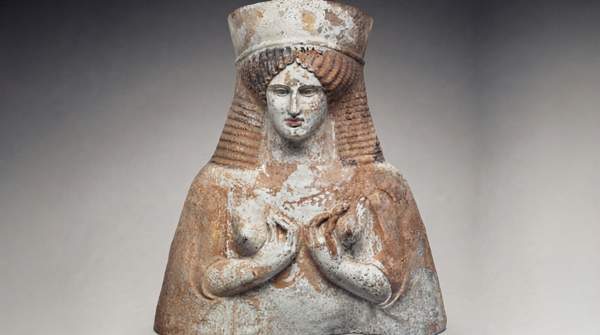
"Digital art preservation" is really two distinct practices that share a name. When a museum digitizes an ancient sculpture, it creates a digital surrogate—a record that documents and provides access to the original, which remains the artwork. When a museum acquires a piece of software art, the digital material is the artwork, and preserving it means keeping its functionality, dependencies, and viewer experience alive through active, ongoing intervention. Confusing the two leads to bad preservation decisions, so this article separates their goals, technologies, and challenges.
Two Worlds of Digital Art Preservation: An Introduction
The distinction rests on where the artwork originates. A physical object—a carving, a painting, a heritage site—exists independently of any computer, and digitization produces a representation of it. Born-digital art, by contrast, is what Perla Innocenti of the University of Glasgow's History of Art program describes as "fundamentally art produced and mediated by a computer," a category within media art that includes software art, computer-mediated installations, and Internet art. These works cannot be separated from their technological context: the hardware, software, and environment that make them run are part of the work itself.
A survey of Open Archival Information System usage in Canadian museums, published by the Canadian Heritage Information Network, illustrates how institutions already treat the two cases differently in practice. Digital facsimiles of a physical object are typically documented by linking them to the physical object's collections management record, while a born-digital object held by a museum is catalogued as an artifact in its own right, with its own accession number. The digitized copy is a record; the born-digital work is the object.
Digitizing Physical Art: Creating Digital Surrogates
For physical art, the goal is an accurate, accessible digital representation—not a replacement for the original. A 2024 review in npj Heritage Science, authored by Dipima Buragohain and colleagues, describes how digital models serve conservationists and researchers as a resource for monitoring changes and deterioration of sites and artifacts over time, and for restoring or reconstructing lost or damaged parts of heritage sites. The same review notes that augmented reality, virtual reality, artificial intelligence, and machine learning are increasingly used to analyze and interpret data from photogrammetry and 3D scanning—for identifying patterns, predicting deterioration, and suggesting conservation strategies.
The technologies here are capture technologies: they record visual and structural data from an object that already exists. The resulting surrogate serves study, documentation, and virtual exhibition. The original object remains the primary artifact, and the digital file's value depends on its fidelity to that original.