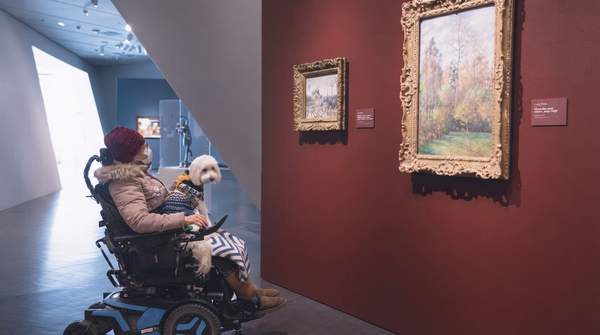
Contemporary art institutions are shifting their definition of accessibility. For decades, a gallery was considered "accessible" if a wheelchair could get through the door. Today, a growing body of curatorial and disability-studies scholarship argues that real access means the art itself must be perceivable, engaging and participatory for people with visual and hearing impairments, not merely reachable inside the building. That philosophical move, from accommodation to multisensory experience design, is the most significant change now underway in how museums and galleries approach public engagement.
Redefining Accessibility: Beyond Physical Compliance
The legal foundation is decades old. The Rehabilitation Act of 1973 and the Americans with Disabilities Act of 1990 mandated public accommodations and workplace modifications intended to ensure the full inclusion of disabled people in daily life, as a Los Angeles County arts accessibility review recounts. Yet that review also observes that despite those successes, people with disabilities still find themselves advocating for accessibility within art spaces, and that confusion persists over what accessibility actually means, what disabled people need to experience art, and who is responsible for providing it.
An MIT forum on contemporary art and access makes the same point more bluntly: the ADA prohibits discrimination, but inadequacies in access persist. Since that landmark legislation, disability studies and crip theory have increasingly influenced art institutions on a broader level, prompting forums on digital access and spatial design. The older framework treated disability as an individual impairment to be accommodated with architecture; the emerging framework treats barriers as something society designs, and therefore something society can redesign.
From Ramps to Rich Experiences: A New Model of Engagement
The clearest way to see the shift is to place the two models side by side. What emerges is a distinction that matters to every institution deciding where to spend its accessibility budget: making a building physically accessible is not the same as making the art accessible.
| Dimension | Traditional "Compliance" Model | Modern "Inclusive Experience" Model |
|---|---|---|
| Focus | Physical access and adherence to legal mandates such as the ADA; though discrimination is prohibited, access inadequacies often persist. | Multisensory, holistic engagement with artworks, deliberately challenging the visual dominance of Western art. |
| Primary Goal | Remove physical barriers so individuals with disabilities can enter; views disability largely as individual impairment. | Foster deep participation for diverse sensory abilities, shifting responsibility from the individual to society for creating accessible environments. |
| Methods/Tools | Architectural modifications: ramps, elevators, accessible restrooms — structural fixes that do not inherently facilitate engagement with the art itself. | Tactile displays, audio description, sign language translation, visual representations of sound, and collaborative design with disabled artists. |
| Audience Benefiting | People with physical disabilities needing structural accommodations; sensory and cognitive engagement goes largely unaddressed. | People with visual or hearing impairments, plus wider audiences seeking richer, more immersive encounters with art. |
Read across the rows, the table shows that the two models are not rivals so much as stages. The compliance model solved entry; the inclusive experience model asks what happens after entry, and answers with sensory translation rather than architecture alone.