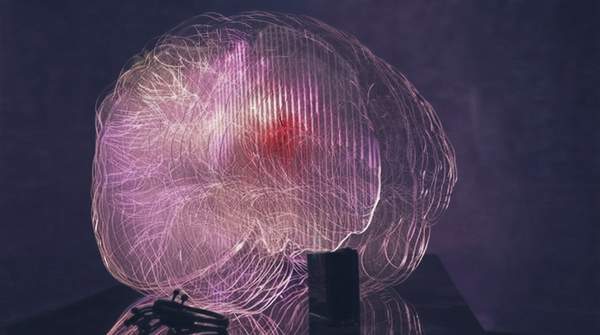
Artists are using brain-computer interfaces (BCIs) to turn their own cognitive states into live, generative artwork. The technology behind this shift is not exotic: affordable, non-invasive EEG headsets detect measurable patterns associated with attention, relaxation, and cognitive effort, and software translates those patterns into visuals, sound, or movement. Two documented projects—a BCI Screen Dress and a Pangolin Scales Animatronic Dress—show how wearable art can visualize a wearer's mental state in real time.
Introduction: Brain-Computer Interfaces as a New Artistic Medium
Brain-computer interfaces were developed for medicine and neuroscience, where systems translating electrical brain activity into machine-readable signals have enabled patients to control prosthetic limbs, communication interfaces, and computer cursors. Over the past decade, artists and designers have begun experimenting with the same technologies, treating neural signals as expressive inputs rather than purely clinical data.
As arts coverage of the field notes, advances in affordable EEG headsets and open-source signal processing frameworks have made neural sensing increasingly accessible outside laboratories. Importantly, these devices cannot decode thoughts; they detect only broad, measurable patterns. Today's BCI artworks extend a lineage that reaches back to 1960s and 1970s biofeedback art, which translated heart rate, brainwaves, or skin conductance into audiovisual systems—but now combine neural sensing with machine learning, real-time computation, and networked media.
Understanding the BCI-to-Art Pipeline
The journey from a raw brainwave to an artwork follows three sequential stages. Understanding them demystifies how an intangible mental state becomes a tangible creative output.
| Stage | Mechanism / Technology | Artistic Result |
|---|---|---|
| 1. Signal Acquisition | A non-invasive EEG headset or headband captures electrical brain activity through sensors on the scalp and converts it into data. | Raw neural data available to the artwork. |
| 2. Signal Processing | Software analyzes the raw signals to identify brainwave patterns—such as frequency bands—associated with specific cognitive states like attention or relaxation. | A real-time measure of the wearer's cognitive state, such as an engagement biomarker. |
| 3. Artistic Translation | The processed patterns act as generative inputs that drive visual systems, sound synthesis, or responsive kinetic elements. | Brain-driven interactive art that responds as the wearer's mental state changes. |
The crucial conceptual shift happens at stage three. Within creative practice, these signals are treated not as precise commands but as generative inputs capable of influencing visual systems, sound synthesis, or responsive environments. The artwork does not read the artist's mind; it responds to fluctuating patterns of cognitive effort and attention, making the brain itself a performative instrument.