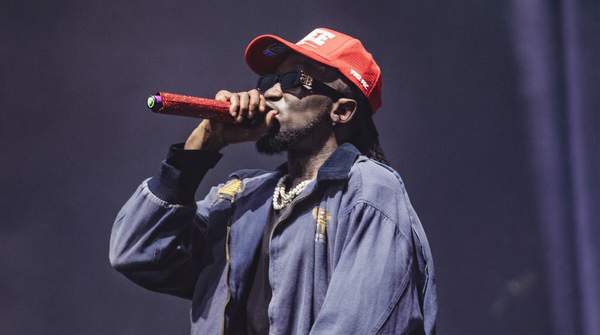
In May 2024, the collaborative song 'U My Everything' by Sexyy Red and Drake sampled 'BBL Drizzy,' an AI-generated track, marking a pivotal moment where synthetic music crossed into mainstream popular culture. This unexpected integration reveals a growing acceptance, or at least curiosity, within the artistic community regarding AI's role in music creation.
Yet, this embrace by top-tier artists unfolds against aggressive efforts by major platforms and rights holders who are simultaneously fighting to control and restrict the commercial use of AI-generated music. This tension creates a fundamental disconnect, as the industry's legal and economic structures grapple with a rapidly evolving technological reality. The proliferation of AI-driven content presents both opportunities for innovation and substantial challenges for intellectual property and artist compensation.
The music industry is likely heading towards a bifurcated future where AI-generated content exists, but its monetization and integration will be heavily regulated by legal frameworks and platform policies. This trajectory risks stifling independent AI innovation while potentially benefiting established players who can navigate complex licensing and legal landscapes more effectively.
The Floodgates Open: AI's Rapid Influx on Streaming Platforms
Deezer estimates that a substantial 18% of songs uploaded to its platform daily are purely AI generated, according to AP News. This deluge has forced streaming services to implement defensive measures to maintain catalog integrity. Spotify, for instance, removed 75 million spam tracks in a 12-month period, with AI tools contributing to this surge in fake music, according to The Guardian. The platform is also introducing an 'AI Persona' label for AI-generated accounts, aiming to distinguish between human and algorithmic creations. Rapid controls highlight the industry's struggle to adapt to AI's disruptive capabilities, attempting to balance open access with content quality and copyright protection.
Measuring the Scale: Catalog Growth vs. AI Dilution
Spotify's legitimate music catalog consists of 100 million tracks, a vast collection that continues to expand, according to The Guardian. Growth reflects a thriving global music market, where total music payouts on Spotify have grown from $1 billion in 2014 to $10 billion in 2024, according to newsroom. This financial expansion suggests a robust platform economy for artists and rights holders.
While overall music payouts are soaring, the rapid influx of AI-generated tracks, some achieving significant success like Oliver McCann's track with 3 million streams, according to AP News, threatens to dilute legitimate artists' share. This creates a complex problem for revenue distribution, as a growing slice of the economic pie is consumed by content that may not represent human creativity, potentially siphoning off micro-payments from a finite pool designated for artists.
The Copyright Battleground: Industry Fights Back
Round Hill Music has filed lawsuits against AI music firms Suno and Anthropic for mass copyright infringement, launching a strong legal offensive from rights holders, according to The Hollywood Reporter. Actions represent a direct challenge to the operational models of AI music generators, which often train on existing copyrighted material without explicit permission.
| Legal Action | Target | Outcome/Status |
|---|---|---|
| Round Hill Music Lawsuit | Suno, Anthropic | Alleged infringement of 500 songs; ongoing, according to The Hollywood Reporter |
| German Court Ruling | Suno | Ruled copyright violation in July 2026, according to Reuters |
These early legal victories and ongoing lawsuits forge a precedent: AI music firms cannot operate without respecting existing copyright laws. The German court ruling against Suno, in particular, reinforces the legal framework for intellectual property in the age of AI. While these legal battles aim to control the proliferation of infringing AI content, they also show a systemic challenge, indicating a need for broader licensing models rather than outright suppression.
Who Profits, Who Pays: The Shifting Economics of AI Music
Fights over AI music profits have started, according to NPR, unveiling a new front in the economic landscape of the music industry. This emerging conflict pits traditional rights holders against new AI creators, each vying for a share of the burgeoning market. The legal actions taken by entities like Round Hill Music seek to protect established revenue streams and intellectual property, asserting that AI firms must compensate for the use of copyrighted works.
However, the narrative of AI music being purely a legal threat is complicated by its adoption by mainstream artists. Sexyy Red and Drake's collaborative song 'U My Everything' sampled 'BBL Drizzy,' an AI-generated song, in May 2024, according to billboard. This high-profile integration directly challenges the industry's suppression efforts by unwittingly legitimizing AI as a creative tool within popular culture. Such collaborations blur the lines between human and AI artistry, creating a complex economic landscape where the value proposition of AI-generated content is being redefined in real-time.
Major music companies and platforms that successfully implement protective measures and monetize AI-generated content on their terms are likely to emerge as winners. Conversely, independent artists whose work is diluted or infringed upon, and AI music firms facing legal challenges without clear licensing frameworks, face substantial risks. This suggests an unsustainable economic model for independent creators using AI without robust protective policies and equitable revenue distribution mechanisms.
The Road Ahead: Regulation, Innovation, and Artistic Integrity
The music industry's current legal and platform-level responses are akin to trying to empty an ocean with a thimble. The sheer scale of AI-generated content entering the market proves current containment strategies are futile. By attempting to litigate AI out of existence, major rights holders risk alienating a new generation of creators, like Sexyy Red and Drake, who increasingly see AI as a creative tool, not just a threat. This approach risks creating a chasm between traditional industry gatekeepers and emerging talent, stifling future innovation and collaboration. A more sustainable path involves developing frameworks that allow for responsible AI integration, balancing protection for existing works with encouragement for new forms of creativity.
By Q3 2026, major labels like Universal Music Group will likely face increased pressure to develop clear licensing frameworks for AI-generated music, moving beyond litigation to embrace controlled integration as AI's proliferation continues.