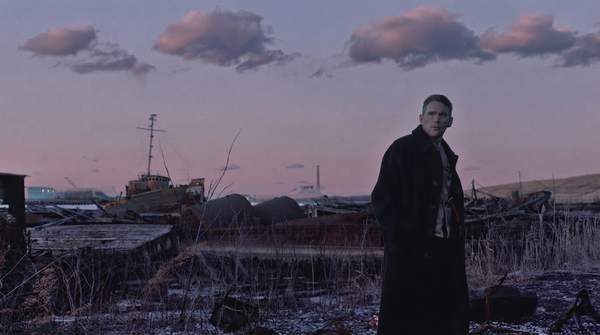
Slow cinema is a distinct film movement built on a cluster of aesthetic choices—long takes, understated storytelling, stillness, minimal dialogue, and an emphasis on duration—that deliberately withhold the narrative momentum mainstream movies train us to expect. When I first sat through a Lav Diaz film, I confess I spent the opening half-hour waiting for something to happen. It took me a while to realize that the waiting was the point: the film was asking me to watch, not to be carried.
Introduction: Defining Slow Cinema
Critics and scholars converge on a working definition despite the movement's internal diversity. Film studies writing on contemporary slow cinema describes its practitioners—however different from one another—as sharing "a tendency towards narrative reduction, slow pace, affectless acting, and an emphasis on everyday spaces and life, whose representation does not necessarily contribute to dramatic coherence and development." De-dramatisation, that analysis argues, is the central characteristic, an approach that reiterates modernist cinema's ambition to observe everyday spaces, gestures, and situations in order to make sense of how time affects social experience.
The movement's ancestry, according to the British Film Institute, runs back through Italian neorealism—Michelangelo Antonioni, Roberto Rossellini, Vittorio De Sica—and Russian filmmaker Andrei Tarkovsky. A substantial body of theoretical writing has since expanded this corpus geographically and historically, from early cinema to contemporary works spanning the mainstream and the experimental. So slow cinema is not one national school but a recognizably shared attitude toward time.
Key Aesthetic Characteristics of Slow Cinema
The movement's toolbox is remarkably consistent across cultures, and it is worth naming the instruments precisely. The commonly cited characteristics include long takes and an emphasis on duration; understated storytelling methods; an emphasis on stillness and the mundane; minimal dialogue; and the use of nonprofessional actors. Acting styles tend toward the affectless rather than the emotive, and the camera frequently holds its position, letting ambient sound carry scenes that a conventional score would otherwise fill.
The result, as one film blog's beginner-friendly checklist puts it, can be shots in which "nothing much happens"—a woman holding a baby for the length of an entire trailer—and long stretches where you hear only a few words spoken. What unites these choices is that none of them contributes to dramatic coherence in the conventional sense; each redirects attention from plot toward atmosphere, gesture, and the passage of time itself.
Challenging Mainstream Narrative Conventions
Here is where the movement earns its reputation as provocation rather than mere style. The Guardian contrasted the genre's long takes with the roughly two-second average shot length of Hollywood action movies—a staggering difference in temporal economy—and observed that slow filmmakers "opt for ambient noises or field recordings rather than bombastic sound design, embrace subdued visual schemes that require the viewer's eye to do more work, and evoke a sense of mystery that springs from the landscapes and local customs they depict more than it does from generic convention." Every convention that mainstream cinema uses to keep audiences oriented—rapid cutting, propulsive scoring, explicit dialogue—is systematically withheld. Where a commercial film compresses time to deliver incident, slow cinema dilates it, refusing the very contract of continuous eventfulness that blockbuster storytelling is built upon.
Artistic and Philosophical Intent
Why would filmmakers court boredom so deliberately? Because for them, slowness is an argument. The genre has been described as an "act of organized resistance," a formulation that explicitly parallels the Slow Food movement's response to industrialized consumption. The scholarly analysis of contemporary slow cinema connects this resistance to modernism's own critical project: the ambition to observe everyday life in order to understand how time has shaped social experience, an emphasis on "everydayness" that links pre- and post-war modernist cinema. This is not nostalgia but a critique—of fast editing, of accelerated modern life, and of an entertainment culture that treats attention as something to be captured rather than cultivated.
The films insist that duration itself is a subject worth contemplating, and that the mundane spaces conventional cinema rushes through contain meaning if we agree to stay long enough to find it.
Fostering Deeper Audience Engagement and Reflection
The philosophical payoff arrives in the viewing experience itself, and it demands something unusual from the spectator. One analogy I find useful compares slow cinema to reading a novel rather than a comic: in a comic, pictures show exactly what you are reading, but in a novel you must imagine the world yourself. Slow film works the same way—"you are given much less than a normal movie," and as a result "you have to put in more work to experience and learn from the film." That labor is not a defect but the mechanism of engagement.
By starving the viewer of narrative handholds, the film forces active interpretation of its world and journey, and the subdued visual schemes make the eye itself work harder. It is fair to note the counterargument: the movement has been criticized as indifferent or even hostile to audiences, and the same blog candidly concedes that if you simply want to switch off after a long day, slow cinema may not be for you.
Slow Cinema Diagnostic Framework
To turn these ideas into a reusable tool, apply the checklist below to any film. Diagnose which traits appear, how strongly, and in what combination; a film exhibiting several of these characteristics across most of its running time can reasonably be classified within the movement, while one or two in isolation suggest mere influence. Use it to analyze what you watch, not just to label it.
| Trait | What to look for | How it contrasts with convention |
|---|---|---|
| Long takes / duration | Extended shots; scenes unfolding in real time | Resists the rapid cutting of commercial pacing |
| Minimal narrative | De-dramatized, reduced storylines without conventional arcs | Withholds event-driven plot development |
| Stillness & the mundane | Everyday spaces and routines given sustained attention | Shifts focus from incident to atmosphere and time |
| Minimal dialogue | Sparse, affectless speech; long silent stretches | Relies on image and ambient sound instead of exposition |
| Observational style | Static camera; field recordings over score | Invites active watching rather than passive consumption |
Embracing Contemplation: A New Way to Watch
To fully appreciate slow cinema, approach films ready to engage actively with duration, stillness, and subtle detail rather than expecting conventional narrative progression—and recognize that the difficulty is the design, not a flaw. The measurable test of whether this framework has done its work: your ability to identify at least three core characteristics of slow cinema in a given film and articulate how those elements contribute to a contemplative experience. Once you can do that, you are no longer merely watching slow movies; you are reading them, and the two-second average shot length of the action film will never look quite the same again.