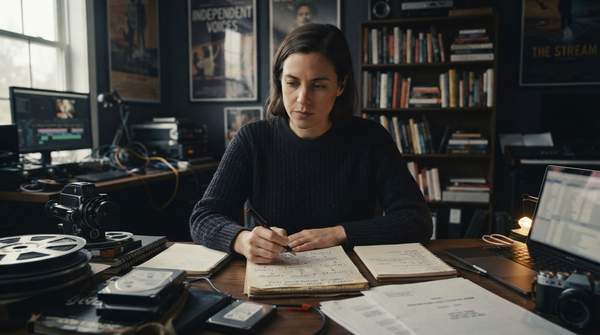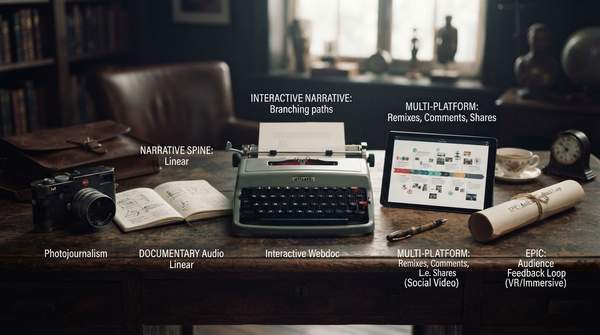
Digital media has fundamentally changed what it means to be an independent storyteller, and the transformation can be organized into three distinct but connected shifts: production tools that almost anyone can afford and learn, distribution platforms that bypass traditional gatekeepers, and narrative forms—non-linear, interactive, immersive, and voice-driven—that simply were not practical in the analog era. Understanding these three pillars separately is the clearest way for a creator to see where the real opportunities now lie.
Introduction: The Digital Revolution in Independent Storytelling
Before digital technology, an aspiring storyteller needed expensive equipment, specialized technical skill, and the blessing of institutional gatekeepers to reach an audience. The digital revolution dissolved those preconditions, reshaping not only how stories are told but who gets to tell them. Writing in the Global Media Journal's open-access coverage of cinematic technology, observers describe the democratization of the medium as one of the digital age's most profound impacts, opening filmmaking to a diverse array of voices and creators rather than a narrow professional class. The same pattern extends across audio, video, and multimedia: as industry analyses of digital transformation note, digital technologies have blurred the boundaries between amateur and skilled expert, letting individuals from diverse backgrounds step into the role of creators.
Democratizing Production: Tools in the Hands of Creators
The first pillar is the collapse of production barriers. Digital cameras were not only more affordable than traditional film cameras; they were easier to use and required less technical skill, which lowered the barriers to entry for aspiring and independent filmmakers. Affordable editing software completed the shift, putting post-production capabilities that once belonged exclusively to studios onto ordinary laptops. The consequence is not merely convenience but diversity: when the cost of making a story plummets, the range of people who can afford to tell one widens dramatically. A creator no longer needs institutional backing to shoot, cut, and finish a piece of work—only a device and an internet connection. That accessibility is the foundation on which the other two transformations rest, because cheap production only matters if there is somewhere for the finished story to go.
Direct-to-Audience: The Rise of Digital Distribution Platforms
The second pillar is distribution. The shift to digital channels disrupted the traditional gatekeepers of the media space, replacing them with platforms that let creators publish directly to a worldwide audience. YouTube, TikTok, and Instagram have risen as hubs of creativity, presenting a global platform for expression and innovation to individuals from any geography or demographic. Streaming services such as Netflix, Amazon Prime, and Disney reshaped audience expectations in parallel, normalizing on-demand access to vast libraries of entertainment available anytime, anywhere. Deloitte's 2025 Digital Media Trends survey underscores how far this shift has gone: 56% of Gen Z respondents and 43% of millennials reported that social media content is more relevant to them than traditional content like TV shows and movies. For an independent creator, that is an audience actively preferring the channels where independents can compete.
Beyond Linear: Innovative Narrative Forms
The third pillar is the story itself. Digital stories can combine still images, moving images, sound, text, and interactive features, and unlike traditional storytelling they may use non-linear structures that allow audiences to interact with the content. Non-linear digital editing made this practical: it allowed for easy editing, the combination of complex visual effects, and deliberate manipulation of narrative structure. The 2000 film "Memento," which used non-linear storytelling enhanced by digital editing to engage and challenge audiences, is a frequently cited example of what these tools make possible. For an independent creator, the significance is that structure itself becomes a creative variable—a story can be organized around discovery, fragments, or audience choice rather than a straight chronological line.
Interactive and Immersive Experiences
Interactivity goes furthest when the audience becomes part of the story. In late 2017, the BBC unveiled an interactive audio sci-fi comedy called "The Inspection Chamber," built exclusively for Amazon's Alexa, in which listeners must use their own voice to become a character who can change the course of the narrative. That experiment illustrates a broader design constraint and opportunity: voice devices are not built for long-running conversational entertainment, so creators working in interactive audio tend to use short segments with frequent questions rather than extended monologue. Immersive technology offers another frontier.
As Raindance's Briana Hilton describes, filmmakers can employ virtual reality to take digital storytelling to new heights, translating cinematic skills into VR worlds where audiences become active participants in the narrative rather than passive viewers. Participatory formats on social platforms work similarly, inviting audiences into the storytelling process itself.
The Three Pillars of Digital Storytelling Transformation
The framework below categorizes the transformation into its three domains, showing how each shift changes a distinct stage of the creative process—from how a story is made, to how it reaches viewers, to how it is structured and experienced.
| Transformation area | Key shift | Impact on independent creators | Example or mechanism |
|---|---|---|---|
| Production | Accessible tools | Lowered barriers to entry; diverse voices can create without institutional backing | Affordable digital cameras and easier-to-use editing software requiring less technical skill |
| Distribution | Direct platforms | Gatekeepers bypassed; worldwide reach from any geography or demographic | YouTube, TikTok, and Instagram as global hubs of creativity; streaming services reshaping on-demand expectations |
| Narrative | Non-linear structures | Structure becomes a creative variable audiences can explore | Digital editing enabling non-linear storytelling, as exemplified by "Memento" (2000) |
| Narrative | Interactive features | Audiences interact with the content rather than only receiving it | Combining still images, moving images, sound, text, and interactive features in non-linear arrangements |
| Narrative | Immersive experiences | Viewers become active participants in the narrative | Virtual reality worlds built by filmmakers translating cinematic skills |
| Narrative | Interactive audio | Voice becomes a storytelling medium with audience agency | The BBC's "The Inspection Chamber" (2017) for Amazon's Alexa, where listeners' voices change the narrative |
Read across the rows, the table makes the synthesis visible: production and distribution are single shifts that opened the field, while narrative is where digital media multiplied the possibilities—non-linear, interactive, immersive, and voice-driven forms each give creators a distinct way to engage. The three pillars are interdependent, since interactive audio or VR work only matters because affordable tools and direct platforms exist to produce and deliver it.
The Future of Independent Digital Storytelling
The trajectory points toward continued convergence. Social platforms have been investing in data-driven personalization for content creators and advertisers, while traditional studios concentrate on streaming distribution and premium content—an asymmetry that favors creators building direct audience relationships. The audience side is moving too: younger viewers increasingly find social content more relevant than traditional TV and film, which means the channels where independents thrive are the channels audiences are choosing. The likely next developments build on what is already visible—more voice-interactive formats designed around the constraints of smart speakers, more immersive work as VR tools mature, and more participatory storytelling that treats the audience as a collaborator rather than a recipient.
Empowering the Next Generation of Narrators
Independent creators should embrace accessible digital tools, leverage diverse distribution platforms, and experiment with innovative narrative forms to connect with audiences. The decision framework is straightforward: start with the affordable production tools that removed the old barriers, publish through the direct channels that audiences now prefer, and test the narrative forms—non-linear structure, interactive features, immersive experiences, or voice-driven audio—that digital media uniquely enables. The measurable indicator of success is increased engagement metrics (views, shares, interactions) on digital platforms for content utilizing interactive or non-linear storytelling techniques. A creator who publishes a conventionally structured piece and then an interactive or non-linear one on the same channel has a direct, observable comparison: if the experimental format lifts engagement, the evidence-backed direction of travel is clear.
Sources
- Digital Storytelling in Media Transformation — Successive Digital
- The Impact of Technology on Cinematic Storytelling — Globalmediajournal
- 2025 Digital Media Trends: Social platforms are becoming a dominant force in media and entertainment — Deloitte Insights
- Digital storytelling - Wikipedia — EN
- Digital Storytelling: Merging Film and Online Marketing Strategies — Raindance
- Innovation