Cultural exchange programs foster cross-cultural understanding through a simple but demanding mechanism: putting people from different backgrounds in direct, structured contact so they can share knowledge, traditions, and worldviews. The STS Foundation defines the practice as "the exchange of cultural knowledge and experiences between people from different backgrounds, heritage, ethnicities, and religions," a "two-way street" that leads to "mutual understanding, breaking down stereotypes, and building bridges of friendship and respect between cultures." The Al Diwan Arabic Book Fair, which concluded its fourth edition in Berlin in October 2026, shows how those abstract goals translate into a concrete, three-day event built around literature, translation, and dialogue.
What is Cultural Exchange?
At its core, cultural exchange is intentional contact across cultural boundaries. The STS Foundation's definition emphasizes reciprocity: individuals from diverse cultures come together to share traditions, customs, values, and worldviews, and the exchange runs in both directions. InterExchange, an exchange-program organization, frames the same idea as more than travel or study abroad — a "transformative experience that broadens horizons, builds bridges between cultures, and creates lasting impact for both individuals and communities."
The U.S. State Department's exchange programs office, which runs educational and cultural exchanges, describes the payoff in similar terms: participants "gain a deeper understanding of yourself and those around you — deepening your knowledge of foreign cultures and strengthening international relationships." The office also notes that living with a host family integrates a visitor into that family, temporarily making them part of it. The common thread is that understanding is built through lived, personal engagement rather than through formal agreements alone.
Core Principles: Building Bridges, Breaking Barriers
Several goals recur across organizations that design and run exchange programs. Youth For Understanding USA, a youth exchange organization, identifies the promotion of mutual understanding and empathy as a central benefit: by stepping into another culture, "whether through travel, hosting, or conversation," participants begin to see the world through someone else's eyes. This creates what the organization calls "a space for genuine human connection, where differences are appreciated rather than feared," encouraging open-mindedness and helping people move beyond assumptions.
From these accounts, four working principles emerge. First, fostering dialogue — bringing people from diverse backgrounds together to talk. Second, sharing diverse perspectives — transmitting cultural knowledge so outsiders can view the world differently. Third, breaking down stereotypes — challenging misconceptions through direct experience. Fourth, building personal connections — forming friendships and respect that outlast any single event. These principles are not aspirational slogans; they are design requirements that a program's activities must actually serve.
The Al Diwan Arabic Book Fair: A Case Study in Action
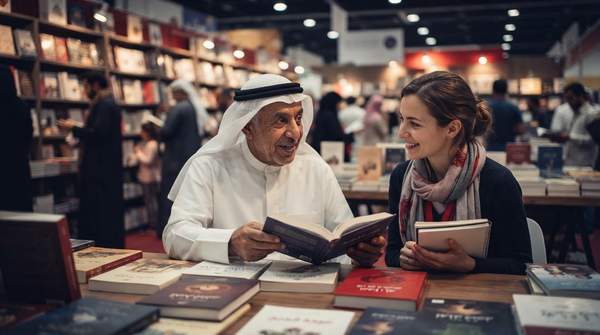
The Al Diwan Arabic Book Fair, organized by the Arab Cultural House "Al Diwan," concluded its fourth edition in Berlin on a Sunday in October 2026. The three-day event featured seminars, intellectual and literary discussions, and cultural activities, with the participation of more than 110 publishing houses from the Arab world and Germany. It brought together authors, intellectuals, publishers, and researchers to explore topics related to literature, translation, publishing, and cross-cultural dialogue.
The fair's significance was articulated by Beinhoff, a German head of a department for culture and society, who told Qatar News Agency that reading transmits knowledge and connects peoples while helping Germany view the world from different perspectives, thereby strengthening bonds of friendship. Her framing is notable for its realism about how international relationships actually work: while international relations are grounded in formal agreements, she argued, their long-term stability and consolidation require mutual understanding — and cultural cooperation helps build it.
Connecting Principles to Practice: The Al Diwan Fair Model
The table below maps the general principles of cultural exchange, as defined by the STS Foundation, Youth For Understanding USA, and the State Department's exchange office, onto the documented activities of the Al Diwan Fair. The mapping is analytical: it connects the fair's reported activities to established principles of cultural exchange, rather than to statements in which the organizers themselves linked each activity to a specific principle.
| Principle of Cultural Exchange | Mechanism at the Al Diwan Fair |
|---|---|
| Fostering dialogue | Seminars, intellectual and literary discussions, and cultural activities that facilitate direct interaction among participants over three days. |
| Sharing diverse perspectives | Literature and discussions that, in Beinhoff's words, transmit knowledge and help German audiences view the world from different perspectives. |
| Breaking down stereotypes | Direct interaction among more than 110 Arab and German publishing houses, authors, and intellectuals — the kind of contact that cultural exchange organizations say moves people beyond assumptions. |
| Building personal connections | An environment gathering authors, intellectuals, publishers, researchers, and the public from two cultures, creating opportunities for relationships to form. |
Read across the rows, the model shows that each component of the fair serves a distinct function. The seminars and discussions operationalize dialogue; the literary content carries perspectives across a language barrier, with translation explicitly on the program; the sheer scale of publisher participation creates the direct, repeated contact that exchange organizations identify as the engine of stereotype reduction; and the gathering format itself supplies the setting for personal connection.
The Enduring Value of Intentional Engagement
Cultural exchange takes many forms beyond book fairs. The STS Foundation identifies hosting an exchange student from another country as one of the most recognized forms, and the State Department's exchange office describes the host-family experience as full integration into a household. Youth exchange organizations emphasize conversation and hosting alongside travel as routes to empathy. What unites a three-day Berlin book fair with a year-long student placement is intentionality: both are structured to produce contact that would not otherwise occur.
Beinhoff's observation about formal agreements captures why this matters. Treaties and official partnerships set the framework for international relations, but their durability depends on mutual understanding that only cultural cooperation can build. A fair that introduces German readers to Arabic literature, or a host family that absorbs a teenager into daily life, works on the same underlying resource: familiarity that replaces assumption.
This article explains principles and mechanisms; it does not evaluate the political effectiveness of specific programs or quantify their long-term impact, and the Al Diwan Fair serves as an illustrative case based on available reporting rather than an exhaustive review.
Sustaining Understanding Through Exchange
For readers deciding where to direct attention or support, the evidence points to a clear standard: engage in or support cultural exchange initiatives that prioritize direct interaction and diverse representation to foster mutual understanding and strengthen international relationships. The Al Diwan Fair's model — dialogue formats, translated literature, and broad participation from both cultures — illustrates what that standard looks like in practice.
The measurable indicator of success is increased participation in cross-cultural events and documented positive shifts in intergroup perceptions, as evidenced by participant feedback or official reports. The State Department's exchange office frames the underlying wager plainly: experiencing a different culture deepens knowledge of foreign cultures and strengthens international relationships — an outcome that formal channels alone cannot deliver.
Sources
- What is Cultural Exchange? - — Stsfoundation
- What is Cultural Exchange? Enrich Your Life Through Global Connections — InterExchange
- Why Participate? — Exchanges
- What is Cultural Exchange? — Youth For Understanding USA
- Al Diwan Fair introduced Germans to richness of Arabic Culture — Thepeninsulaqatar