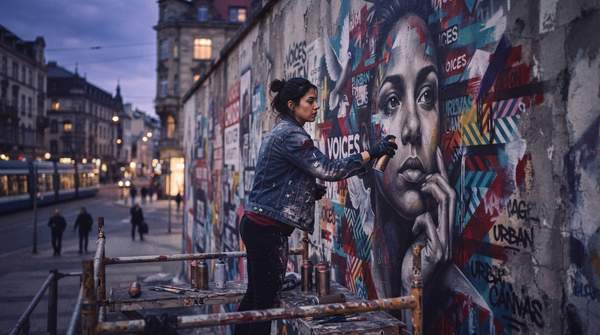
Street art and graffiti have undergone a profound transformation, evolving from unsanctioned acts of rebellion into recognized forms of cultural expression and powerful mediums for social commentary. What was once largely dismissed as vandalism has grown into a global phenomenon, embraced by cities, galleries, and art enthusiasts alike, as noted by the East End Arts Council. This evolution has reshaped urban landscapes into vibrant expressions of creativity, resistance, and storytelling, deeply rooted in social movements, cultural identity, and artistic innovation.
This journey from illicit tags to legitimate art reflects significant shifts in artistic style, intent, public perception, and institutional recognition over several decades. Ndung'u John Wanjiku, writing for Research Output Journals, highlights that street art, initially perceived as vandalism, has transitioned into a legitimate art movement encompassing a wide range of visual expressions in public spaces. This article traces this historical progression, examining how public perception and institutional recognition shifted, and analyzing the social impact of public art.
Early Roots: Graffiti as Rebellion and Identity
The origins of modern graffiti can be traced to the 1960s and 1970s, particularly in Western contexts, where young artists began "tagging" their names and creating intricate designs on subway cars and buildings. These early artists, often referred to as "writers," were driven by a desire to leave their mark on public spaces and amplify their voices in a rapidly urbanizing world, according to Nina Ryan of Sotheby's Institute of Art. This period saw graffiti become a cornerstone of urban identity, especially with the rise of hip-hop culture in the 1970s, providing a creative outlet for marginalized communities to express frustrations, aspirations, and cultural pride.
Initially, graffiti was largely associated with vandalism, prompting cities to launch aggressive anti-graffiti campaigns. Despite its outlaw status, the practice prioritized visibility and placement, with artists like Jean-Michel Basquiat contributing to its early elevation. The International Journal of Legal Science and Innovation notes that while writing names and creating artwork in public spaces has existed for thousands of years, the modern form of graffiti specifically centers on personal and individual identity.
The Rise of Street Art: Beyond Tagging
By the 1990s, the narrative surrounding urban art began to change, laying the groundwork for its broader acceptance. While graffiti primarily focuses on personal identity through stylized lettering and tags, street art encompasses a wider range of visual expressions, including murals, stencils, wheatpaste posters, and installations, as explained by Sotheby's Institute of Art. Street art often aims to engage with the public on social or political themes, sometimes with the consent of property owners.
This period witnessed a new wave of urban artists exploring themes centered on social commentary, pop culture, and artistic innovation. Contemporary street artists began to incorporate complex narratives, stencils, and multimedia installations, redefining the style, according to Carousel Fine Art. This intellectual layer helped shift the narrative around street art towards wider acceptance, moving beyond mere visual appeal to become a vehicle for deeper messages.
Street Art as Social and Political Commentary
Street art has evolved into a powerful medium for political and social discourse, engaging communities and challenging societal norms. Artists like Banksy gained prominence in the 1990s and early 2000s by creating works with a strong conceptual focus, using street art as a vehicle for satirical messages about politics, capitalism, and societal hypocrisy, as reported by Carousel Fine Art. This intellectual depth resonated with audiences beyond the urban street scene, including art galleries, traditional art institutions, and collectors.
Ndung'u John Wanjiku's analysis highlights how street art has become a tool for political and social discourse, reclaiming public space and fostering community engagement. The International Journal of Legal Science and Innovation further distinguishes street art by its intention to gather public and social appreciation and commentary, often recognized for its aesthetic nature and value through various mediums such as murals. Slogans of protest and political or social commentary graffiti on walls are considered precursors to modern street art and continue to be a significant aspect of the genre, as noted by Wikipedia contributors.
Shifting Perceptions: From Vandalism to Valued Art
The transformation of public and institutional views on street art and graffiti has been a gradual process. In the 1970s and 1980s, graffiti was largely associated with vandalism, leading to aggressive anti-graffiti campaigns by cities. However, despite its outlaw status, graffiti began to gain recognition when galleries and collectors showed interest in the movement, according to Sotheby's Institute of Art. This shift was not immediate and involved initial resistance, with law enforcement cracking down on graffiti under "anti-vandalism" campaigns, as Carousel Fine Art describes.
By the 1990s, following the success of artists like Basquiat, street art gained global momentum. Events such as mural festivals and city-sponsored commissions provided artists with legitimate platforms, shifting public perception from viewing street art as vandalism to recognizing it as a cultural value, Carousel Fine Art explains. Today, urban cities worldwide increasingly embrace graffiti and street art, transforming these once marginalized forms of expression into celebrated art forms, as seen in neighborhoods like Miami's Wynwood.
Urban Impact and Community Engagement
Street art's impact extends beyond aesthetics, significantly influencing urban landscapes and fostering community engagement. It serves as a vital tool for reclaiming public spaces and providing platforms for voices often unheard, as highlighted by Ndung'u John Wanjiku. This is evident in places like London's Brick Lane, which features iconic street art by artists such as Banksy and Stik, and Paris's Canal Saint-Martin area, where artists use walls as an open canvas for political and social commentary, according to Sotheby's Institute of Art.
In São Paulo, Brazil, street art emerged as a potent expression of the people's voices, serving as a platform for social commentary and urban space reclamation, particularly during the country's transition from military dictatorship to democracy in the early 1980s, as reported by The Yale Globalist. The International Journal of Legal Science and Innovation points to examples like the Indira Railway Station, which features a 280-meter-long mural aimed at raising awareness about HIV and its precautions, demonstrating how street art can address themes of displacement and public health.
The Evolution of Street Art: A Chronological Journey
| Historical Period | Key Characteristics/Movements | Influential Artists/Examples | Public/Institutional Perception |
|---|---|---|---|
| 1960s-1970s | Early graffiti emerged as unsanctioned public art, primarily focused on personal identity through stylized lettering and tags. | "Writers" like those in New York City's subway scene; Jean-Michel Basquiat's early work. | Initially perceived as vandalism, it prioritized visibility and placement. Cities launched aggressive anti-graffiti campaigns. |
| 1980s-1990s | Emergence of broader street art forms, incorporating stencils, wheatpaste, and murals; initial shift towards diverse artistic intent. | Artists like Blek le Rat introduced stencils; Basquiat's transition to galleries. | Despite outlaw status, galleries and collectors began to show interest, initiating a shift towards recognition as legitimate art. |
| 1990s-2000s | New wave of urban artists exploring social commentary, pop culture, and artistic innovation; incorporation of complex narratives and multimedia. | Artists like Banksy gained prominence, creating works with strong conceptual and satirical messages that resonated with broader audiences. | This intellectual layer helped shift the narrative around street art towards wider acceptance, including by traditional art institutions. |
| Contemporary Era | Continued evolution, blending poignant commentary, accessibility, and artistic innovation; use of new media like video projections. | Banksy, Shepard Fairey, and numerous local artists contributing to urban revitalization. | Street art is increasingly embraced by cities, galleries, and art enthusiasts, transforming urban landscapes into vibrant expressions of creativity and storytelling. What was once dismissed as vandalism has grown into a global phenomenon, sometimes with artist consent. |
| Overall Evolution | Street art has transformed into a tool for political and social discourse, engaging communities and challenging societal norms. | Diverse artists globally using public spaces for critical expression. | This transformation highlights its role in reclaiming public space and influencing public discourse, blurring the lines between public and fine art. |
Embracing the Urban Canvas: A Call for Continued Engagement
The journey of street art and graffiti from illicit acts to recognized cultural expression and social commentary underscores its enduring power and relevance. What began as an act of rebellion has become a powerful form of creative expression, blurring the lines between public and fine art, as noted by Carousel Fine Art. This evolution demonstrates street art's capacity to transform urban environments and engage communities in meaningful dialogue.
Cities and communities should continue to recognize and integrate street art as a legitimate and powerful medium for cultural expression and social commentary. This can be measured by increased public art initiatives, dedicated urban art spaces, and community-led mural projects, which foster creativity, reclaim public spaces, and provide platforms for diverse voices, as suggested by the East End Arts Council and Ndung'u John Wanjiku.
Sources
- From Walls to the World: An Exploration of Street Art Culture — East End Arts Council | Long Island Art & Music Gallery
- | Research Output Journals — Rojournals
- The Evolution of Street Art: How Graffiti Shaped Urban Culture — Sotheby's Institute of Art
- Historical Background of Graffiti and Street Art — International Journal of Legal Science and Innovation
- The Evolution of Street Art: From Vandalism to Contemporary Art Phenomenon — Carousel Fine Art
- Street art - Wikipedia — EN
- Urban Tapestry: The Evolution of Street Art and Its Cultural Impact – The Yale Globalist


