In 2005, a performance of Samuel Beckett's 'Waiting for Godot' in New Orleans, amidst Hurricane Katrina's devastation, became a profound source of community healing. Staged among wreckage, the production offered residents a shared space for reflection and emotional processing, illustrating public art's unexpected power to address collective trauma. Artistic expression, even simple forms, contributes directly to recovery and fosters resilience, transcending mere aesthetics.
Public art is championed for its ability to foster community bonds and revitalize urban spaces. Yet, its integration into urban planning often disregards art's complex relationship with power, inadvertently contributing to gentrification. Tools meant for communal benefit can become instruments of displacement, revealing a critical challenge.
Without rigorous research and a critical, community-led approach, public art risks becoming a superficial amenity, not a genuine force for equitable urban transformation. A re-evaluation of its deployment strategies is demanded, particularly concerning community identity by 2026.
More Than Just Decoration: Defining Public Art's Role
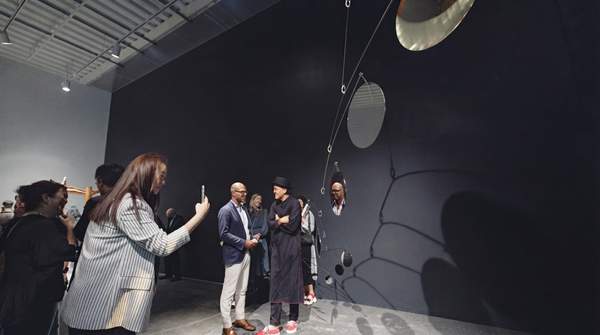
The National Endowment for the Arts (NEA) significantly supported public art through its Art in Public Places program, funding over 700 works between 1967 and 1995, according to Arts. Art's capacity to shape civic spaces and enhance public life was recognized by this initiative. Alexander Calder's 'La Grande Vitesse' in Grand Rapids, Michigan, an early NEA-supported project, revitalized the city's downtown. Such projects showed public art's potential to foster civic pride, attract visitors, and spur urban renewal, establishing its value beyond aesthetics.
An uncritical approach to public art was inadvertently fostered by this historical success, particularly from early NEA projects. The focus on economic uplift and visual appeal often overshadowed deeper investigations into art's social dynamics and long-term community impact. Even well-intentioned collaborative art practices, designed to build local bonds, now face displacement due to gentrification, as economic development frequently overrides community preservation and equity.
The Unseen Tensions: Art, Power, and Urbanization
Studies on culture and neoliberal urban planning acknowledge artists' role in urban change. Yet, these analyses often disregard art's complex relationship to power and resistance, overlooking its effects on public encounters with urban space, according to Forarthistory Org Uk. Planners integrating public art without rigorous research into its emancipatory properties miss a critical opportunity for genuine community empowerment. Instead, they inadvertently fuel gentrification, turning a potential asset into a community liability.
Artistic expressions in urban environments can reveal, question, and resist neoliberal urbanization. Yet, this critical function is often overlooked for superficial integration that disregards its profound effects on public encounters. Collaborative art practices, intended to build community and foster local narratives, increasingly face challenges due to gentrification, as highlighted by Muse Jhu. Even well-intentioned community art initiatives become casualties of the urban development they aim to enhance, exposing a systemic flaw in planning models that prioritize economic metrics over genuine social equity.
The contrast between 'Waiting for Godot' as a source of healing and art's complex relationship to power indicates a significant systemic issue. Public art's true potential for social good is squandered by an uncritical, neoliberal approach prioritizing superficial revitalization over deep, sustainable community building. Existing communities are alienated by this dynamic, undermining public art's purpose.
Beyond Aesthetics: Public Art's Impact on Community Well-being
Public art initiatives lacking rigorous research into their emancipatory properties miss a significant opportunity for genuine community empowerment, turning a potential asset into a liability. Integrating art into urban planning without critically examining its relationship with power risks accelerating gentrification and eroding social bonds, often resulting in 'revitalized' spaces that alienate existing residents. True community well-being relies on art that genuinely reflects and strengthens local bonds, moving beyond mere aesthetic improvements. The challenges faced by collaborative art practices due to gentrification expose a systemic flaw in urban planning models that prioritize economic metrics—property value increases or tourist appeal—over authentic social equity and community preservation. Public art's capacity to build lasting attachment, foster social capital, and contribute meaningfully to residents' quality of life is hindered by this imbalance.
Common Questions About Public Art
How does public art influence social cohesion?
Public art significantly influences social cohesion by fostering a shared sense of identity and place. It creates unique public spaces that encourage interaction and collective experience, as outlined in the Arlington Public Art Implementation Guide. These initiatives strengthen community bonds when genuinely rooted in local needs and perspectives, providing common ground and enhancing collective belonging. Success lies in authentic engagement.
How can public art reflect cultural heritage?
Public art reflects cultural heritage by being authentic to its place and community, incorporating historical narratives, local traditions, and indigenous artistic forms. The Arlington Public Art Implementation Guide emphasizes creating art that resonates with its location's unique character and history. Artworks serve as tangible expressions of a community's past and present identity, fostering deeper appreciation for its roots and celebrating its distinct character, due to this intentional connection. Such art becomes a living archive.
The Future of Public Art: A Call for Critical Engagement
Public art's profound capacity for community healing, witnessed in post-Katrina New Orleans, contrasts sharply with its current trajectory in neoliberal urban planning. While a potent catalyst for identity, public art is inadvertently weaponized, accelerating gentrification and eroding the social bonds it purports to strengthen. A more critical and informed approach to its deployment is demanded.
Urban planners must move beyond superficial revitalization, embracing rigorous research into art’s emancipatory properties. Public art's enduring value lies not just in its presence, but in its capacity to foster genuine dialogue, challenge power structures, and empower the communities it serves. A fundamental shift toward community-led initiatives, prioritizing social equity over economic metrics, is essential to realize art's full potential for authentic social change.
By 2027, urban art initiatives must integrate comprehensive community-led frameworks to ensure public art serves as a true agent for equitable transformation. A commitment from municipal bodies, like the Arlington Public Art program, to prioritize genuine community engagement and critical assessment in all future projects is demanded.